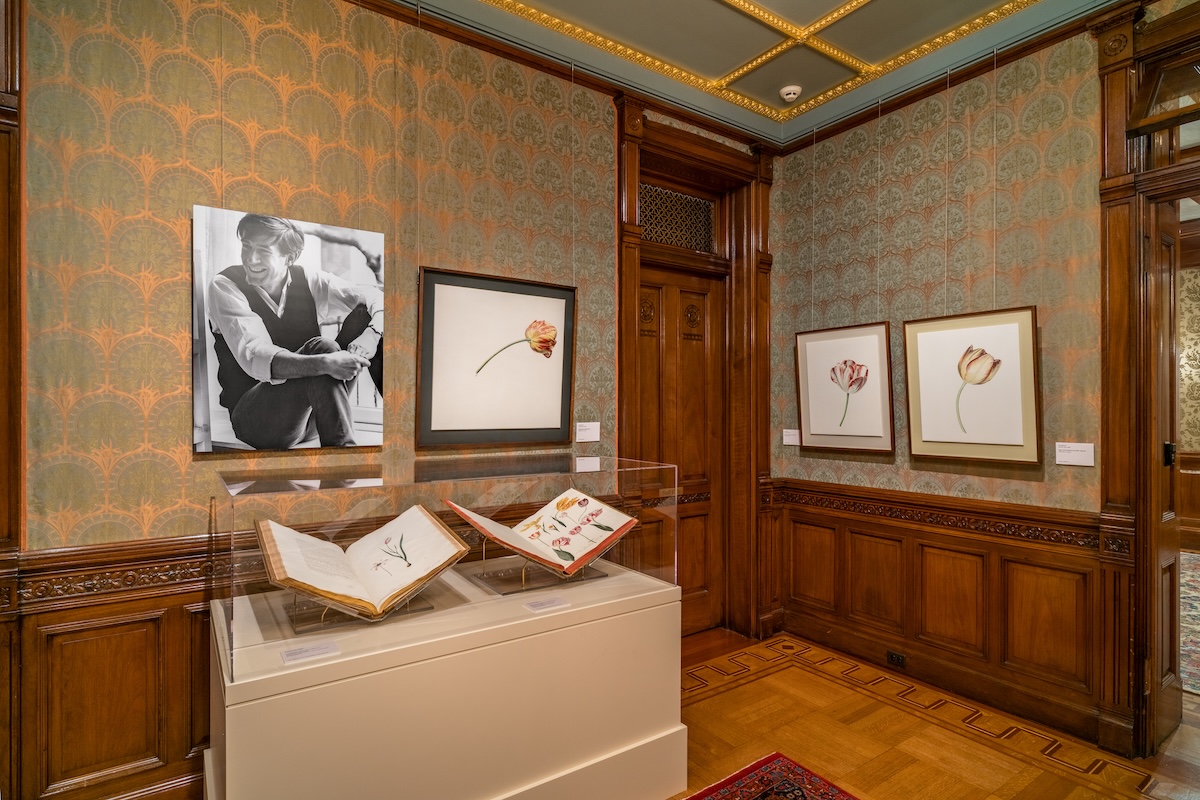
I knew of Rory McEwen as a singer of Scottish balladry and topical songs. But I never knew he was a highly respected botanical artist—until now.
Presented in association with Oak Spring Garden Foundation in Virginia and the Royal Botanic Gardens in London, Rory McEwen: A New Perspective on Nature, runs through August 17, at the Driehaus Museum in River North. Even if, like me, you don’t have a green thumb in your body or think you have no interest in botanical art, this exquisite show will surprise and delight you and open your eyes.
Some have called the Eton-educated, movie-star handsome McEwen the “troubadour with a brush.” His works can be found in private and public collections around the world, including the British Museum, the Victoria and Albert Museum, the Tate Gallery, the Museum of Modern Art in New York, and the National Gallery of Modern Art and the Demarco Gallery, both in Edinburgh. Whether using watercolor on vellum or watercolor on paper, his work had a distinctive style. He often employed large empty canvases to create a vision of his own secret life of plant, always executed in exact, minute detail, and taking individual flowers and vegetables—objects of the common kitchen and everyday world—as subject matter while also creating modernist sculptures in glass, metal, steel, wood, and even tweed.
Rory McEwen was born in 1932 at Marchmont House, the McEwen family home in the Scottish Borders. He began playing the guitar as a teenager. From his older brother Jamie, he came to love American jazz and blues. He served in the Queen’s Own Cameron Highlanders as part of his national service. Later, he attended college at Cambridge University, where he befriended the likes of Dudley Moore and Peter Cook. An internationalist at heart, over the years his friends included artists (Jim Dine, Brice Marden, Cy Twombly), poets (Kenneth Koch, Ron Padgett), and writers and musicians (Bob Dylan, George Harrison, Robert Graves) as well as members of the royal family.
He was also a part of the burgeoning folk revival movement in the mid-1950s. He and his brother Alex toured the US, recorded albums of Scottish songs and ballads for Smithsonian Folkways, and even appeared on the Ed Sullivan Show. Returning to Britain, he toured and performed regularly in clubs and became the host of and performer on the BBC-television music show Hullabaloo. By the mid-1960s, however, disillusioned with music, he turned to an ongoing passion: the visual arts (he began painting flowers when he was as young as eight years old).
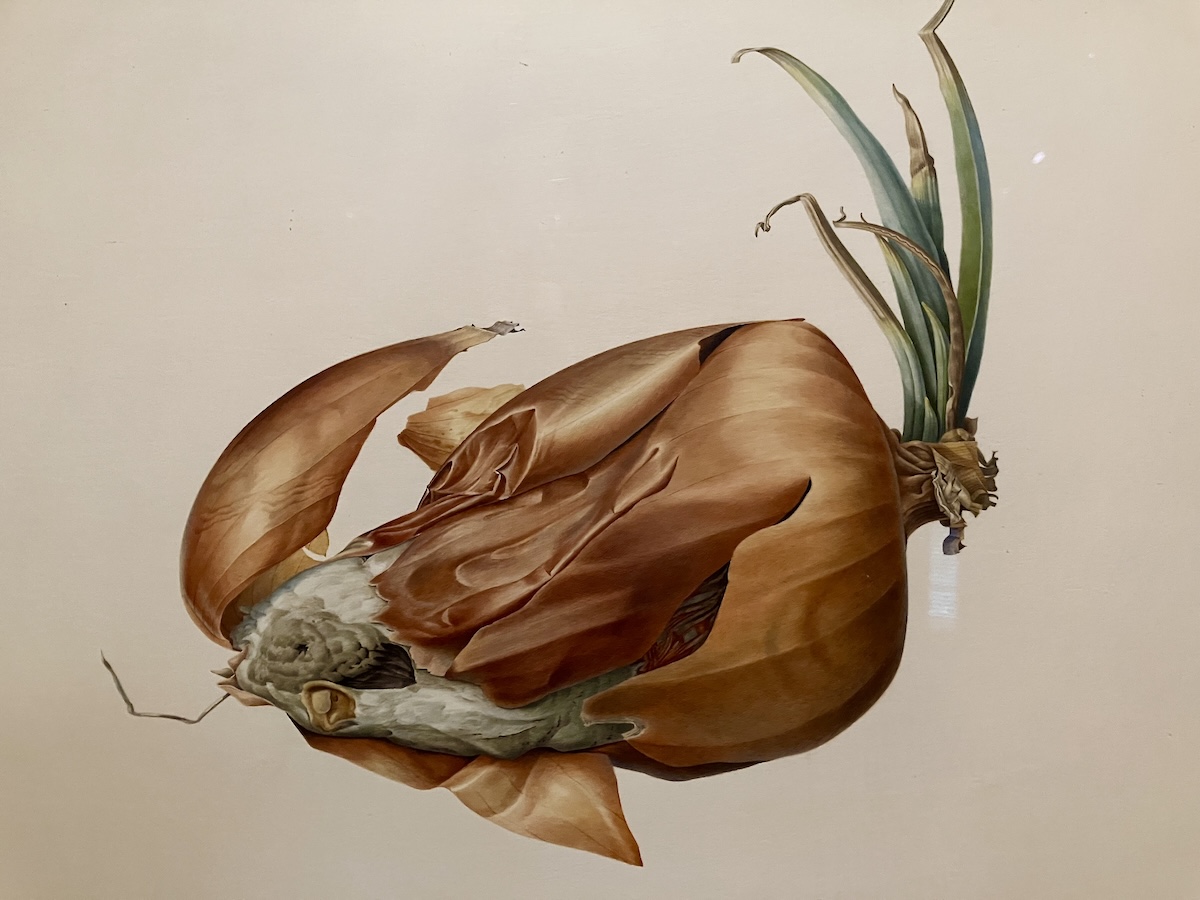
McEwen brought a modern sensibility to botanical art: his paintings on vellum have been compared to the great botanist painters of the 18th century. He painted plants and vegetables––artichokes, peppers, and peeling onions were among his favorites. By the early 1970s he was moving in a minimalist direction in a series of paintings called True Facts from Nature, which consisted of objects of nature that floated Zen-like in wide and empty white spaces.
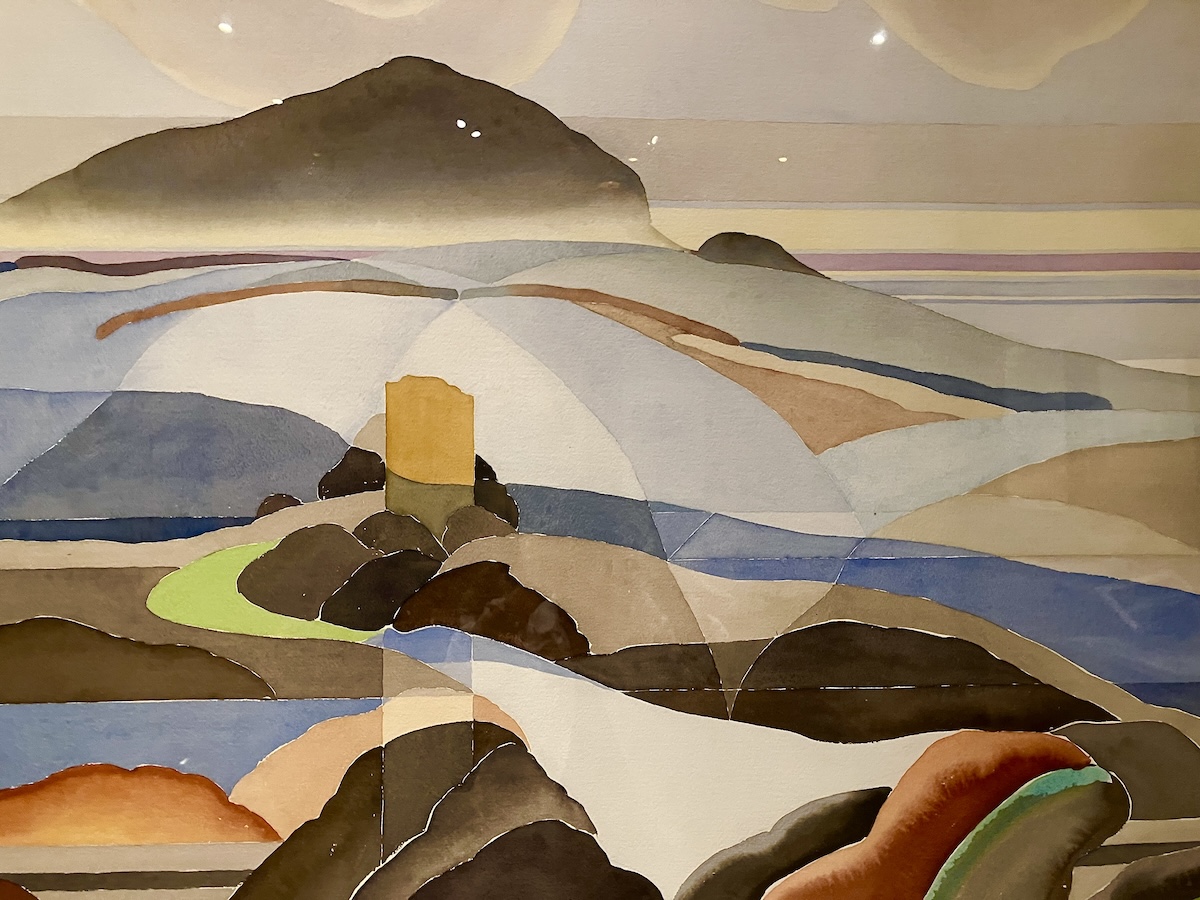
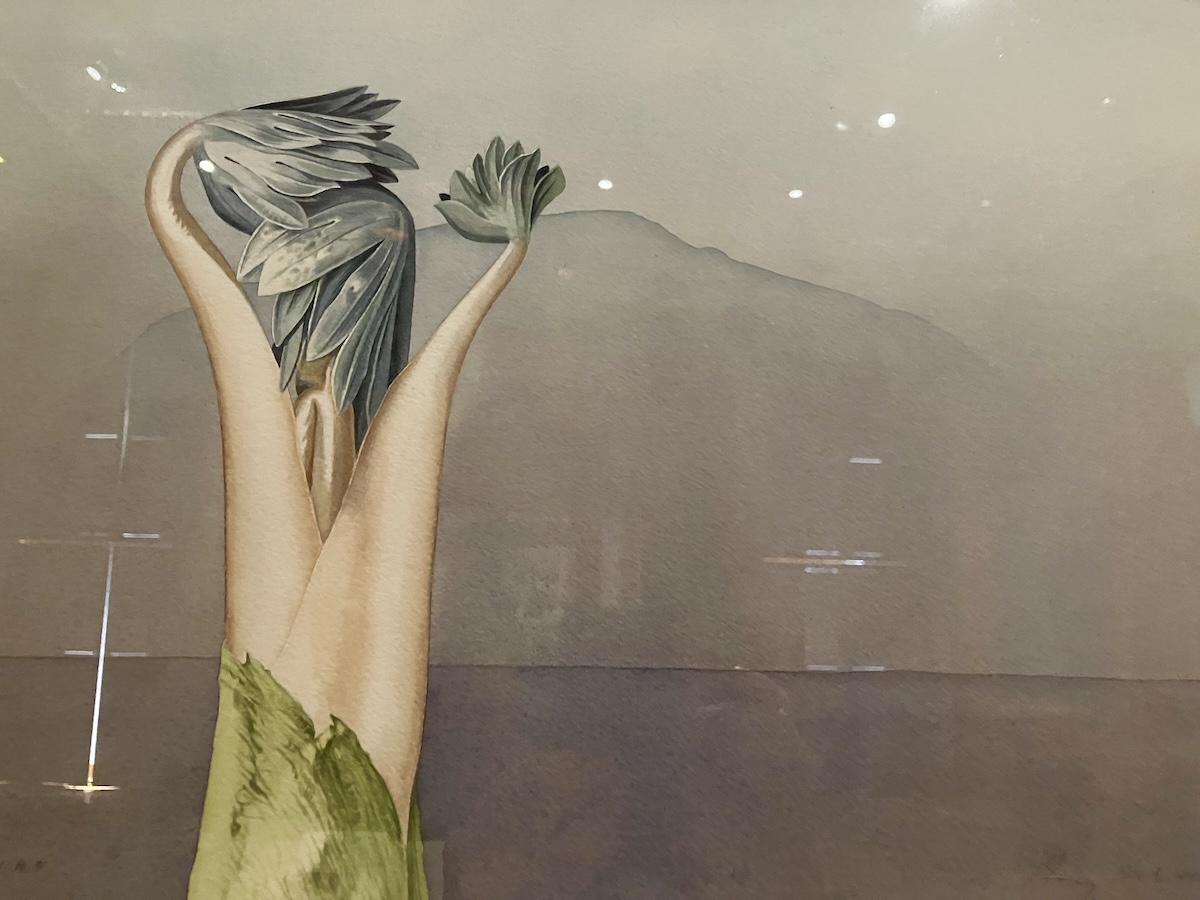
Admiring the plant photography of the German artist Karl Blossfeldt, McEwen painted a series of natural objects but set in a romantic landscape and seen through a personal lens. “Aconitum. Monk’s Hood with Ailsa Craig II,” for example, may have paid homage to Blossfeldt, but it was inspired by the view outside his own window in which a human-like shoot seems to be waving to the nearby uninhabited island of Ailsa Craig. A similar vista of the island, “View from Bardrochat,” consists of a gorgeously colorful collage of sea and undulating hills.
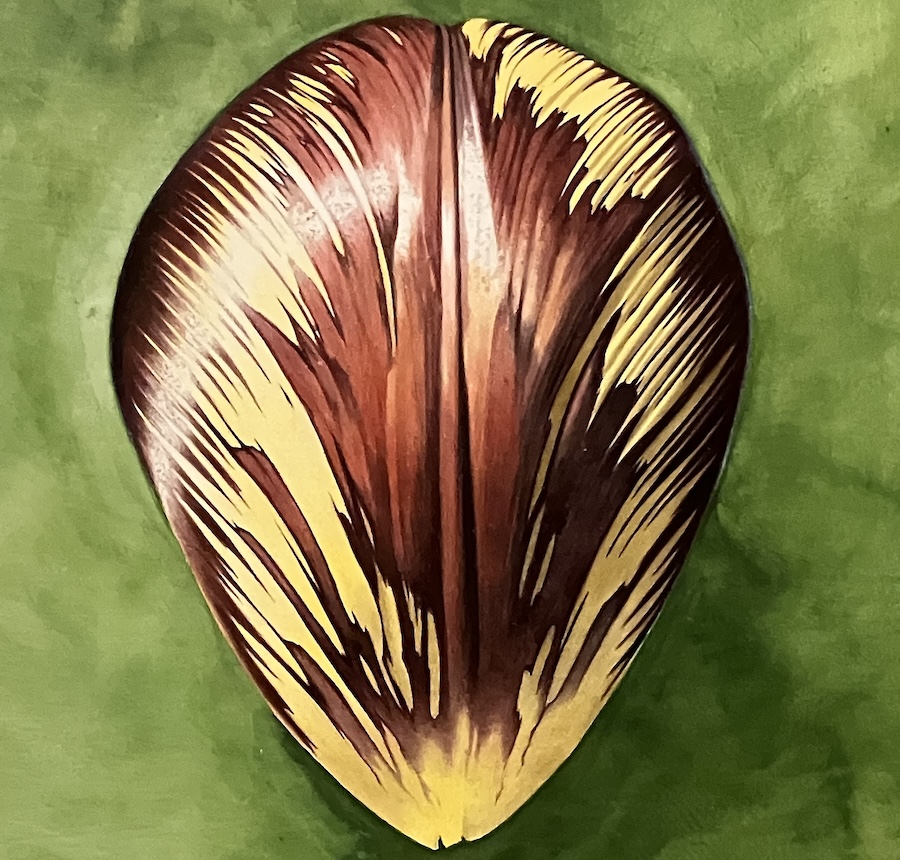
His tulips are unlike any you will see in the natural world. “Tulip Petal” is a stunning interpretation of this most popular of garden flowers. With a deep green background, its oval shape comes alive in shades of brown and yellow. The effect is otherworldly. On the other hand, “Dying Tulip” transcends its name. If a tulip can be called cute it would be this one with its endearing red petals with black specks that mimic a face. Another work, “Tulip Petal IV (blue and grey),” a large tulip petal oil on canvas, is also striking in the way it resembles the slick hair on the back of someone’s head.
eaves were another popular subject. In the late 1970s, McEwen started a series of paintings of single leaves, often reflecting the rustic colors of autumn. On walks around London in places like Fulham Road and Redcliffe Square and especially in Kew Gardens, he would collect dying leaves. There was something about the leaves that appealed to him. As he noted in his journal, he didn’t consider them dead things but rather as having their own unique personality. Indeed, the “dead” leaf of “Kensington Gardens I” is as vibrant as any leaf hanging from a tree. Another lovely piece, “Fogo (Leaf on Snow),” named after the tiny village in the Scottish Borders where his studio was located, was commissioned by the Museum of Modern Art in New York for their 1974 Christmas card.
McEwen seemed to have led a marvelous and curiosity-filled life until 1982. Tragically, after learning he had terminal brain cancer, he threw himself in front of a train at the South Kensington tube station in London. He was 50.
On the first floor of the Driehaus Museum behind the stairs and down a tile floor that leads to a separate room is a small tribute to his musical career. Here you can listen to McEwen singing ballads (“The Bonny Earl of Moray”), a song about Marilyn Monroe, a Scottish whaling song (“The Diamond”), and a mesmerizing spoken word piece called “Names.” Recorded in 1969 with the American pop artist Jim Dine, some have called it the first rap song. Rap or not, McEwen, accompanied by spare drums, recites a wildly eclectic litany of names that appear to mean something to him, including Queen Elizabeth, Dr. Who, Dr. No, Lenny Bruce, Howard Hughes (which he rhymes with the Robert Johnson song “Terrapin Blues”), Bob Dylan, Blind Willie McTell, and Mary, Queen of Scots, among many others.
The exhibition is curated by Ruth L. A. Stiff, Curator of International Exhibitions, Royal Botanic Gardens, Kew (London) and accompanied by a full-color catalog produced by the Oak Spring Garden Foundation.
McEwen saw poetry in dead leaves and the petals of tulips. You will too in this luminous show. There’s still time to see it. Don’t miss it. Rory McEwen: A New Perspective on Nature continues through August 17 at the Driehaus Museum, 50 E. Erie St. The museum is open Wednesday-Sunday. Admission is $20 with discounts available. Visit the website or phone 312-482-8933 for more information.
If you enjoyed this post, please consider supporting Third Coast Review’s arts and culture coverage by making a donation. Choose the amount that works best for you, and know how much we appreciate your support!
