
Whenever my older sister and I asked our dad if we could watch the World War II television comedy Hogan’s Heroes, he also required us to watch the documentary series The World at War so we’d know that combat wasn’t meant to be funny. We did and it had a lasting impact. I remember being overwhelmed by those black-and-white newsreels of emaciated bodies being bulldozed into mass graves and more, in order to “never forget.”
The new exhibit, Anne Frank the Exhibition, at the Museum of Science and Industry also helps us remember. In conjunction with Amsterdam’s Anne Frank Huis, the exhibit is an immersive installation of 130 artifacts (some never seen before) with Spanish subtitles and a comprehensive audio narration device to use throughout the presentation. The exhibit is sharp, but dark and a bit claustrophobic—clearly by design to emulate moving from spacious freedom into tighter rooms, just as Anne and her family did.
Holocaust survivor Elie Wiesel shared brutal camp stories in his memoir Night, charging readers with the duty to remember, the danger of indifference and the importance of bearing witness, saying "To forget would be not only dangerous but offensive; to forget the dead would be akin to killing them a second time. Neutrality helps the oppressor, never the victim. Silence encourages the tormentor, never the tormented."
Even though I still feel physically ill to learn about the Holocaust, I know that those who don’t remember the past are condemned to repeat it. But over six million murders are almost impossible to process, despite thousands of history books written on possibly the most impactful event of the 20th century. But then there’s Anne Frank, whose love of life and writing in her diary creates a more intimate, accessible path to understanding the horrors of unchecked authoritarianism, racism and war. Those of us who embrace the burden of bearing witness are grateful that she shared her story so we too can try to understand the enormous toll. Her diary recounting a young girl hiding from Nazis has been translated into 70 languages for over 35 million readers.
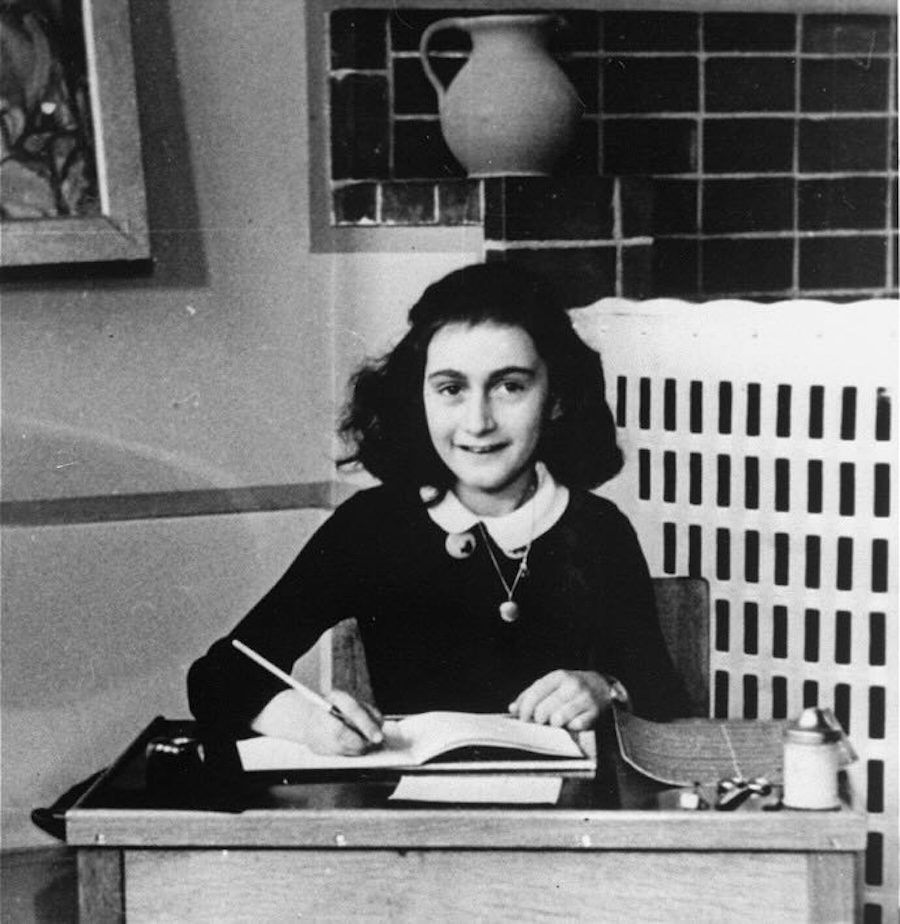
Anne’s father Otto and mother Edith lived in Frankfurt, Germany, before 1929 (also spending a few years in New York to work for a department store). Anne’s older sister Margot came first, then Anne was born three years later, in 1929. The Jewish family moved to Amsterdam in 1934 to run a spice and jam company as well as escape Hitler’s rise, with Otto saying, “After the experiences in Nazi Germany, life in the Netherlands felt like a life of our own again..” (Several important quotes are in large type on the walls of the exhibit.)
Implements from their lives are displayed in clever Lucite cases shaped like houses to get a sense of their spaces and communities. Photos are displayed everywhere as well, notably the school photo proof sheets with dozens of slightly different images of the girls being girls, young women smiling and excited for education (they learned Dutch quickly) and the future. These photos underscore that these victims were just girls, just children when they were taken and brutalized.
In 1942, the Frank family moved behind a wall at Prinsengracht 263 with another quartet to hide from the Nazis who were sweeping neighborhoods for Jews. One of their Dutch helpers, office worker Miep Gies, collected whatever items remained after SS officer Karl Silberbauer and the Gestapo raided the annex on August 4, 1944, took the humans and all their valuable property. She explains this herself in one of the exhibit’s videos, saying “This is your daughter Anne’s legacy” when she handed over the remaining papers. One of the returned documents was Anne’s red-checked diary.
Anne had received her first diary for her birthday on June 12, 1942. On the first page, Anne wrote, “I hope I will be able to confide everything to you, as I have never been able to confide in anyone, and I hope you will be a great source of comfort and support.” She added that “the annex is an ideal place to hide. It may be damp and lopsided, but there’s probably not a more comfortable hiding place in all of Amsterdam. No, in all of Holland.” First, she wrote strictly for herself but polished the entries into more of a cohesive narrative after she heard a radio broadcast encouraging people to keep notes about wartime experiences.
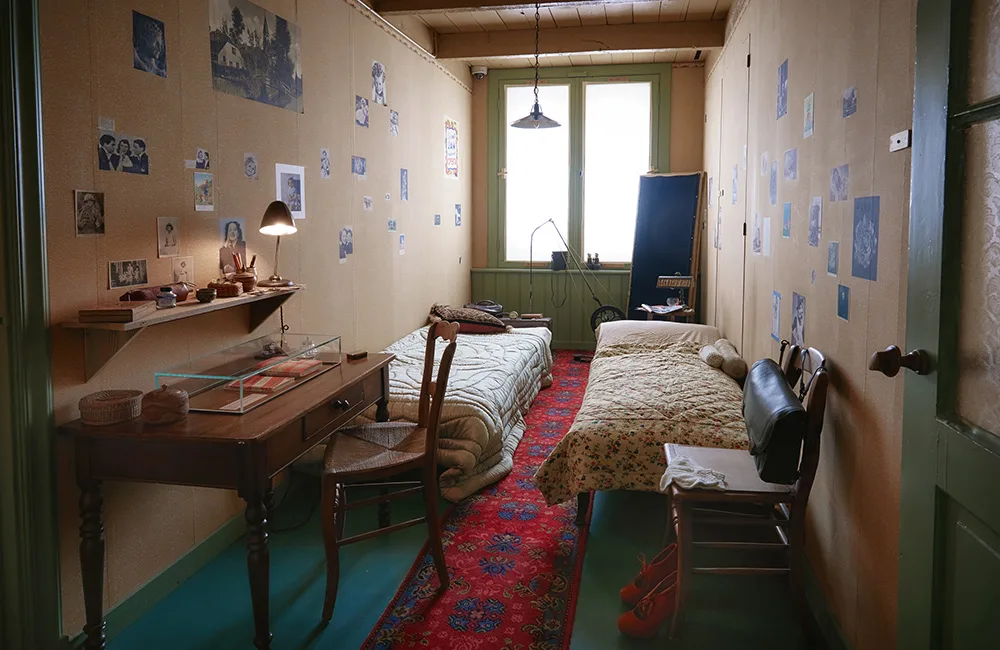
Quotes from the diary lead viewers to a replica of the annex in this exhibition, small but comfortable and homey, yet almost unbearable to traverse knowing the eventual outcome. The several rooms of the annex then lead to a massive, glass-floor display: a white stone relief map of Europe with red flags marking the locations of the ghettos, concentration and extermination camps, looking like blood drops on fearful skin. More than 1,000 ghettos were established to corral Jews before they were shipped off to torture and death, including 400 in Poland, the largest in Lodz and Warsaw, which was established in November 1940. By March 1941, around 445,000 people were imprisoned there. Anne and Margot ended up in Germany’s Bergen-Belsen camp, where they died from typhus, likely around February 1945.
There’s a chilling section about the Wannsee conference, the 90-minute meeting at a Berlin villa in January 1942 where Hitler and the Nazis composed the implementation of the Final Solution, explaining the systematic extermination of Jews using dry, bureaucratic language. The Einsatzgruppen, killing squads that followed the German army to execute Jews and others, are also exposed for the nearly 900,000 Soviet Jews they murdered in 1941 alone.
Eleanor Roosevelt wrote the introduction to the first US edition of Anne Frank's book in 1952, and Shelley Winters won the 1959 Oscar for portraying the matriarch of the other hidden family, Auguste van Pels, in the movie version. Susan Strasberg performed the lead in the 1955 Broadway play, which was reprised by Natalie Portman in 1996. Otto Frank attended the opening of the museum in Amsterdam, built into their hidden annex, on May 3, 1960.
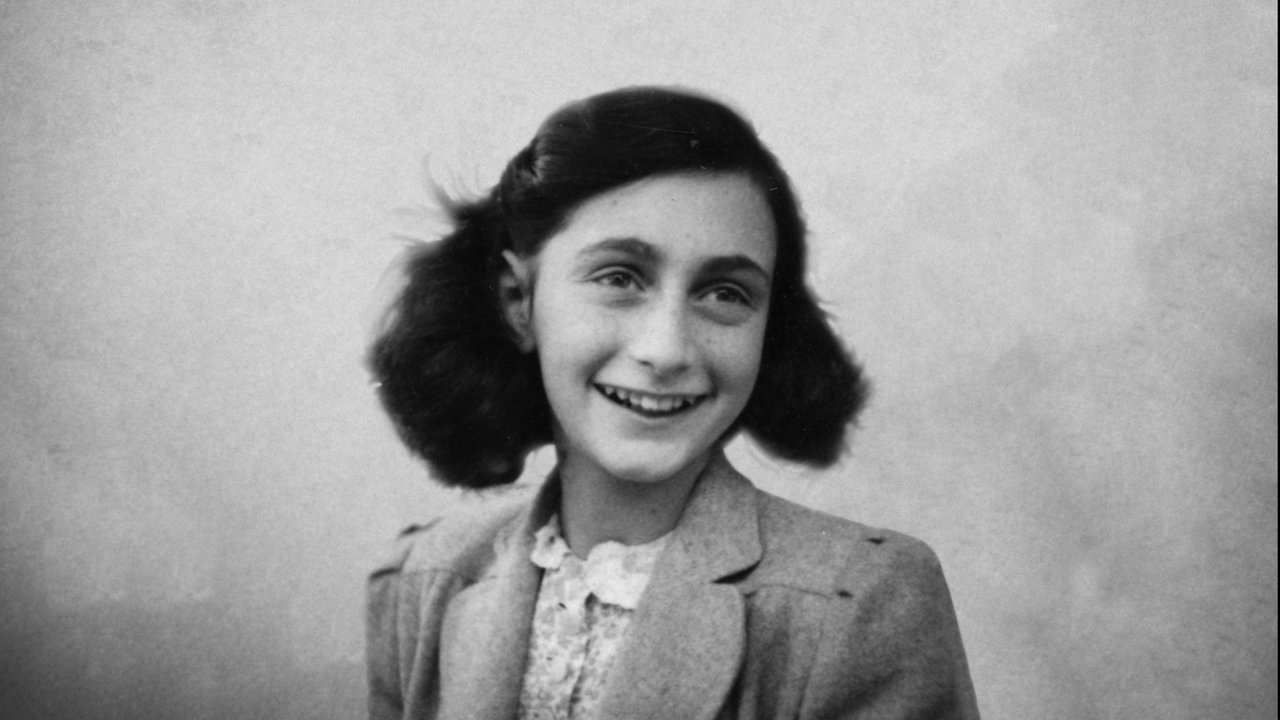
Anne’s sweet, smiling face and cheerful storytelling are apparent when you read one of her most famous quotes: “I still believe that people are really good at heart.” I don’t agree, especially when racial genocide continues unabated today. We haven’t learned the lessons of the past, or we have certainly forgotten them. Wiesel wrote, "Never shall I forget that smoke. Never shall I forget the small faces of the children whose bodies I saw transformed into smoke under a silent sky.”
But we are grateful to Anne Frank and this exhibit for commemorating her courage in finding a way to turn her smoke into a fire of witness that still burns bright.
The Anne Frank Exhibition continues through early 2027 at the Museum of Science and Industry, 5700 S. DuSable Lake Shore Drive. The exhibit is recommended for ages 10 and up, and usually takes about one hour to complete.
General admission is $26.95 and $14.95 for under 12. City of Chicago residents receive a discount on general admission: $9 off for adults and $5 off for children (ages 3-11). In addition, Anne Frank exhibit tickets are $19 for adults and $15 for kids. Free general admission is available every day for the military, teachers, first responders, and Chicago kids under 18. Free admission for Illinois residents is available on certain days. Free museum passes are also available with a Chicago Public Library card.
Support arts and culture journalism today. This work doesn't happen without your support. Contribute today and ensure we can continue to share the latest reviews, essays, and previews of the most anticipated arts and culture events across the city.
