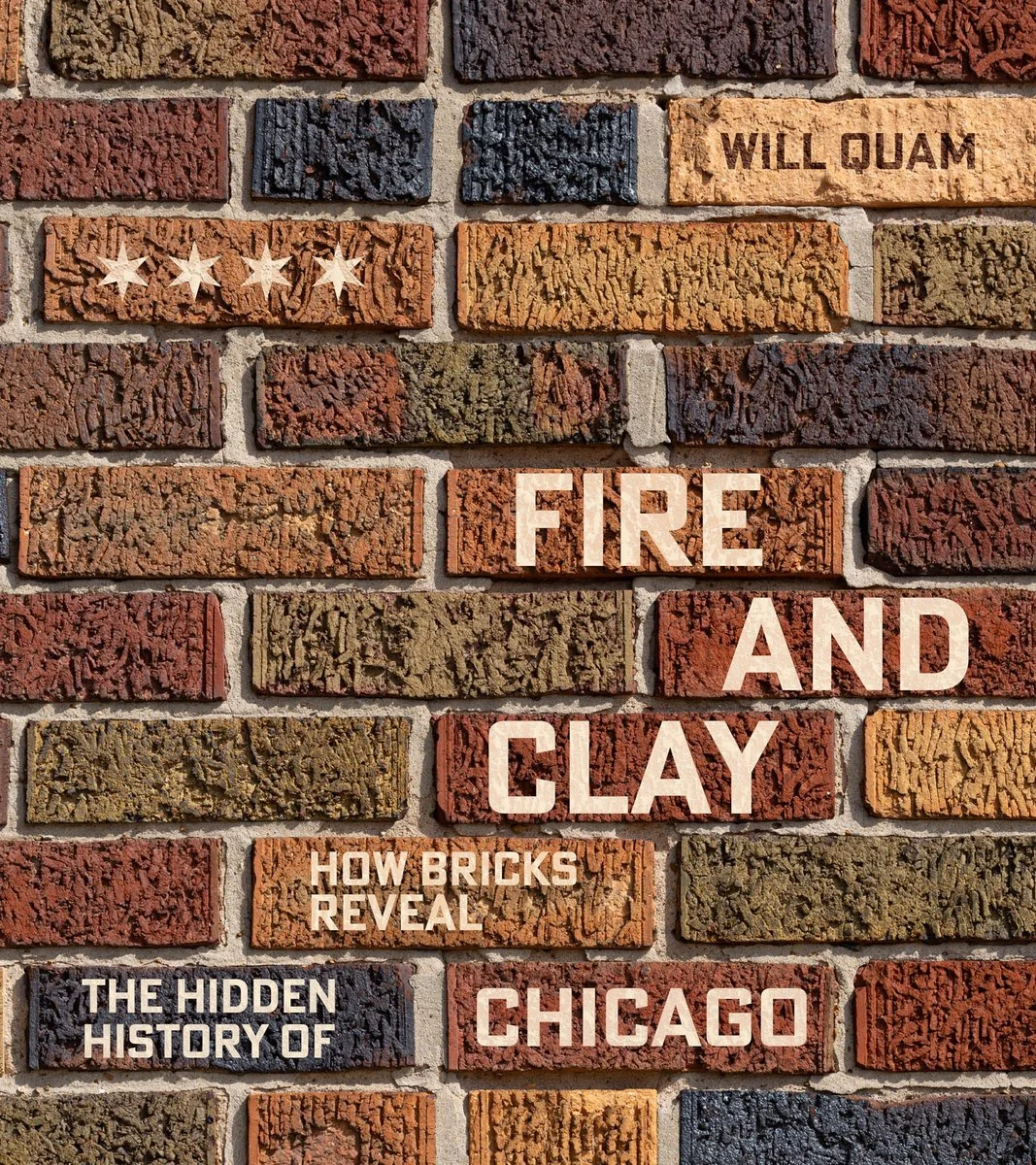
Brick expert Will Quam shared his love and knowledge of the clay rectangles on lsat weekend as part of the spring 2026 Chicago Humanities Festival. The author of Fire and Clay: How Bricks Reveal the Hidden History of Chicago (reviewed here) gave two midday walking tours around Lakeview, then presented an afternoon lecture at the Athenaeum, the historic arts venue located next door to three former giant brick pits (Lane Tech High School, nearby at Western and Addison, was also built over a decommissioned clay pit).
Especially after the Great Fire of 1871, Chicago built new buildings made of more fire-resistant and porous brick, which are still seen throughout the city today. There are common bricks, rougher and containing more non-clay material like rocks and rubble with non-standard coloring, as well as perfect bricks, which are more uniform in color and composition. Many area buildings are like a brick mullet: business in the front, with perfect bricks on the face of the building to impress, with a party of common bricks comprising the sides and back. The Chicago Fire Academy is an example of these massive brick structures, which was built on the site of Mrs. O’Leary’s barn at Taylor and Jefferson.
Chicago architecture also utilizes Indiana greystone, especially around campuses like the University of Chicago and Northwestern, but that stone can be heavy and dense (yet easier to carve than marble and with no crystals inside like granite), so it’s primarily used for windowsills and lintels. Yet brick remains the affordable favorite, made by grinding clay into a fine substance, which is then pressed into rectangles using a hydraulic press. If there’s more iron content in the clay, then those bricks have a smoother, more ceramic-like finish as opposed to the rougher, basic types.
By 1916, the Chicago area produced the most bricks in the country at over one billion, but bricks were also imported from Milwaukee, St. Louis and elsewhere. Nearby Park Ridge was even called Brickton in 1857. The average cost was about $10 for 1,000 common bricks (the labor is more expensive), and Quam estimated that 50,000-90,000 bricks are used for one Chicago bungalow. Pavers were larger interconnected bricks used for pathways. Most bricks were extruded, when prepared clay is pushed through a die to produce a continuous column that is then cut into the uniform shape. Some are augmented with brushes for texture. Illinois stopped making bricks in 2012.
On a sunny spring afternoon, Quam walked an enthusiastic entourage around the Lincoln, Wellington and Southport quadrant to showcase other brick buildings near the Athenaeum and St. Alphonsus Church, which was built in 1889 by German immigrants. Some of the asphalt shingles in the area, also created in the late 1800s, were made to look like brick too.
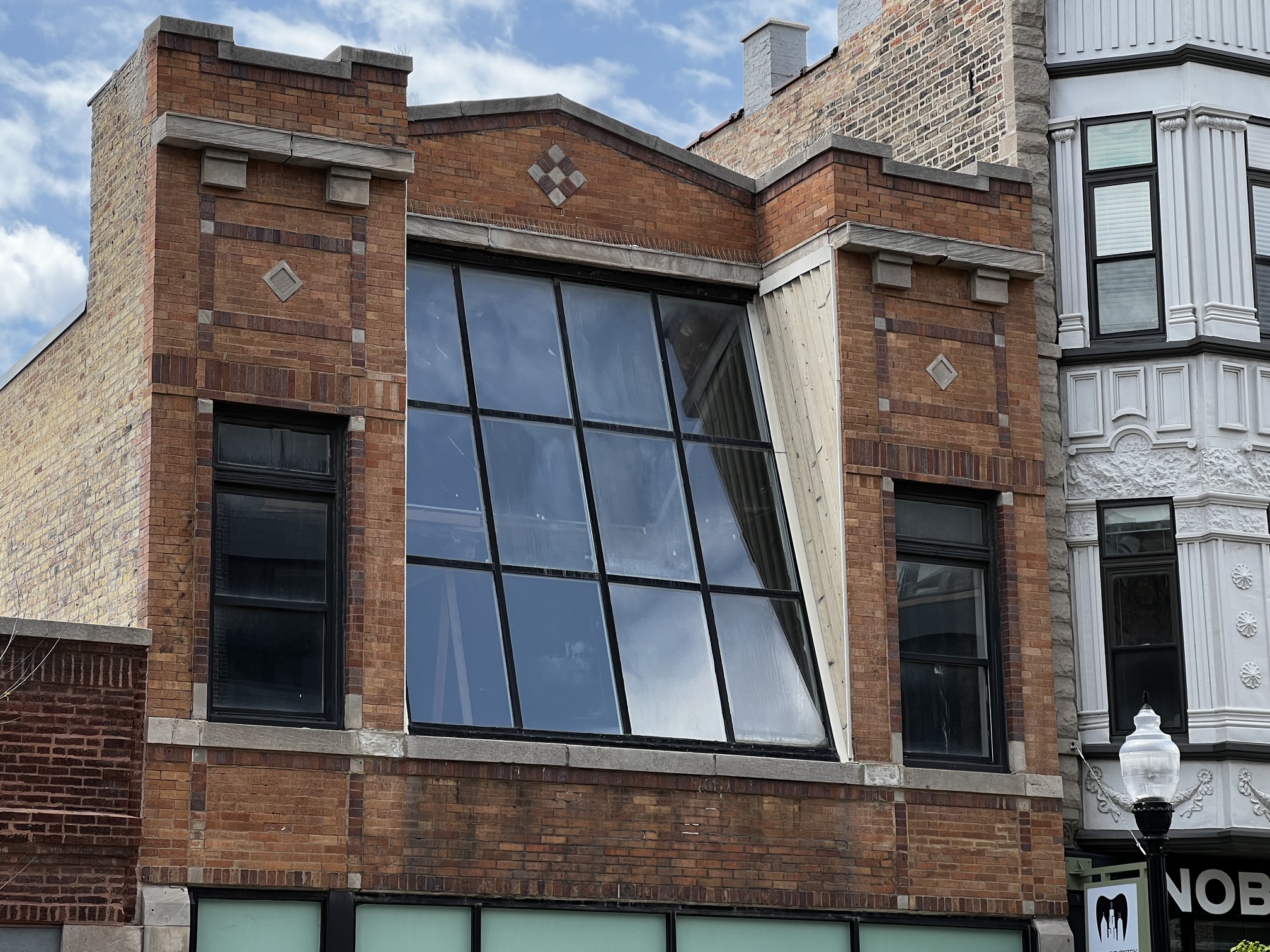
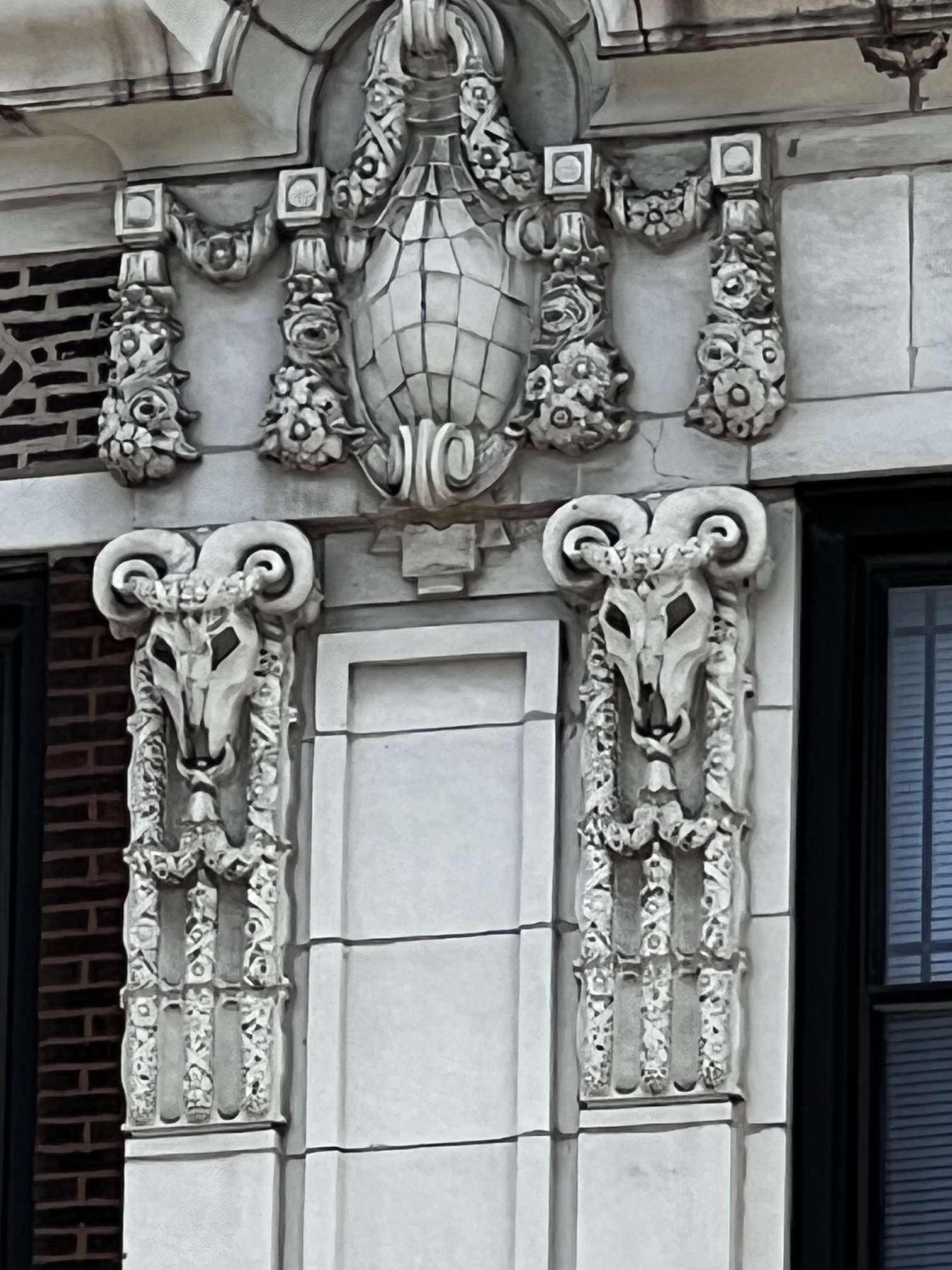
First stop was a former photography studio built in 1916 at 3048 North Lincoln, where the brick was used to frame a large, angled window, used to bring light inside before electricity. Quam also discussed terracotta clay, the reddish-brown, iron-rich, low-fire material that was used to sculpt intricate designs and work in tandem with bricks since the designs could be easily copied and integrated, like at Wrigley Field, the Merz Apothecary Building in Lincoln Square, and the Jewelers Building at 35 East Wacker. Sometimes the terracotta is speckled with glaze to look like granite or even something volcanic, and architect Frank Lloyd Wright was known to prefer these iron-spotted bricks, according to Quam.
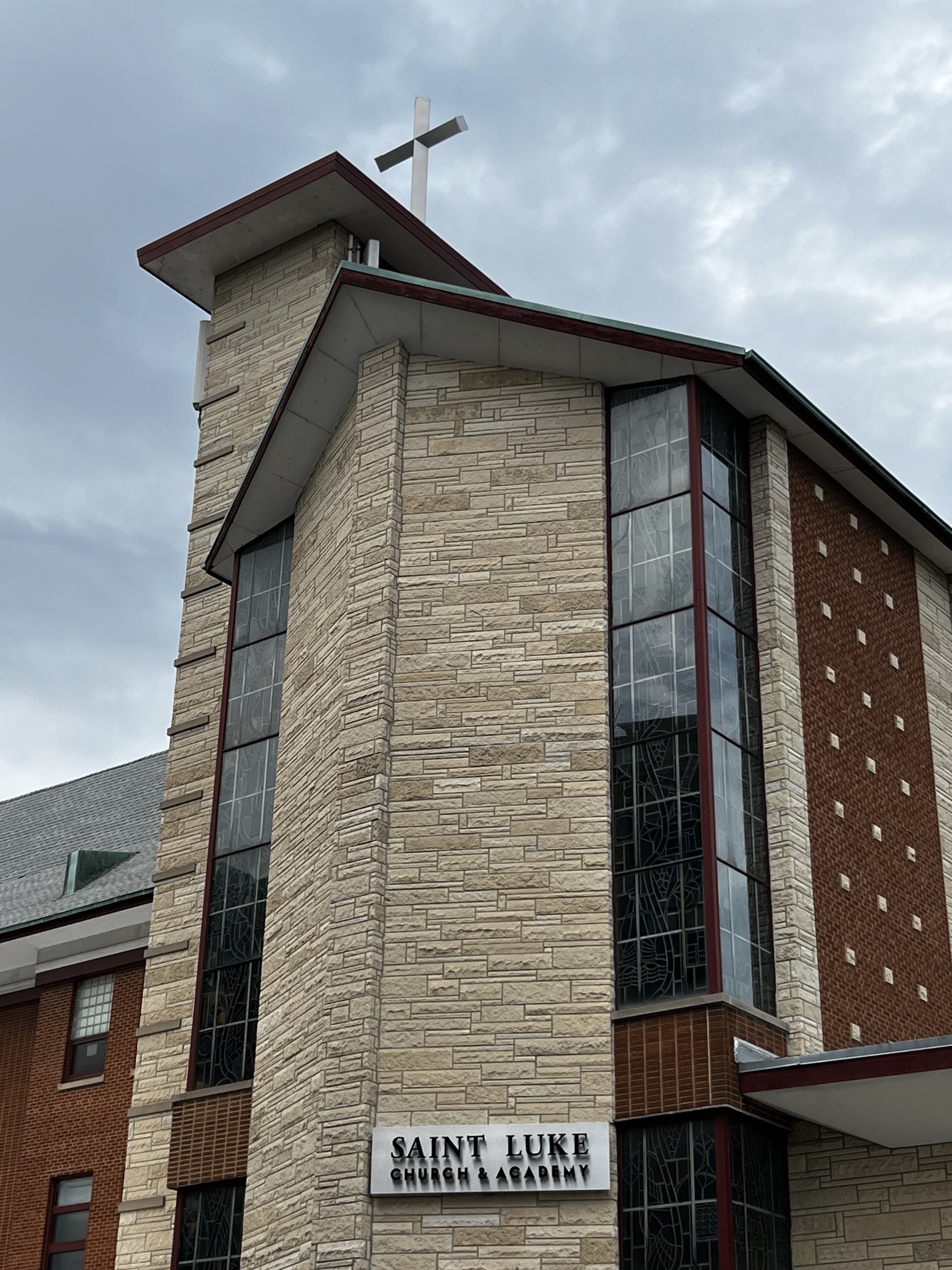
We also paused in front of 1959’s Evangelical Church of St. Luke at Belmont and Greenview. It’s imposing edifice was primarily built from lannon stone. Quam talked about trends in brick sizes and colors, since some current condo buildings seem to favor black brick, but all colors and shapes can be found in Chicago structures, from peach to yellow, straight to curved. “Red brick is a better neighbor than black brick,” said Quam. Architects and designers can use the wide varieties of brick like tree bark, tapestries or fabric, appearing “pleated and sewn,” such as Studio Gang’s Brick Weave House in West Town. The Glendale Heights Post Office was designed by Carol Ross Barney in the 1980s to resemble a waving American flag using red, buff and blue bricks.
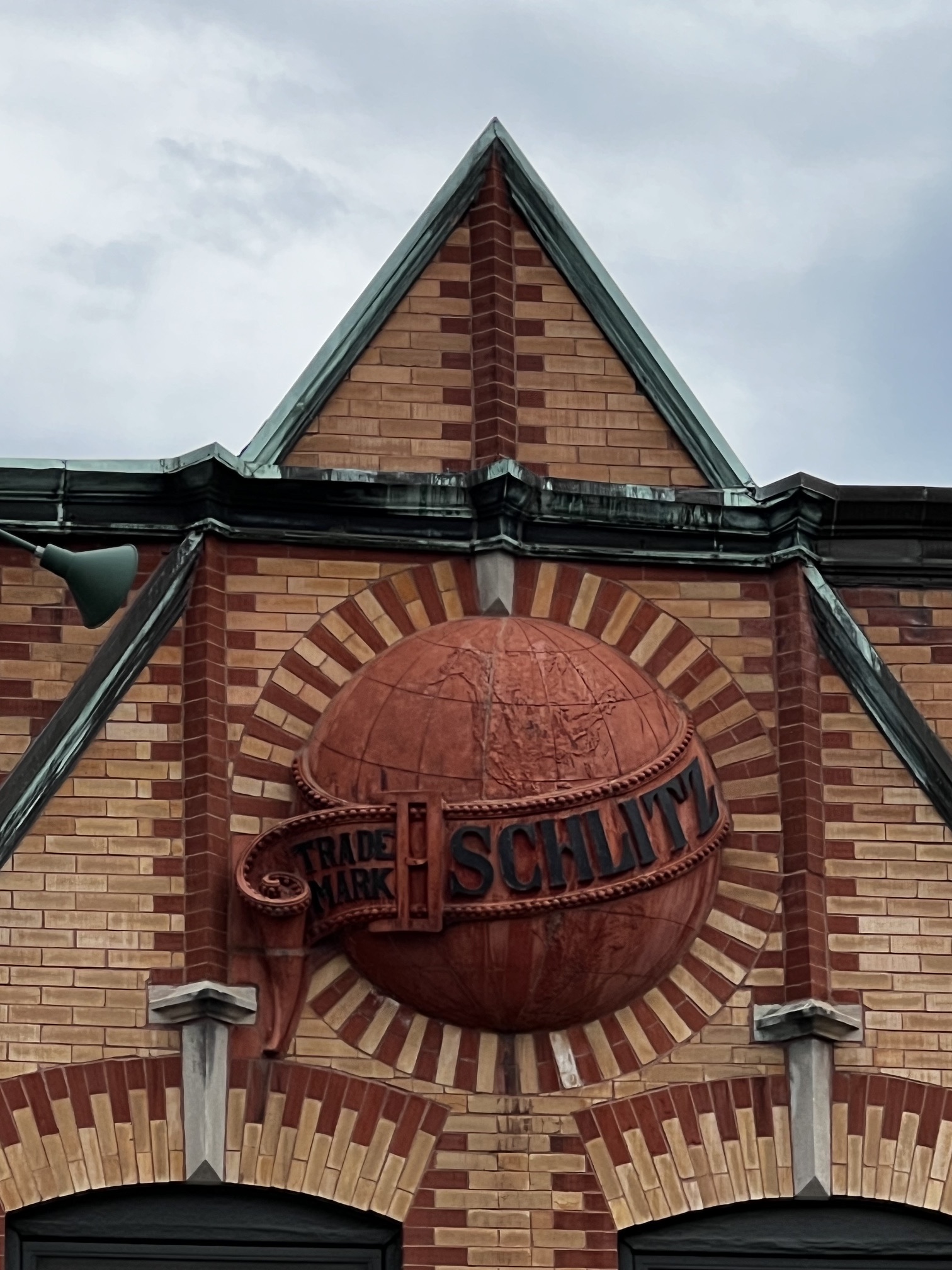
At the corner of Belmont and Southport, we saw Schubas Tavern, built in 1903 by the Schlitz Brewing Company as a “tied house,” a brewery-owned saloon selling the company’s beverages exclusively, still one of the best-preserved examples in the country. The blend of red and yellow brick is detailed, vibrant and engaging branding.
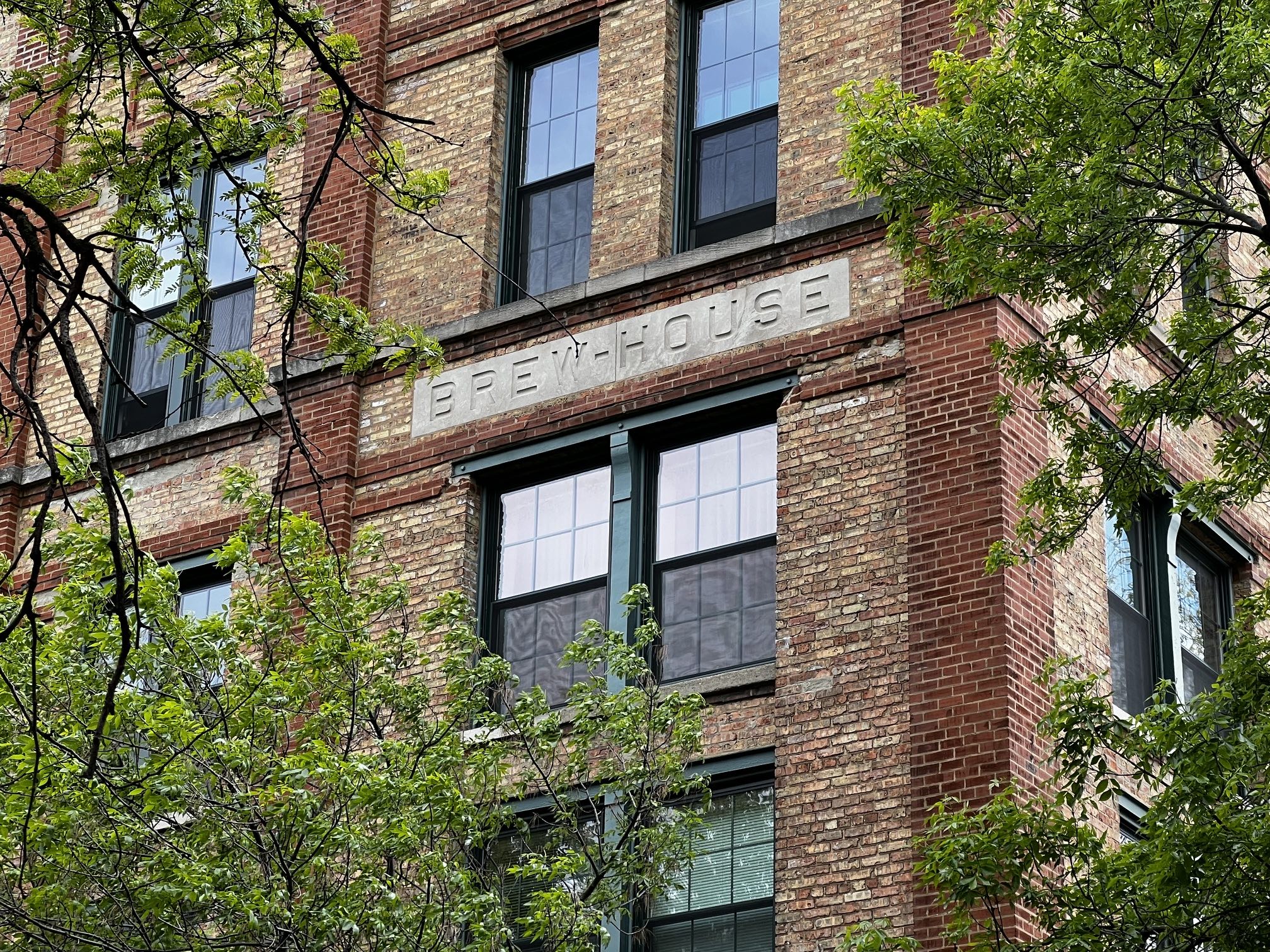
The Brewery Loft building at 1301 W. Fletcher was built in 1888 by the Best Brewing Company, which survived prohibition by selling ice and malt syrup that home brewers could use to make bootleg booze. It was also one of the first companies to sell beer in cans. The building was converted to apartments in 2007, but the brick sign remains.
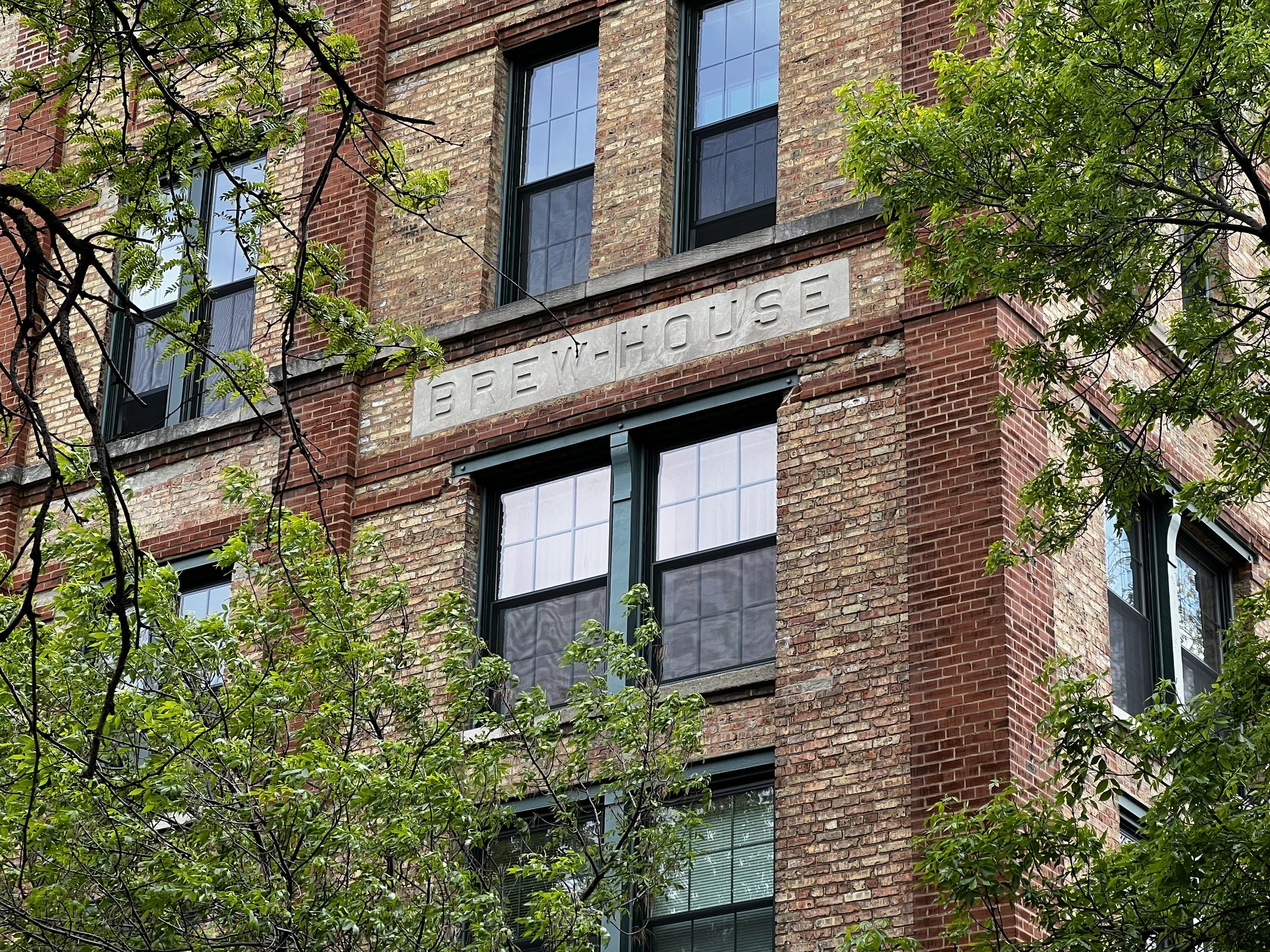
Post World War 2, concrete blocks became more popular building materials, since each one replaced seven bricks. But Quam’s mission statement is that brick is staunchly anti-machine and pro-people, requiring human hands to create, design and build. He’s a brick collector himself, and encourages folks to research their own finds at the International Brick Collectors’ Association website, as well as support artists who use bricks, like Theaster Gates, Mara Smith, and Maria Gasparian.
Every weekend, Quam offers brick tours of several Chicagoland neighborhoods, including Albany Park, Bronzeville, Beverly, Uptown, Old Town, Logan Square, Noble Square, Hyde Park, McKinley Park, Rogers Park, Wicker Park, Oak Park and Austin. The Chicago Humanities Festival will offer Northwestern University Day on Sunday, May 17, as well as events in June.
Did you enjoy this post? Please consider supporting Third Coast Review’s arts and culture coverage by making a donation. Choose the amount that works best for you, and know how much we appreciate your support!
