
I drove down Cuyler Avenue the other day, and, as usual, I was reminded of Kiki Cuyler who played outfield for the Cubs from 1928 through 1935 during a 19-year Hall of Fame career.
He was way before my time. However, when I was a kid in the 1950s, there was a line of baseball cards of great players from the past, and I had his card. And who doesn’t love the idea of a ballplayer called Kiki (pronounced ki-ki, rhyming with ki-ler)?
Alas, Cuyler Avenue—which runs east-west for about seven miles, a block north of Irving Park Road—isn’t named for Kiki. It honors Edward J. Cuyler who came to Chicago in 1855 to work as a paymaster for the Chicago & North Western Railroad.
That’s according to the bible of Chicago streets, Streetwise Chicago: A History of Chicago Street Names by Don Hayner and Tom McNamee, published in 1988 by Loyola University Press. Hayner later rose to be editor-in-chief at the Sun-Times and McNamee became the editorial page editor. I’ve used that book often throughout a long career as a Chicago news reporter as well as in essays, freelance articles and a book I wrote about the elevated Loop.
And, because of it, I am well aware of the sad fact that, with one embarrassing exception, there is no street in Chicago that is named for someone who played for the White Sox or the Cubs.
This is particularly melancholy to consider at this time of year when the baseball season is just getting under way.
The sad fact is that, with one embarrassing exception, there is no street in Chicago that is named for someone who played for the White Sox or the Cubs.
Take, for example, Hack Wilson who was the Cubs centerfielder from 1926 through 1931 during a Hall of Fame career, hitting .322 for the team and smacking an average of more than 30 home runs a year.
Ten-mile-long Wilson Avenue, however, isn’t named for Hack, but for John P. Wilson, the guy who drafted the laws under which the Sanitary District of Chicago, now called the Metropolitan Reclamation District, was established and also helped found Children’s Memorial Hospital, now Lurie Children's Hospital.
Or consider Wilbur Wood who had a massive career as a White Sox pitcher from 1967 through 1978, winning 163 games. It would be a happy thing if Wood Street, which runs north-south for about ten miles, a little bit west of Ashland Avenue, were named for him — but it’s not. Hayner and McNamee report that it commemorates a real estate developer named Alonzo Wood.
In fact, many Chicago streets are named for real estate developers and their wives and children because those entrepreneurs were the ones who did the street-naming. (One delicious twist to this: When Reuben Taylor drew up his property plat, he named the little street at 1700 West for his wife Paulina, but the main thoroughfare at 1600 he called Reuben Street. Later, the city changed his street to Ashland Avenue, but Paulina Street continues to recall his wife.)
When it comes to baseball-sounding names, there are any number of examples, such as Thome Avenue which runs east-west for three miles a bit south of Devon Avenue. It commemorates G.H. Thome, a real estate developer in the Edgewater neighborhood, not the White Sox Hall of Fame first baseman Jim Thome. And, to add insult to injury, it’s pronounced as a one-syllable word rhyming with “home,” rather than the ballplayer’s “to-may.”
And Taylor Street is not named for second baseman Tony Taylor and catcher Sammy Taylor, two members of the Cubs when I was a kid, but recognizes instead U.S. President Zachary Taylor who served only 15 months before dying in 1850.
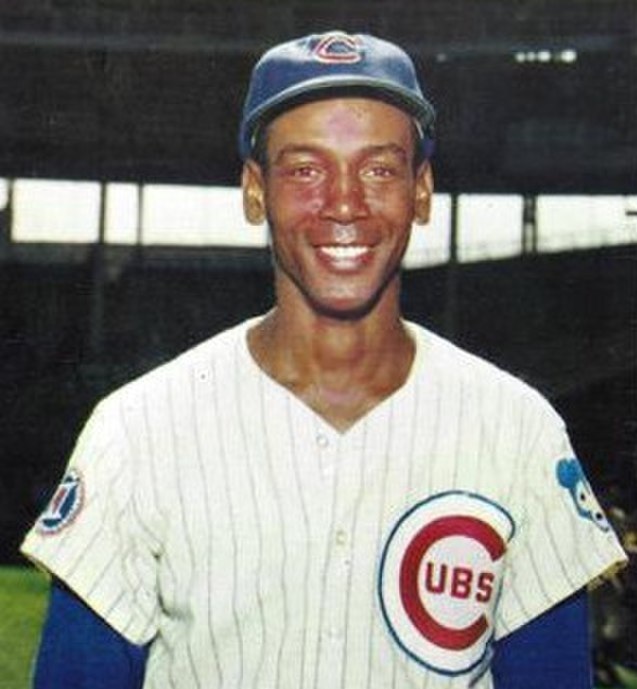
And Hall-of-Famer Ernie Banks, Tony Taylor’s double play partner? Yes, there is a Banks Street that runs for just two blocks, a little north of Division Street. But it’s named for Union General Nathaniel Banks from the Civil War, not Mr. Cub.
The Hayner-McNamee book details the names of hundreds of other streets, and the melancholy reality is that Dawson Avenue isn’t named for Cubs right fielder Andre Dawson, and McDowell Avenue and Pierce Avenue aren’t for White Sox pitchers Jack McDowell and Billy Pierce.
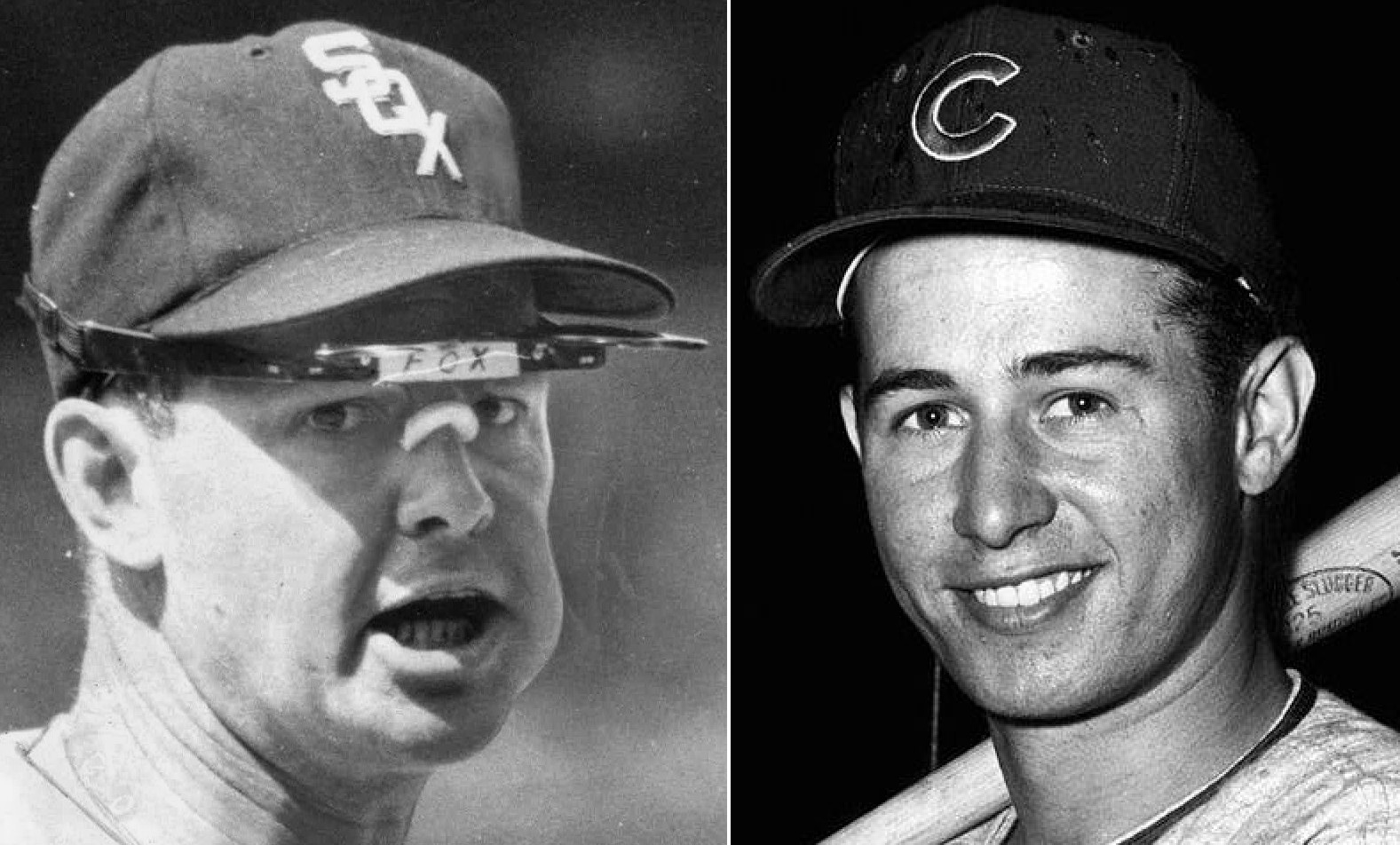
There’s no Nellie Fox Street or any street called Fox. But maybe some savvy Chicago pol might do something about that on the South Side. Or, on the North Side, how about a Ron Santo Avenue?
And, if there’s a need to find a street that would benefit from a name change, look no farther than Anson Place which extends just a single block on the West Side between Leavitt Street and Oakley Boulevard.
It’s named for Adrian “Cap” Anson who played 22 years (1876-1897) for the Chicago White Stockings, which later changed its name to the Chicago Cubs, with a lifetime average of .334, and served as manager for most of that time.
It was a sterling career, and Anson is in the Hall of Fame, but he’s infamous for playing a key role in racially segregating the major leagues until that color barrier was broken in 1947 by Jackie Robinson.
That’s a baseball street name that Chicago could certainly do without.
Streetwise Chicago: A History of Chicago Street Names is available from some online booksellers and used booksellers.
Support arts and culture journalism today. This work doesn't happen without your support. Contribute today and ensure we can continue to share the latest reviews, essays, and previews of the most anticipated arts and culture events across the city.
