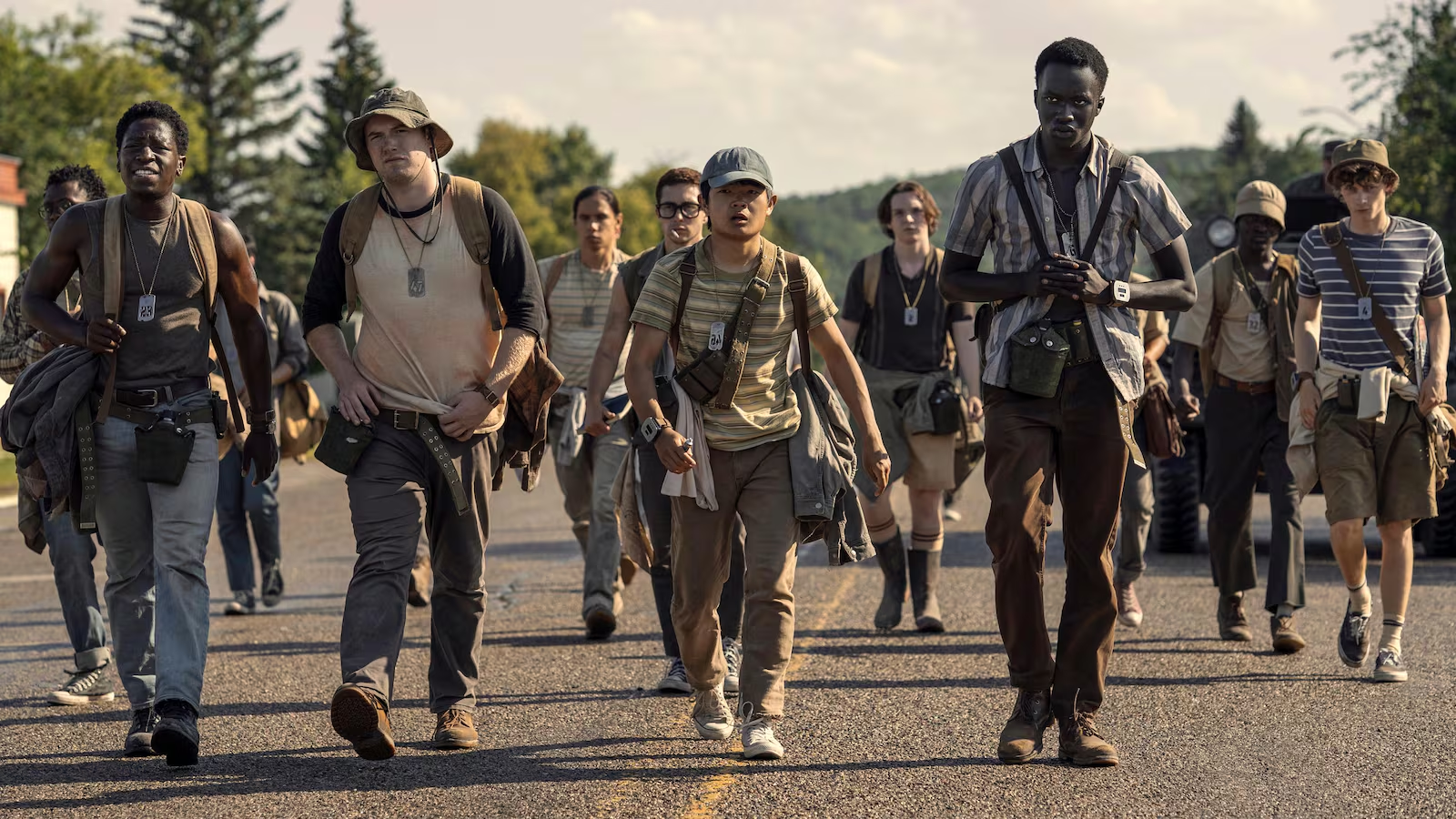

People paying any kind of attention to pop culture over the last 50 years know there are two different Stephen King stories: the purely narrative/non-horror tales that still may contain scary elements (Stand By Me, The Shawshank Redemption, The Green Mile, even the recent The Life of Chuck) and the material he’s better known for with the creepy clowns and monsters and vampires and shinings and other psychic bits.
The Long Walk mostly falls into the former category, but it also certainly doesn’t shy away from the horrible aspects of its story, set in the near future or recent past in which a modern U.S. civil war has destroyed the very fabric of society and government One of the ways that the powers that be have decided to restore America’s commitment to hard work and perseverance is a 50-man walking contest with no finish line.
The contest only seems to accept young male volunteers (although none of the contestants we meet knows anyone that didn’t sign up), and the objective is simple: walk until only one man is standing. If you walk too slow or too far off the designated road, you get a series of three warnings that end with you getting shot in the head (quite graphically).
In a strange way, this is a road-trip movie, with 50 characters who are strangers to us and each other, who get to know each other as they walk and talk. At first they converse for information about each other, but later they talk just keep each other awake. A few become friends, others antagonists, and as we get to know each player, we can start to assign them a personality. Most of them root for each other, but in the end, they are competing against one another for a large cash prize and one wish that must be granted (this wish seems superfluous since the money should get you just about anything you want).
Perhaps in a more substantial way, The Long Walk is an antiwar film or an anti-authoritarian exercise—a cautionary tale about what happens to the fabric of civilization when we don’t find a way to get along and mend fences as a nation. Director Francis Lawrence has dabbled in this world before in more colorful works like I Am Legend and most of the Hunger Games movies, including the prequel, The Ballad of Songbirds & Snakes. This time around, he’s taken a much more grounded-in-reality approach to his subject. After hours of trudging, people are throwing up, going to the bathroom in the middle of the road, even falling asleep as they walk, which might be the scariest thing imaginable because of the crazy dreams they have.
From a screenplay by JT Mollner, our eyes and ears through most of the journey is Raymond Garraty (Cooper Hoffman), given the number 47 (the walkers are only referred to by number as automated warnings are assigned). Garraty is the only character we see in times leading up to the walk commencing. He lives with his mother (Judy Greer); his father (Josh Hamilton) was abducted and eventually killed by the military for having subversive books in his home. Garraty becomes hesitant friends with Peter McVries (#23, David Jonsson, Alien: Romulus), and the two push each other through this intense and emotional journey.
Other among the group are Hank Olson (#46, Ben Wang), the resident comic relief; Stebbins (#38, Garrett Wareing), perhaps the most in-shape of the bunch; Curley (#7, Roman Griffin Davis, Jojo Rabbit); Gary Barkovitch (#5, Charlie Plummer), the self-designated asshole who pushes everybody’s buttons; and Collie Parker (#48, Joshua Odjick), an indigenous participant. But the only true villain in the piece is The Major (Mark Hamill), who not only runs the Long Walk but pops in along the route from time to time to deliver words of encouragement—more for the benefit of the televised audience than the contestants. There was a time when I might have said Hamill was playing this character too broadly or too villainously, but today, he seems to be playing it just about right for the times.
Director Lawrence does an impressive job conveying the various levels of exhaustion combined with the mental toll the entire endeavor has on the walkers, whose herd thins considerably after the first 24 hours. The film manages to find multiples places where tension builds, even though all we’re watching is people putting one foot in front of the other. In the end, the endeavor is exhilarating and enraging. I’m now doubly curious about Edgar Wright’s upcoming Running Man film, since it’s also taken from the same collection of novellas as the The Long Walk (The Bachman Books) and contains the same youthful outrage that King possessed when he wrote both.
The film is now playing in theaters.
If you enjoyed this post, please consider supporting Third Coast Review’s arts and culture coverage by making a donation. Choose the amount that works best for you, and know it goes directly to support our writers and contributors.
