

It´s easy to understand why one might be hesitant about watching Truth & Treason. It deals with too many hot-button issues, and could easily come across as preachy or politically motivated. But the movie is surprising. Somehow, it navigates issues that are so divisive in our current social climate—nationalism, free speech, and the role of religion—to tell the amazing true story of Helmuth Hübener.
Hübener was the youngest person sentenced to death by the Nazis at age 17. His crime? High treason. Hübener listened to foreign broadcasts, then created and posted anti-Nazi leaflets around his hometown of Hamburg, Germany. This subversive act brought on the wrath of the Nazis. Even though it sometimes leans on familiar tropes and sentimentality, Truth & Treason ultimately delivers on its weighty title.
The film was directed by Matt Whitaker, who co-wrote the script with Ethan Vincent. Whitaker also directed a 2002 documentary about Hübener’s life called Truth & Conviction. Whitaker has intimate knowledge of the story, and is well-poised to turn the facts into a compelling narrative.
The movie tells the true story of Helmuth Hübener, a 16-year-old boy living in Hamburg, Germany, at the beginning of World War II. Aside from being a gifted writer and a devout Mormon, Helmuth is a normal boy. He likes to ride bikes with his friends, listen to music, and dance. While Helmuth is a proud and patriotic German, he has a growing sense that the Nazi regime is at odds with his religious faith. After his older brother acquires an illegal foreign radio, Helmuth realizes that much of what his own government is telling him is lies and propaganda. After one of his Jewish friends (who was passing as Mormon) is banned from coming to church services and eventually taken to Auschwitz, Helmuth becomes committed to sharing the truth he’s learned.
Helmuth and his friends stay up all night listening to foreign broadcasts and writing down what’s really happening in the War. He shares uplifting messages from England. He tells of Nazi war crimes. He distributes the truth of what’s happening on over 60 leaflets, sharing them all over Hamburg. Eventually, Helmuth and his friends are caught, taken to the highest court of Nazi Germany and tried for high treason. Helmuth maintains that all he did was tell the truth.
It's striking how fresh and new this story feels. The moral courage shown by Helmuth and his friends seems so relevant to our current political climate. Our post-modern culture clashes with Helmuth’s confession: “I was just telling the truth,” in a good way; a way that makes you think.
Truth & Treason is a product of Angel Studios, known for its faith-based projects, like The Sound of Freedom and The Chosen. The film clearly has a pro-faith perspective, but doesn't shy away from the ways religion was used by many as a reason to side with the Nazis, rather than fight against them.
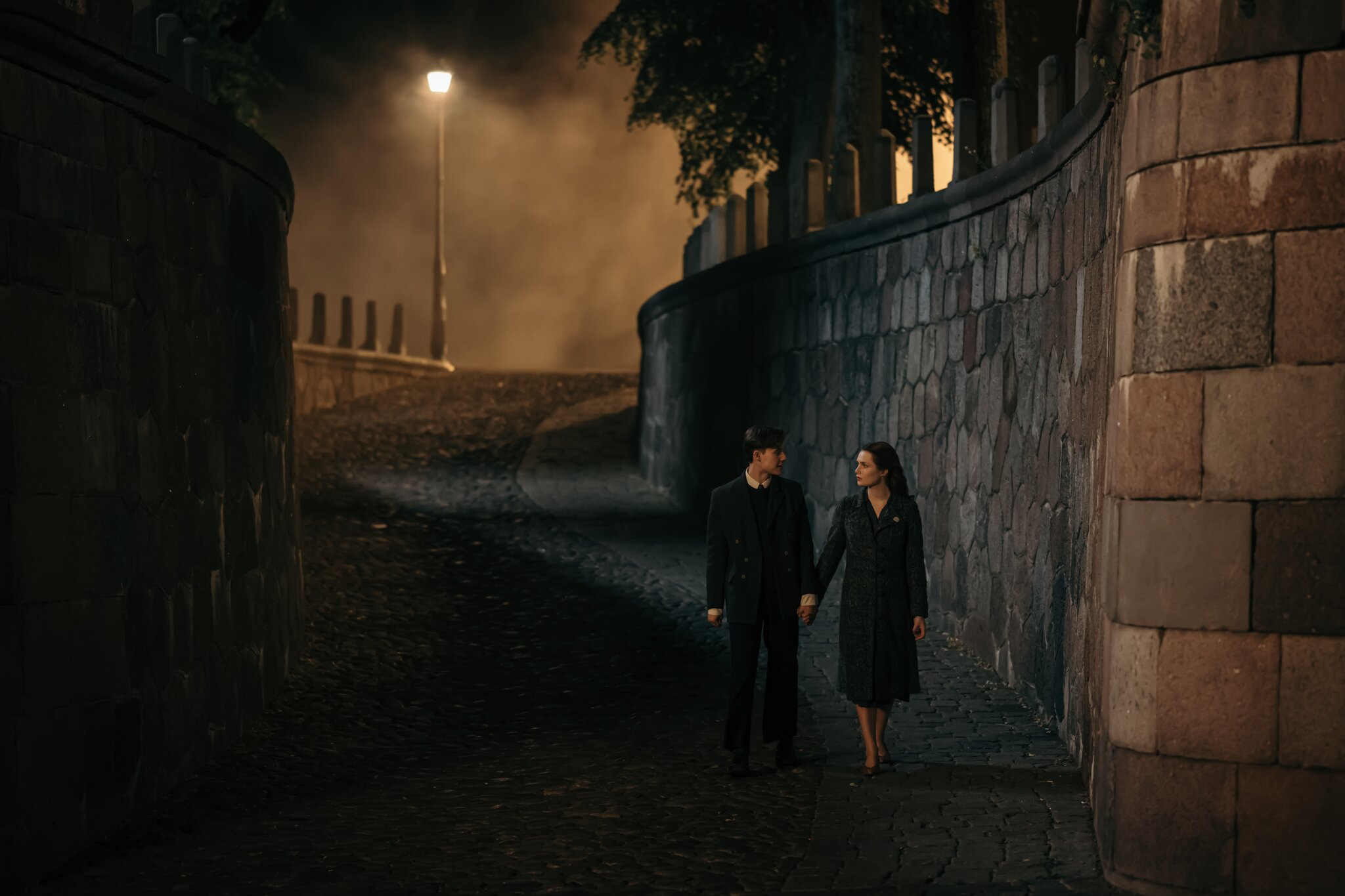
The film also tackles ideas of nationalism and free speech. In general, the movie does a good job of inviting dialogue on these issues, rather than being prescriptive or bluntly pushing forth an ideology.
And while the movie’s conclusion unequivocally is that Helmuth is a hero for his efforts, and the Nazi regime is wrong for its lies, coercion, and murder, there is a surprising amount of space given to the rationale of the Nazis and those who were complicit in their mission. Many people acted out of fear or misguided patriotism. This gives texture to Helmuth’s story and helps us understand both his adversaries and the inner conflict some of his allies faced.
One of the most surprising elements of this film is how suspenseful and visceral it is to watch. There are times you will literally hold your breath in fear. We see Helmuth and his friends subjected to intense physical pain several times. This doesn't feel normal for a faith-based film about a boy who has the courage to do what is right.
And while the juxtaposition of the intensity and violence with Helmuth's boyish pursuits—swimming, dancing, kissing girls—may seem odd, it's true to his story. Making this contrast seems key to Whitaker's vision. It is both true that Nazi Germany was violent and scary and that Helmuth Hübener was just a boy.
While the cast is not particularly strong, the two main roles are embodied effectively. Helmuth is played by relative newcomer Ewan Horrocks (Dominia, The Last Kingdom). Horrocks captures Helmuth's sincerity and vitality. Rupert Evans (Hellboy) also gives a stand-out performance as Erwin Mussener, the conflicted German officer investigating Helmuth for his crimes.The two actors work especially well together as foils, where Mussener's doubts only serve to highlight Helmuth's resolve.
Overall, the film´s emotional sincerity, bold take on issues relevant to the modern discourse, and foundation as a true story make it worth your time, especially if you can leave space for a bit of moralizing. Helmuth's story is in good hands with director Matt Whitaker, who is unafraid to tell the truth as he sees it.
Truth & Treason is now playing in theaters.
If you enjoyed this post, please consider supporting Third Coast Review’s arts and culture coverage by making a donation. Choose the amount that works best for you, and know it goes directly to support our writers and contributors.
