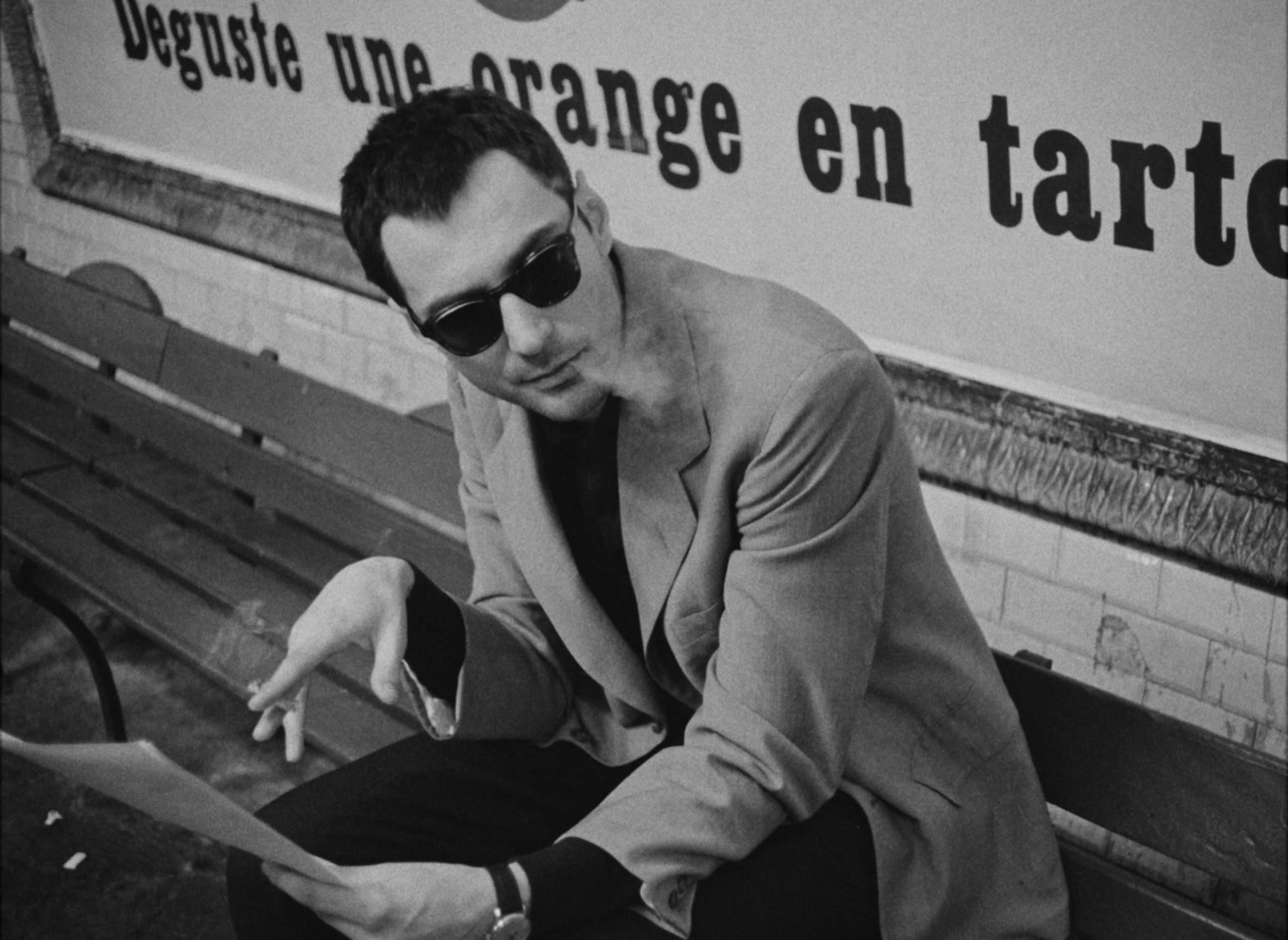

If one takes a passing glance at Richard Linklater’s filmography, helming a black-and-white, mostly-in-French retelling of the making of Jean-Luc Godard’s seminal French New Wave classic Breathless might seem a bit out of character. The Dazed and Confused guy? Really?
Yes, really. Because, of course, upon closer inspection, the case could be made that more than any other genre, Linklater has been influenced by and emulated the mid-century French movement defined by naturalism in dialogue and filming driven by narratives where nothing more happens than the passing of time as we observe the interplay of various relationships. The Before trilogy, anyone?
With Nouvelle Vague, Linklater (and the four (!) people the screenplay is attributed to, Holly Gent, Vincent Palmo Jr., Michèle Halberstadt and Laetitia Masson) pays beautiful and moving homage to one of cinema’s greatest and the film that defined him, a generation and, it could be argued, the art form itself. Emerging from the deeply talented roster of writers and filmmakers publishing Cahiers du Cinema in Paris (though only momentarily, we do see the likes of Rohmer, Varda, Rivette and more…my little cinephile heart skipped a beat!), Godard wasn’t yet 30 years old when he convinced Georges de Beauregard to finance his idea for a film about a small-time crook on the run, falling fast for a young American journalist.
The film was to be shot entirely on location on the streets of Paris and without much of anything resembling a script, let alone a shooting schedule or budget. What Godard had was a vision, and though he often struggled to express that to his collaborators, in the process he pioneered a new way to make films where authenticity and the human experience take center stage.
In Nouvelle Vague, Godard is played by Guillaume Marbeck, a relative newcomer and an absolute revelation as a young man who is at once the most confident person in the room and the most insecure. He casts unknown boxer Jean-Paul Belmondo (Aubry Dullin) as his leading man, but de Beauregard (Bruno Dreyfürst) insists he casts starlet Jean Seberg (Zoey Deutch) as the love interest to give the film a fighting chance at the box office. Deutch as Seberg is a remarkable and worthy sparring partner for Godard, juggling her own career ambitions and creative impulses alongside a new marriage and her own fledgling French skills.
Linklater has a unique and wonderful ability to infuse his films with a sense of reverie and genuine love for the craft; his appreciation for the art of filmmaking, the joy in collaboration and the beautiful alchemy of talent each craftsperson brings to the table is evident in every frame, and Nouvelle Vague is no exception. Like Godard, Linklater (working with French cinematographer David Chambille) shoots the film as a sort of as-it-happens experience, putting his audience right next to the filmmaker through it all.
Though not a documentary, the film has a deeply historical feel to it, not just because of its mid-century setting but because it evokes a sense of watching cinema history unfold on screen. We are getting a peek into a process that changed lives (Belmondo went on to become a bona fide star in his own right), changed an industry (forever altering the way we understand films can be made), and—it’s not an overstatement to say—changed cinema as an art form. Whether you’re familiar with the French New Wave style of filmmaking or not (and I admit, I deeply am—the last time I was in Paris I made sure to visit Agnes Varda’s grave), Nouvelle Vague offers an endearing chronicle of a significant moment in moviemaking lore bolstered by an impressive central performance not to be missed.
Nouvelle Vague opens in theaters on October 31; the film begins streaming on Netflix on November 14.
If you enjoyed this post, please consider supporting Third Coast Review’s arts and culture coverage by making a donation. Choose the amount that works best for you, and know it goes directly to support our writers and contributors.
