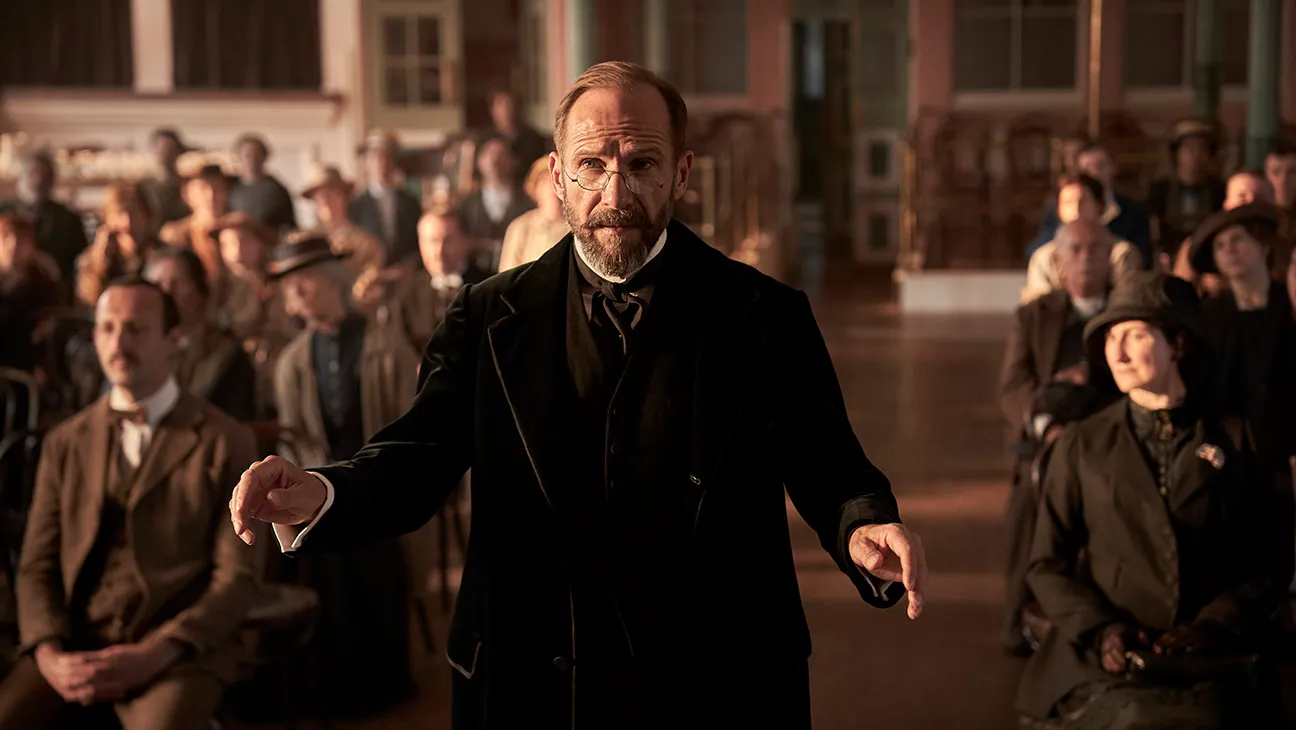

Ralph Fiennes is an actor who, when mentioned in a film's top billing, all but assures I will see said film. His credits and accolades date back so far and are so numbered that his Wikipedia page doesn't even name them all; instead, it links out to separate pages just to catalog them all. Thrice nominated for an Academy Award (but yet to win), Fiennes is a reliably impressive performance wherever he shows up on screen; last year's Conclave was no exception, but the list goes on and on, from Schindler's List and The English Patient, of course, to embodying evil as Voldemort in the Harry Potter films, work with Wes Anderson and the Coen brothers, and so, so much more.
So when I found myself with a ticket to the World Premiere of The Choral at the Toronto International Film Festival last September, I was interested to see Fiennes in his latest role as a choir director rallying a small church choir to present their annual work during the depths of World War I. The film sees writer Alan Bennett re-team with frequent collaborator Nicholas Hytner at the helm, and overall becomes a worthy period drama all about British resolve, duty and integrity. It’s obvious the filmmakers are going for something more rousing than the film ever actually achieves, but what it lacks in oomph it more than makes up in strong performances and a genuine sense of community.
Fiennes is Henry Guthrie, a no-nonsense choral director and musician who makes no apologies for his recent time spent in Germany or his unspoken but still known homosexuality. He’s recruited by the board of the Ramsden church choir, a pastoral town in Yorkshire with the northern accents to prove it, when their director is conscripted to the army for the war effort. No one is terribly pleased with this decision, including Guthrie, but he’s got a job to do so he sets about holding auditions and bolstering the choir's ranks with townspeople and wounded soldiers from the local army hospital.
All of this doesn’t sit well with the stuffy board, including Mr. Duxbury (Roger Allam), Mr. Fynton (Mark Addy) and Mr. Trickett (Alun Armstrong), who are used to certain works being produced, and more importantly used to certain roles they’ll each play in said productions. But desperate times—and a director insistent on his own ways—will change even the stodgiest of Englishmen, and soon they have to accept that not only won’t they be playing the roles they expect, they’ll be presenting a different show entirely.
Intertwined into the plot around the auditions, the show and all the changes Guthrie is ushering in is a glimpse into wartime life for a small English town, and how the people left behind (some against their will) get on with their day-to-day lives. There’s the unexpected romance in the choir ranks, as Bella (Emily Fairn) believes her sweetheart is missing in action; it’s sweet until Clyde (Jacob Dudman) returns home and Bella has a decision to make that will break someone’s heart. There’s Mr. Fynton’s photography studio where all the town comes to get portraits before going off to the front—or ones to send to those who are already there. And there’s the women holding it all down all the while.
Ultimately, The Choral is going exactly where you expect it to go, which isn’t a criticism. The show will be presented, if with a few twists and turns before we can get to the moment itself. Each of our main charachters will be faced with heartbreak or struggle; Guthrie’s involves his partner being on duty aboard a ship the town gets word had been sunk, a gut-wrenching moment in Fiennes’ hands. And, as expected, it’s Fiennes who is the focal point here, delivering a rich and committed performance as a man who has spent long enough kowtowing to society's and others' expectations and won’t be bothered to do it any more.
It’s this quiet form of resistance that permeated The Choral and the community we come to know so well. It comes more naturally to some than others, but it’s there in its own way for everyone, and each is confronted with the potential finality (and fatality) of war and must decide what’s really important to them. If the British are known to keep calm and carry on, The Choral would like to stretch that definition ever so slightly.
Carry on, indeed, but with courage enough to speak up for what’s right (and wrong) and with the resolve to no longer play a passive role in the way things are, but to help be a part of the change for good. Set in 1916, the film is quite timely, indeed.
The Choral is now in theaters.
If you enjoyed this post, please consider supporting Third Coast Review’s arts and culture coverage by making a donation. Choose the amount that works best for you, and know it goes directly to support our writers and contributors.
