The Architecture & Design Film Festival, opens in Chicago tomorrow, Thursday, February 19, and runs through Sunday, February 22, at the Chicago Cultural Center and the Gene Siskel Film Center. The festival is presented by the Chicago Architecture Center.
The 10-film festival lineup—all Chicago premieres—highlights issues such as sustainability, housing and community resilience as well as design philosophy, visual identity and artistic legacy.
We’ve been able to screen a few of the films and here are some mini-reviews to whet your appetite for getting out to see these unusual films live at the Cultural Center (opening night) and the Siskel Film Center.
See our festival preview for brief descriptions of all 10 feature-length films. Screenings will be accompanied by talkbacks with directors and architects and conversations that connect films with the communities and contexts they portray. Full festival information and tickets are available here.
Prickly Mountain and My Design-Build Life
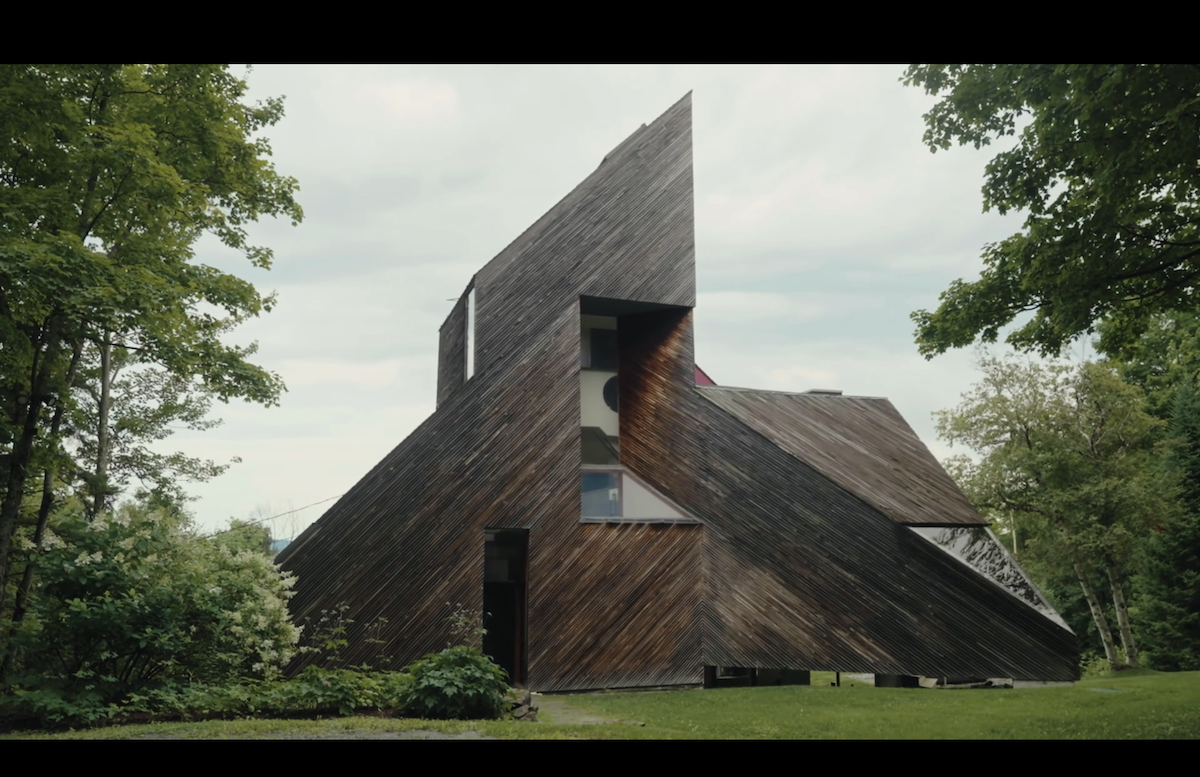
The opening night documentary by adventure-filmmaker Allie Rood tells the story of Warren, Vermont, the mountain town where she grew up. Prickly Mountain is a paean to ad hoc architecture and building. Design-build has a long history and today’s definition is more formalized than it was in the 1960s and ‘70s, ”I grew up inside an architectural movement,” filmmaker Rood says early in the film. She and her sister grew up in four houses designed and built sequentially by her father Mac Rood and her mother Bobbi Rood. By the end of the film, Rood is building her own house in Warren.
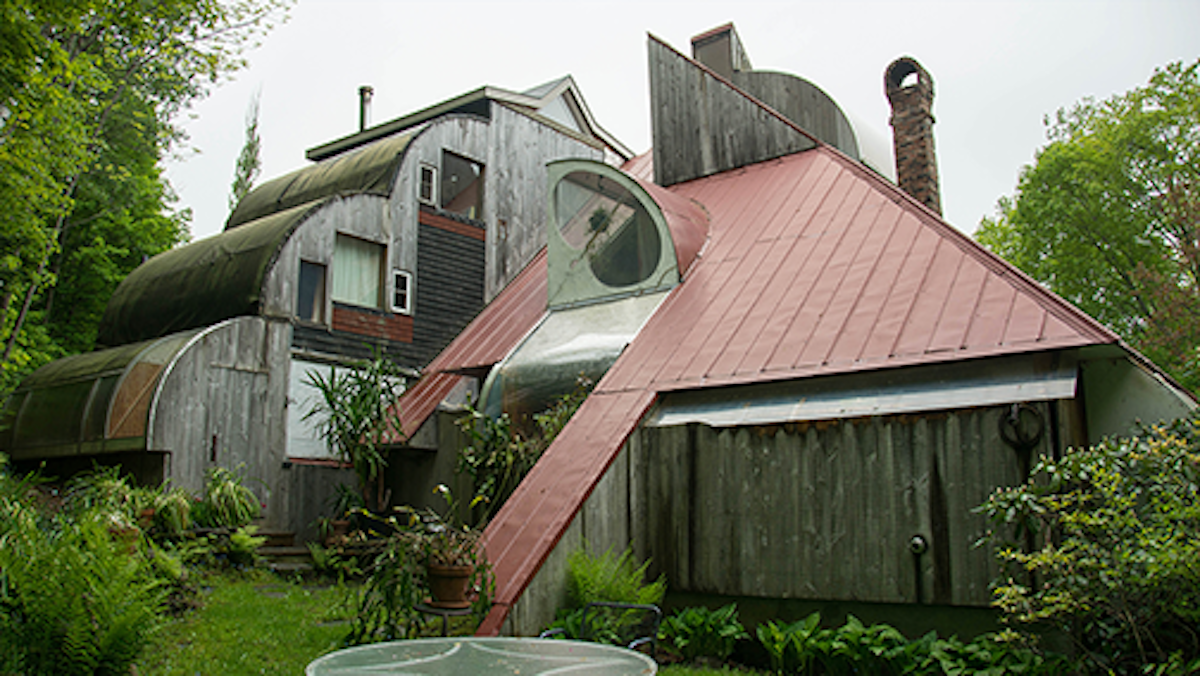
The movement was started by architects from Yale School of Architecture, students of Bob Mann and his “post-Bauhaus” thinking. They knew that skiers were interested in ski houses and Prickly Mountain and the Mad River Valley was a perfect location to buy cheap land and build with no building codes. “Wacky houses” was the first goal. One of the first structures was the Tack House, designed and built by architect Dave Sellers. The design was ad hoc, sometimes done on site or drawn on wooden parts of the structure as the builder decided how to use material that happened to be available. The Tack House was built in parts, over the years, with many additions. One of the highlights of the 90-minute film is a tour by Candy Barr, Sellers’ ex-wife, who crawls around the many spaces created, including a very narrow staircase that Barr says is an example of Sellers’ “imperviousness to convenience.”
Other houses featured are the Bridge House, designed/built by Sellers; the Sibley House by Bill Reineke; and Dimetrodon, by Jim Sanford, Richard Travers and Bill Maclay, who return to the 1971 house to tour it today. Waitsfield 10 was designed by John Connell and built by 100 people, mainly students, over many summers with design decisions made randomly. See the trailer for examples of these houses. (Rood notes that things “haven’t been as messy lately; they are more pure and clean.”)
Rood spent nine years making the film, which features original music by Grammy-nominated fellow Vermonter Grace Potter, a producer on the film.
Prickly Mountain and My Design-Build Life (90 minutes) will be screened at 7pm Thursday, February 19, at the Chicago Cultural Center’s Claudia Cassidy Theater. Filmmaker Allie Rood will attend.
Identity: A Czech Graphic Design Love Story
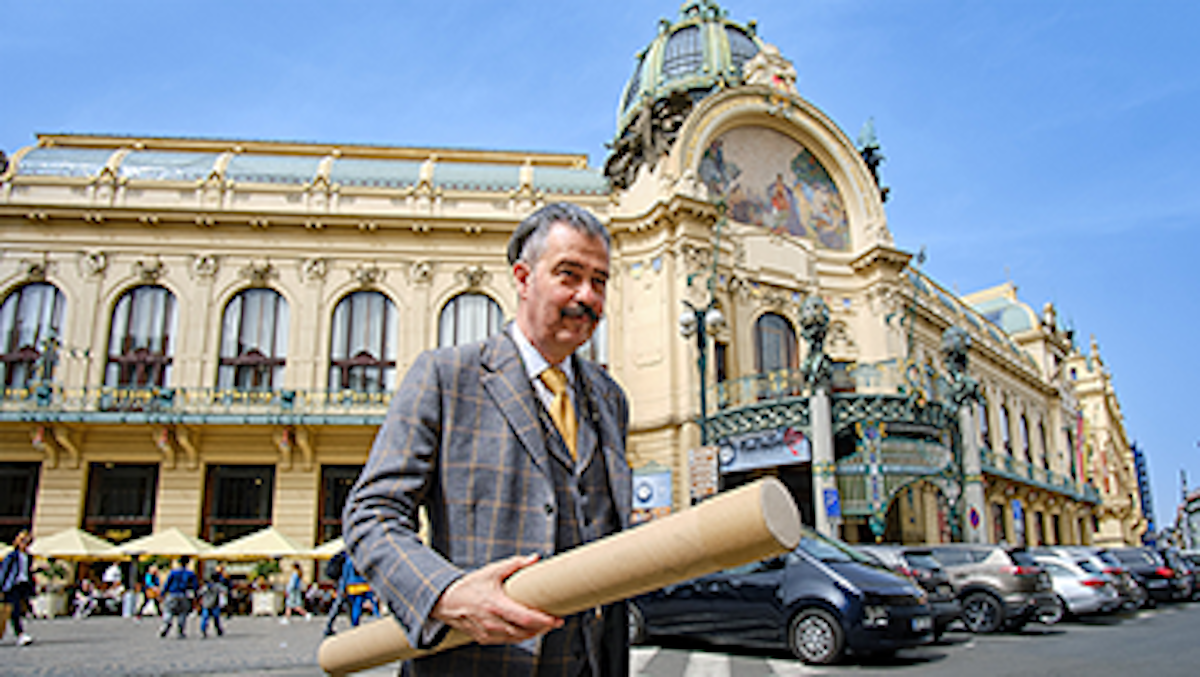
Have you yearned to visit Prague? Taking a tour of Czechia with Czech-American art auctioneer and collector Nicholas Lowry might be your best tour preparation. This charming film documents Lowry’s design interests and his trip to Czechia (aka the Czech Republic), but it’s not your standard tourist documentary by any means. The film is directed by Kateřina Mikulcova and Petr Smelik.
Lowry takes us on tours of museums, archives, design studios and even a beer archive in Czechia’s major cities; Prague, Pilsen, Zlin, and Brno. Along the way, we get close looks at vintage poster collections (Lowry’s obsession) and other art by the famous Alfons Mucha, whose art nouveau style of posters and other works is iconic
We see an historic collection of beer mats (coasters) at the Pilsner Urquell archive. After a visit to a design studio known for its typographic design, Lowry treks across a large Prague public square carrying a giant B. We also spend time with the work of a designer named Ladislav Sutnar, who designed children’s building blocks early in his career and later became known as a visionary of information design, a precursor to its importance in the digital age.
Lowry explains at the beginning that his Czech visit was inspired by an alphabet book from his childhood, Abeceda by Karel Teige. We observe him as he packs for his trip, choosing from his 60 patterned suits (he has a tartan fetish), each of which requires a shirt, tie and pocket square. And he never travels without his moustache wax.
Identity: A Czech Graphic Design Love Story (90 minutes) will be shown at 6:30pm Friday, February 20, at the Gene Siskel Film Center.
Lewerentz Divine Darkness
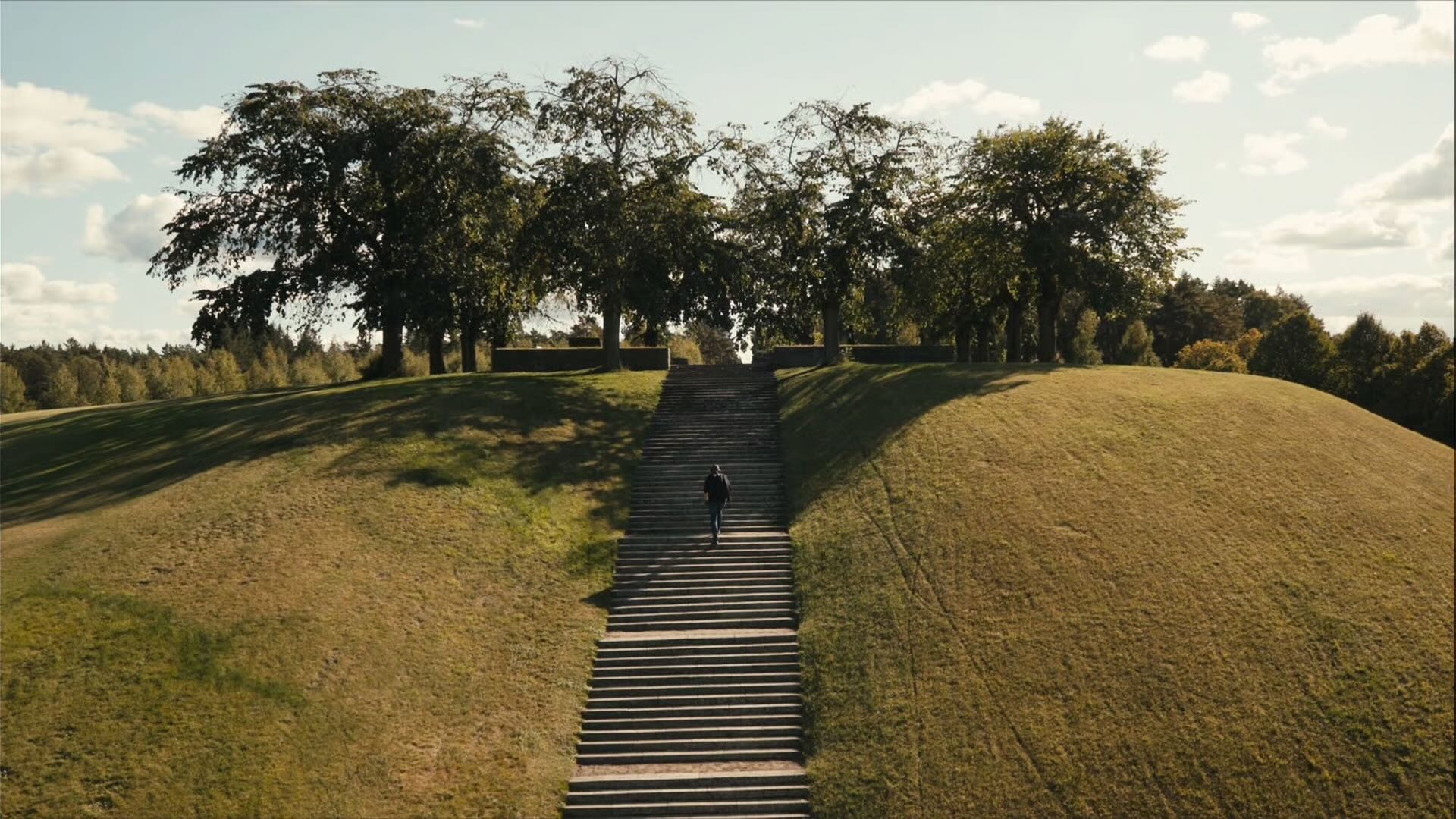
This documentary about Swedish architect Sigurd Lewerentz covers his long career and focuses on his legacy and influence on Nordic architecture. Born in 1885, he was a practicing architect until the end of his life in 1975. Many of his most important works were cemeteries and churches; he is sometimes called the architect of grief. His career spanned a neoclassical phase in his early years and more abstract, sometimes brutalist, works in his later life.
Lewerentz was a private man, even reclusive, and avoided the press and any interviews. Director Sven Blume accessed a trove of 16mm film clips and audio recordings that was discovered in a root cellar decades after the architect died. Blume was able to use the material to reintroduce Lewerentz and define his life and career. The films and audio recordings were made by architect-photographer Bernt Nyberg in the 1960s and ‘70s; he later was a close colleague of Lewerentz.
The film shows Lewerentz mostly in his later years, as he worked to complete final details and reach perfection on projects such as the Woodland Cemetery and chapel (a UNESCO World Heritage Site), the Malmo Opera and Music Theatre and the Flower Kiosk in Malmo, and two churches—St Mark’s in Stockholm and St. Peter’s in Scania.
The film is quiet and moody, much of it composed of the black-and-white films made by Nyberg, and narrated by a few architects with occasional comments from his granddaughter and Lewerentz himself.
Lewerentz Divine Darkness (70 minutes) will be shown at 5:45pm on Saturday, February 21, at the Gene Siskel Film Center. Filmmaker Sven Blume will attend.
Full festival information and tickets are available here.
Did you enjoy this post? Please consider supporting Third Coast Review’s arts and culture coverage by making a donation. Choose the amount that works best for you, and know how much we appreciate your support!
