
Editor's Note: the following article contains spoilers about Peaky Blinders.
Here's the thing about the Netflix original series Peaky Blinders: if you know it, you love it. Unfortunately, for some reason unfathomable to me (I am, indeed, one of those who loves it), the number of people who know (and love) it is devastatingly small. It perhaps got a bump a few years ago when star Cillian Murphy won an Oscar for his role in Oppenheimer and people started to recognize a talent many of us have been following for decades. But generally speaking, when I ask someone if they've seen the show, the response is some version of "I've been meaning to..." or "My dad really likes it..." and so on.
Please, if you have not watched the six-season series streaming on Netflix, take the next binge opportunity you have to settle in and get to know the Shelby family and their fictional world set in very real historical times. At just 36 episodes, the show (created by Stephen Knight, who wrote Pablo Larrain's Spencer and is behind Netflix's other new series, Guinness) is a masterclass in vibes, from the music choices to the period costuming and of course, the gangster family plot lines that center loyalty, politics, money and a unique code of ethics. At the middle of it all is Thomas Shelby (Murphy), the cool-headed second-eldest of five siblings who find themselves making a go of it in Birmingham, England after World War I. Their parents have both died and brothers Arthur Jr (Paul Anderson), Tommy and John (Joe Cole) are back from the war with the PTSD to prove it; sister Ada (Sophie Rundle) and youngest Finn (Harry Kirton) are still young enough at the show's outset that they aren't terribly involved in the family business, but that will change soon enough. The only version of a parent they have left is the great Aunt Pol, played with absolute fortitude by the late, great Helen McCrory.
Over the course of six seasons and several time jumps (the first season begins in 1919; the last season ends in 1934), the Shelbys' status catapults from small-time drug and arms smugglers to political players with real governmental and societal power. As the last season ends, Tommy is coming into his own in a brand new way, having been at the top of his powers and coming thisclose to losing it all. The final episode ends in a moment of triumph and promise for the patriarch; despite all the loss he's suffered, despite all he's facing in his political life (and what we all know lies ahead for him and the world); he seems reborn, ready to return to his roots of handling shit and always getting what he wants in the end.
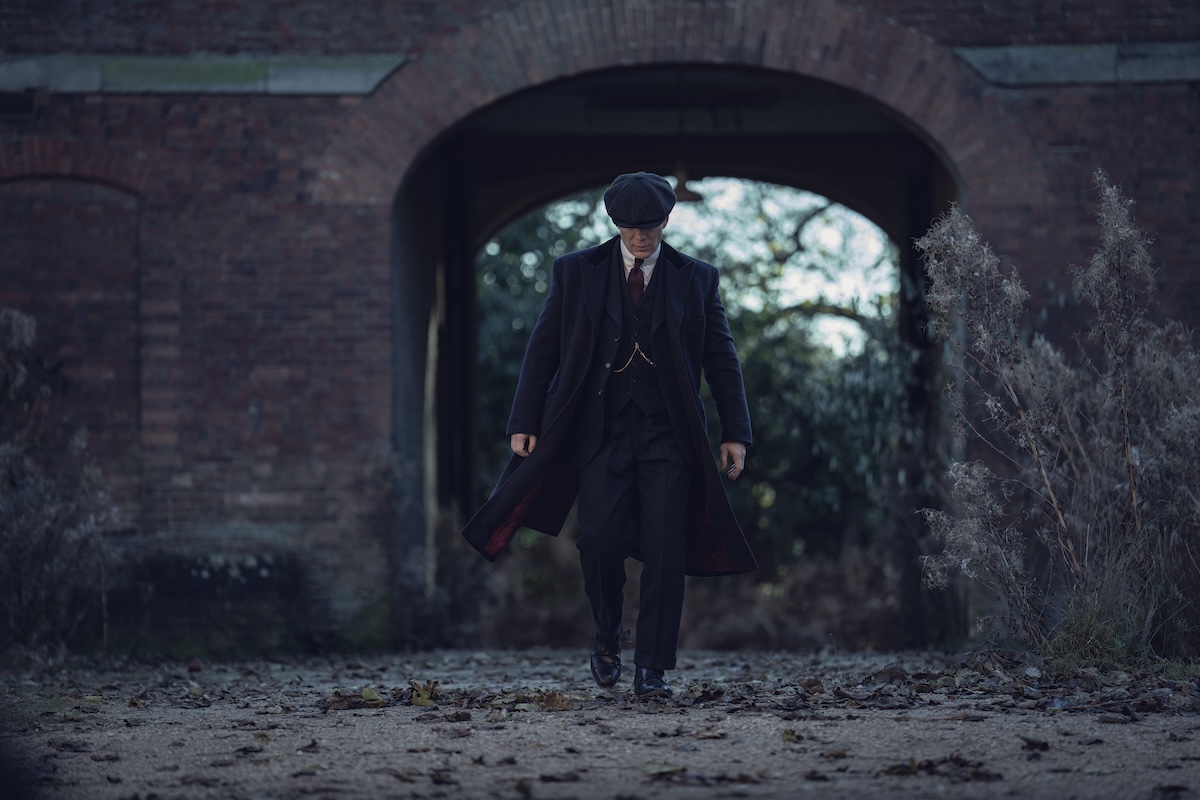
Which is what makes Peaky Blinders: The Immortal Man such a letdown in many ways, as it jumps ahead to 1940 and the first months of the second World War. We meet Tommy not as a man in charge of all that orbits him, pulling levers and making deals to enrich himself while serving, in his own unique way, his community and his country. Instead, he's isolated and distraught in a crumbling castle in the countryside, with only longtime right-hand-man Johnny Dogs (Packy Lee) to tend to him; there's no indication that he's had some financial loss or been otherwise dethroned by circumstances out of his control (as if there could ever be any). Instead, he seems to be deep in grief about the loss of his daughter, Ruby (Bonnie Stott); his wife Lizzie (Natasha O'Keeffe) has long since left him and taken his younger son Charles (by his first wife Grace), with her. He's a man at sea and, in a way that is so uncharacteristically Tommy, he's letting it get to him and entirely derail his life.
Meanwhlie, Ada has taken over his seat in the House of Commons, representing the people of Birmingham, and his elder son, Duke (recast inexplicably here as Barry Keoghan), has taken up the Shelby crime family mantle. But Duke is no Tommy; he's careless and driven by ego, and when Nazi sympathizer John Beckett (Tim Roth) approaches him about a counterfeit currency scam Germany has concocted to shock the British economy and win the war, he's willing to play along if the price is right. (Side note: in true Peaky Blinders fashion, this narrative thread is apparently based on a very real strategy Germany considered at the time.) Soon, Duke is in over his head with this massive (and very risky) deal, and Ada is begging Tom to get his head out of his ass and come back to set his son straight.
Things move quickly from there and to say more about the overall plot and decisions Knight makes for his characters would be giving away too much. Suffice it to say that The Immortal Man is absolutely meant to be a fan-service act of closure; as the credits roll, there will be very little to wonder about the fates of Tommy, Ada and the other Shelbys after having spent so much time with them over the years.
And yet, even as the plot gives us dramatic character developments and nostalgic callbacks to characters and plot points of the past (yes, Tommy is again digging a tunnel in the film's final scenes), the film either rushes through other stories or leaves them out entirely. At this point in the world of the Shelbys, so many people have died either in real life (McCrory) or on the show that there isn't a lot of the main cast to bring back, but even so, the ones who remain seem oddly absent. We get a convoluted story about Arthur's death, and Finn, who we last saw swearing to get back at Duke for banishing him from the family, is completely absent here. Both brothers could certainly have played more of a role in this final chapter; instead, we meet Rebecca Ferguson as (and this may be a bit of a spoiler?) the twin sister of Duke's mother, a woman who evokes a whirlwind of emotions in Tommy and the requisite love interest in this latest installment.
In the end, The Immortal Man attempts to dance that complicated line of standing up as a film in its own right (which requires a lot of exposition and explanation for the newbs) and tying up the narrative loose ends die-hard fans like me are eager to see concluded. In its effort to do both things, I'm not sure it does either terribly well; in re-casting Duke, the film gets a bit of extra star power with an ever-watchable Keoghan (truly, he's always the most captivating thing on screen, and that's saying a lot when he's sharing the scene with Murphy), but absent is the sense of attachment we've come to ascribe to so many of these characters.
What's most exceptional about this final chapter in the Peaky Blinders lore, for all its shortcomings, is the time we get with Tommy—even if he is mooring about lost and confused for the first half of the film. By the second half, I found myself again cheering for this scrappy Romani kid who came from nothing to create a world of plenty and a sense of order, even in his high-stakes, criminal way. I'll miss the Shelbys and their fierce loyalty, their brash dealmaking, their complicated family dynamics and their amazing sense of style. I'm not sure The Immortal Man is the fond farewell I wanted it to be, but it's what we have and it will have to do.
The Immortal Man is now in theaters and streams on Netflix beginning March 20.
If you enjoyed this post, please consider supporting Third Coast Review’s arts and culture coverage by making a donation. Choose the amount that works best for you, and know it goes directly to support our writers and contributors.
