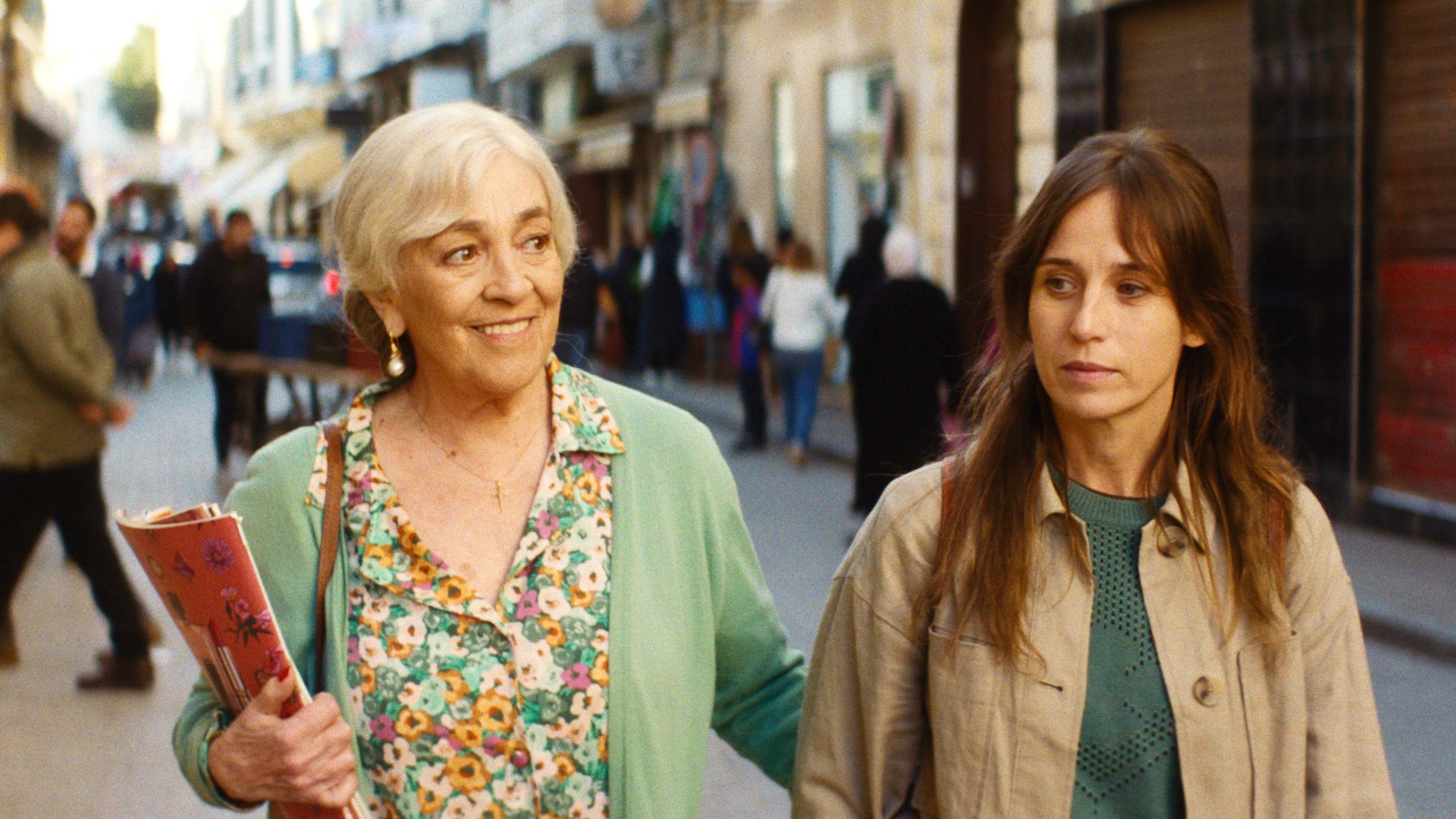

Has the Spanish government declared Carmen Maura a national treasure? If not, what are they waiting for? Maura stands shoulder to shoulder with such icons as Bette Davis, Joan Crawford, Meryl Streep and Catherine Deneuve. Like them, she is a star in the old Hollywood sense of the word. No matter how brilliant, sublime, outrageously insane, kitschy or even bad the film may be, her mere presence makes it that much more memorable. She is both Carmen and the character she is playing, her performances so self-effacing, so finely calibrated that we can’t help but fall under her spell.
In Maryam Touzani’s Calle Málaga, Maura takes on a role that was tailor-made for her, as soon as Touzani and her co-screenwriting husband Nabil Ayouch typed the words THE END in their script. Maura plays María Ángeles, a 79-year-old widow born in Tangier to Spanish parents escaping the Spanish Civil War. María Ángeles has been living in relative comfort in the same second floor apartment for 40 years: it is where she raised her daughter Clara (Marta Etura) and where her husband died. She knows every neighbor and street vendor by first name and takes delight in such simple things as shopping up and down bustling Calle Málaga, listening to the same bolero record every day at the same time, tending to her flowers and, as the film opens, preparing croquetas for her daughter’s imminent arrival, her first visit in a while. Maura immediately snares you with her radiant smile, her equally radiant eyes, as she takes pleasure in every sight, every smell, every sound, sensations that never feel old to her character. Feelings that María Ángeles will eventually learn she has taken for granted.
Clara’s visit will leave a bitter taste in María Ángeles’ mouth as her daughter, embroiled in a bitter divorce and running out of money, breaks the news that she has already set in motion the sale of the apartment (which her father put under her name) and everything inside it. Clara gives her mother one of two choices: to move back to Madrid with her and her children or stay in Tangiers at a retirement home for those born in Spain or of Spanish descent. Maura’s body language and facial expressions are devastating: her posture drops slightly, the smile vanishes, her eyes expressing a combination of disappointment, hurt and even fear. Etura’s performance matches Maura’s beat by beat: this is a woman who feels cornered, who is desperate, who has no choice and knows, deep within, the harm she is causing but doesn’t want to acknowledge. She recriminates, she accuses, she wants her mother to understand. A traditional melodrama would have treated Clara as the thankless child who is treating her parental unit as an afterthought; but Touzani is aiming for something more complex and, even understated, in this contentious mother-daughter relationship.
María Ángeles decides to stay in Tangiers even if that means living under the tightly regimented structure of a nursing home. But after telling an in-house hair stylist to piss off in a very Carmen Maura-way, María Ángeles comes up with a scheme to leave the residence and go back to her apartment even if it means living there as a squatter until the place is officially sold. Determined to reclaim her life, she visits the store owned by Abslam (Ahmed Boulane), the antiques dealer who bought all her furniture far below its actual value, to buy back all of it. I’ll leave you to discover how she comes up with the money to do so. Slowly and most definitely surely, her determination conquers Abslam’s heart leading to a sweet, gentle and respectful love story (including a very tactfully and tastefully shot nude scene between the two actors).
Calle Málaga honors and celebrates the objects, people and experiences that shaped our lives as well as the loss of those things and loved ones we held dear to our hearts. In María Ángeles' case, from the melancholy she feels after affectionately cleaning the tombstones of her loved ones at a nearly abandoned cemetery, the final resting place of those Spaniards who escaped Franco’s dictatorship, to her unlikely friendship with Sister Josefa (María Alfonsa Rosso) who has taken a vow of silence and serves as a sounding board to her best friend’s stories.
Touzani smartly stays out of her actors’ way, especially Maura; she trusts their instincts as well as Belgian Polish cinematographer Virginie Surdej’s, who discreetly positions her camera to capture every expression and who lights objects and locations with the same delicacy she lights the actors, taking advantage of Tangier’s natural light to bring out its streets’ and buildings' vivid, warm colors.
But most of all, Calle Málaga celebrates an actor that we have taken for granted, especially since most of her other films have not been released theatrically in this country and her work on television has only been seen in some streaming services. Calle Málaga serves as a reminder not only of her greatness but that we, too, deserve to live in a decent world where we can grow old surrounded by those creature comforts that will make that final act in our lives much more endurable.
Calle Málaga is playing exclusively at the Siskel Film Center until April 16.
If you enjoyed this post, please consider supporting Third Coast Review’s arts and culture coverage by making a donation. Choose the amount that works best for you, and know it goes directly to support our writers and contributors.
