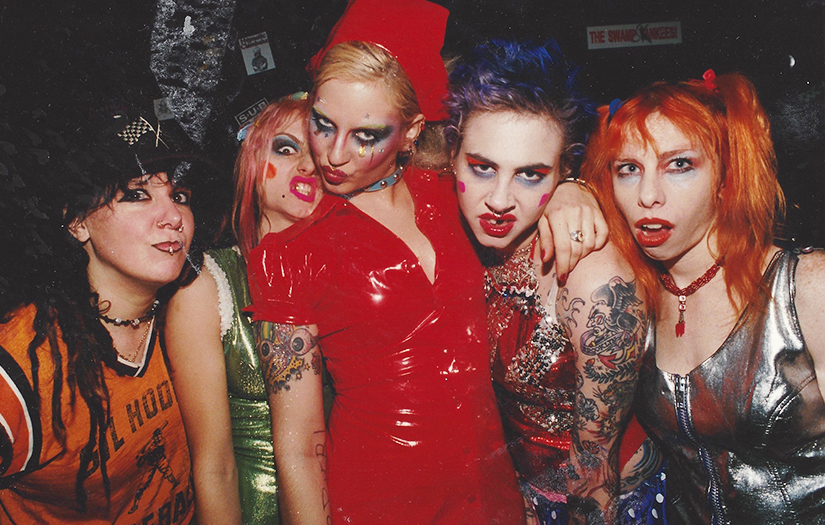

Although the trailblazing New York punk legends Lunachicks weren’t technically the first all-female punk band, their iconic looks and undeniably catchy hard-rock tunes always make me feel like they should have been the one to break out big. Maybe the world wasn’t ready for a band quite as unhinged as Theo Kogan, Gina Volpe, Sydney “Squid” Silver, Chip English, Sindi Benezra, and Becky Wreck (all members at one point in the band’s history) were. But based on interviews with members of the Go-Go’s, Blondie, L7, Lucious Jackson, The Offspring, Danzig, and even GWAR, it’s clear these unfiltered, feminist creatives have earned their place in rock history, as well as earned themselves this fantastic documentary from first-time doc filmmaker Ilya Chaiken (The Unlovables, Margarita Happy Hour).
More than simply a collection of new and archival interviews and vintage footage of the late-1980s/early-1990s New York City (where all of the band members lived) punk scene, Pretty Ugly: The Story of the Lunachicks traces the band’s origins while also giving us a detailed account of what their lives are like today. The stories from the band’s heyday are outrageous and quite funny, as they go from teenagers who have no musical experience to seasoned pros in the male-dominated punk world (both in terms of other bands and the audience). They looked out for each other on stage and off, and eventually, they became fearless in their determination to be subversively creative by confronting gender politics both in life and in their music. Their song “Bitterness Barbie” is a pure, angry anthem for a generation of female rockers, but it also described the band’s costume, wig, and makeup choices, as well as their general onstage personas.
But as the film is being shot, interview by interview, the question keeps coming up (mostly from journalist Jeanne Fury, who was writing a book about the band at the time of filming) about a reunion. Most of the members are still friends, and because of the structure of the film, we don’t know what ultimately drove them apart (in many ways, the band was much like their male counterparts, letting ego, substance abuse, and outside influences get the best of their rare bond). And just as we’re prepared to live with the very real possibility that Lunachicks will never play together again on stage, it just kind of happens (thanks in part to the aforementioned book about them being released).
Director Chaiken has accomplished something rare by making Pretty Ugly a joy for fans but also something highly accessible to people who have never heard of Lunachicks. The use of music is crucial, letting the songs play out so the messages contained within are clear and powerful. But also, the newer footage of the women re-sparking old connections is genuinely moving and goes far beyond a simple nostalgia trip. The story of Lunachicks is the story of the ’90s New York punk scene, complete with handmade posters being taped to light poles and the sides of buildings. They shared the stage with the Ramones and played all the hallmark sketchy clubs that the lower-east side of Manhattan offered. Beyond that, their messages resonate to this day—gender, power, LGBTQ+ rights, and creative freedom were front and center in their music, and eventually the crowds responded and sought them out because they spoke directly to them.
You hear about the bands who were super successful and garnered a lot of fans in the process, but there are other bands who labored hard as part of the underground but were wildly influential to other musicians who were paying attention. I think the Lunachicks exists most comfortably in this second category, and the quality of their fanbase is impressive. They still sound incredible in the most recent footage in Pretty Ugly, but more fulfilling is knowing that these women are all still friends and know the others have their backs at all times.
The film is now available on digital.
If you enjoyed this post, please consider supporting Third Coast Review’s arts and culture coverage by making a donation. Choose the amount that works best for you, and know it goes directly to support our writers and contributors.
