
From Hungarian director Ildikó Enyedi (On Body and Soul, The Story of My Wife), Silent Friend presents us with three very different stories, all exploring the natural world as it pertains to life through more than 100 years of history of a majestic ginkgo tree rooted deeply on the campus of a German university. Our three protagonists couldn’t be more different, but their experiences exploring the mysteries of nature bind them across decades of curious students and educators, searching for that elusive link between humans and the world they live in. I’m aware that it all might sound like a bunch of hippie crap, but Enyedi keeps her stories so grounded and personal that the film feels more like three character studies in the context of this more sweeping theme of what it means to be human.
In early 2020, Dr. Tony Wong (Tony Leung) arrives in Marburg from Hong Kong, hoping to complete his research on the brain activity of newborns. But when the COVID pandemic shuts down the university, he’s stuck on campus, almost completely alone. Just to occupy his mind, he shifts his focus to the aforementioned ginkgo tree (which dates back to 1832), and decides to determine if he can match his own neurological activity with the tree’s. Via Zoom, he accepts advice and works with French botanist Dr. Alice Sauvage (Léa Seydoux), and before long, Dr. Wong is strapping a brain scanner to the tree, much to the dismay of the campus janitor (Sylvester Groth), who initially complains about the doctor’s strange experiments. Leung’s thoughtful, measuring performance draws us into his character’s loneliness and curiosity, especially as he and the custodian finally befriend each other.
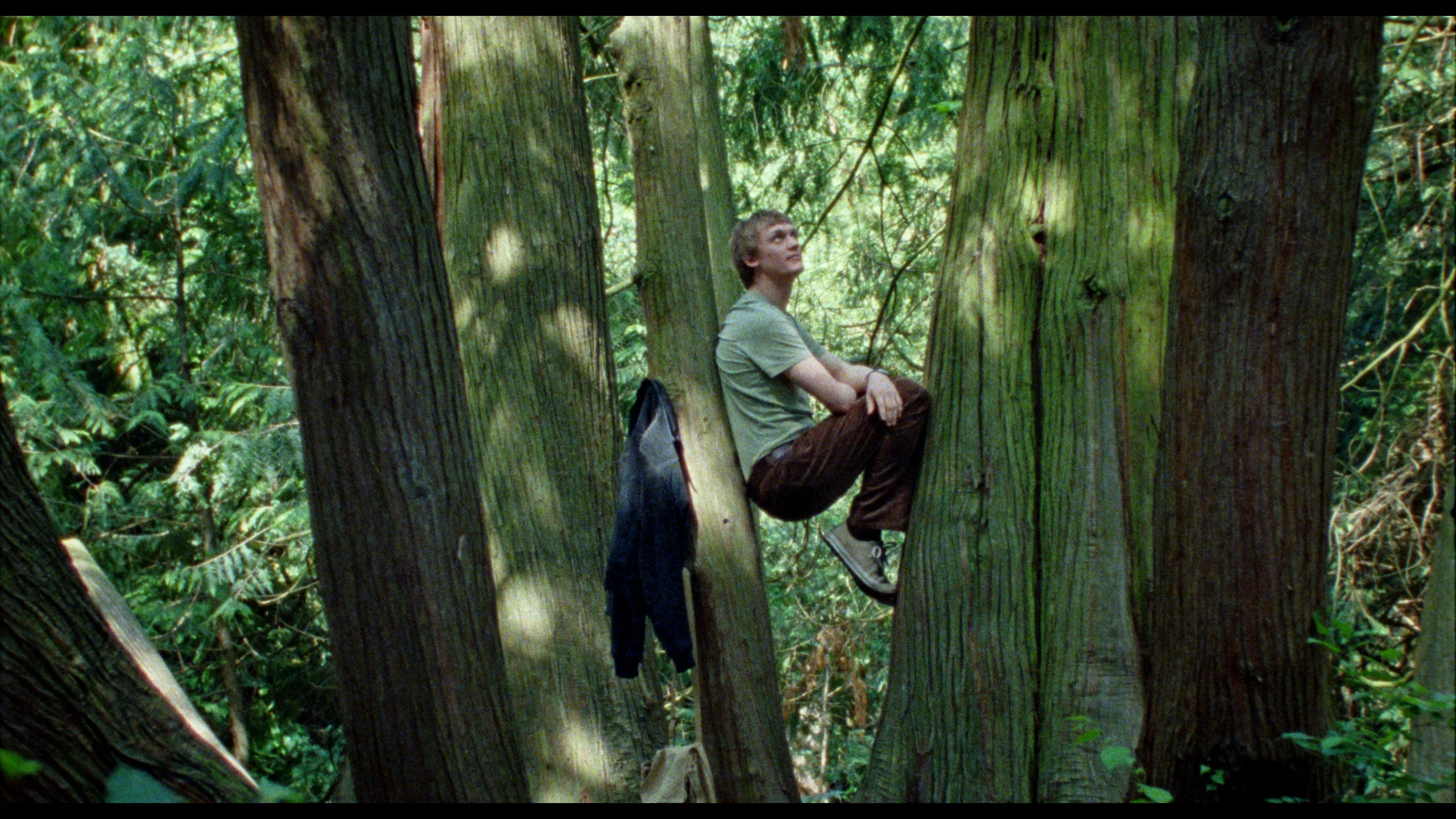
In 1972, a student named Hannes (Enzo Brumm) lives in shared student housing but spends a great deal of his time at the nearby botanical garden, close to the ginkgo tree. One of his housing partners, Gundula (Marlene Burow) is studying interactions between plants and humans, which Hannes initially says he has no interest in. But as he begins to fall for Gundula, he opens up to the possible connection, and when she leaves town for several weeks to study, Hannes agrees to take care of her geranium, which is connected to an activity sensor. Hannes not only improves upon the functions of the sensor, he also devises a way for the plant to react to his presence, and his connection to the natural world of this plant teaches him a great deal about connection—something that is tested when he receives a postcard from Gundula with troubling news.
Perhaps the most harrowing section of Silent Friend is the section set during 1908 and centering on Luna Wedler’s Grete, who is determined to become the university’s first female student. Her specialty is botany, and after an especially brutal and humiliating interview process, she is accepted into the program, which she celebrates by racing to the botanical garden and, naturally, the ginkgo tree. Through a series of events, she attends a female-only gathering at the tree, and eventually takes a part-time job as a photographer’s assistant, where she learns photography work that she hopes she can use in her research and an upcoming expedition that some in her class are taking to the East Indies. Grete is shy and buttoned-down in most ways, but that doesn’t keep the men in the world she lives in to pester, mock, and aggressively come on to her—all of which seems to strengthen and fortify her.
Silent Friend isn’t an easy film to explain but it’s an effortless one to experience. The three stories are intercut in a way that the parallel in each character life is easy to spot but still unique to that person. I was especially impressed with Luna Wedler (who won an acting award for this role at last year’s Venice Film Festival), and the way she accomplished so much of her acting with simply her eyes and expressions. This is not a film you rush through, so settle in, let Silent Friend wash over you like a gentle rain, and see where it takes you.
The film is now playing exclusively at the Gene Siskel Film Center.
If you enjoyed this post, please consider supporting Third Coast Review’s arts and culture coverage by making a donation. Choose the amount that works best for you, and know it goes directly to support our writers and contributors.
