
What separates the music documentaries directed by producer and Roots drummer Ahmir “Questlove” Thompson (Summer of Soul; Sly Lives! (aka the Burden of Black Genius); Ladies & Gentlemen... 50 Years of SNL Music) is that he not only provides the musical highlights of whatever he’s spotlighting, but he also gives audiences the absolutely crucial context for these revelatory moments in history. For example, in his film about Sly and the Family Stone, he placed the band’s musical output against the backdrop of changing times, both in terms of the world at large as well as Black culture. But he also dissects the band’s best songs down to their individual instruments to explore why any particular song is so damn good.
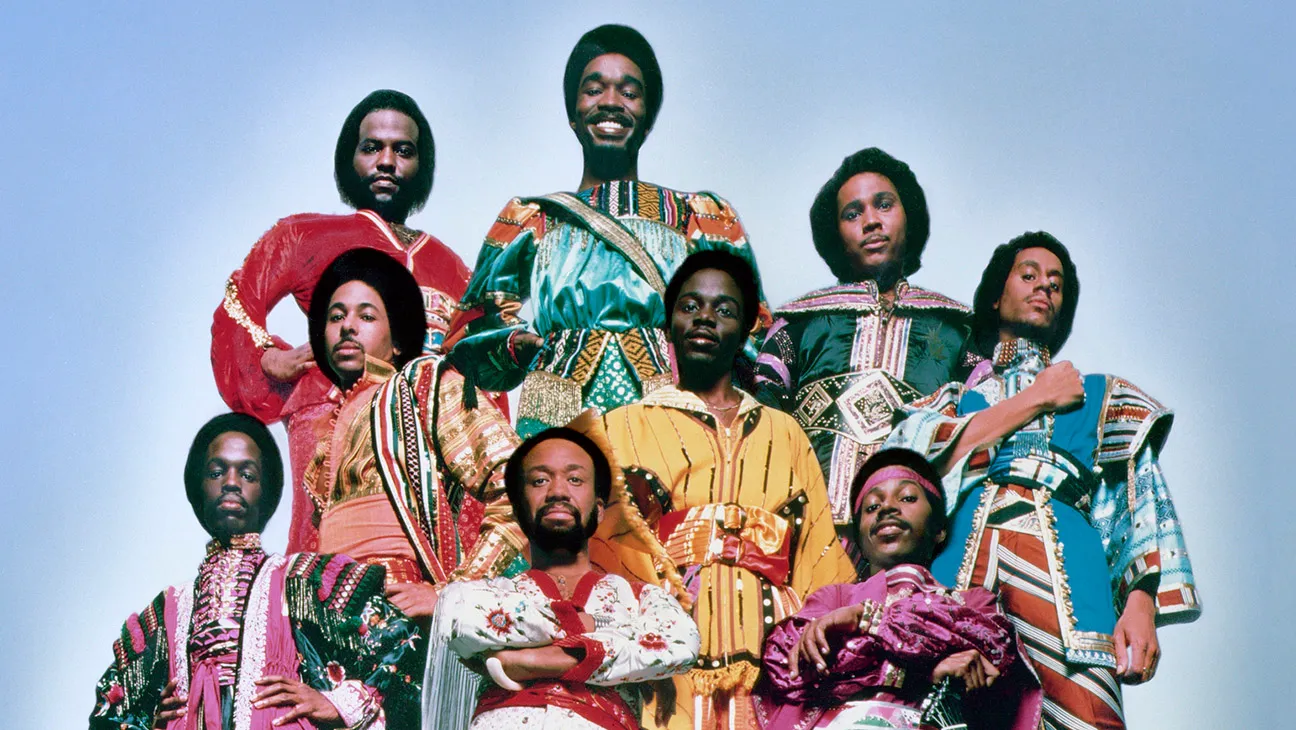
Now with his examination of the award-winning band Earth, Wind & Fire, Thompson moves gracefully through the troubling life of the late founding member Maurice White, who began his career as a drummer for Ramsey Lewis and eventually piecing together EWF in Chicago. One of the most important distinguishing traits of EWF stemmed from White’s commitment to blending Afro-futurism, world philosophies, spirituality, astrology, and even a belief in alien life—all of which came together on stage in an explosion of wild costumes, elaborate staging (courtesy of a Broadway production designer), and even a bit of magic (White hired magician Doug Henning to spice up the lives shows with a bit of illusion).
But none of the superficial flash would have meant a damn thing without some of the best R&B, funk, soul, disco, Afro-pop, and whatever else they wanted to throw in the mix. But so much of what White was building was also being undercut by his own insistence that he was the absolute leader of the band, which included denying deserved songwriting credits to the other band members (some of whom were his own family) and control over who was brought in to help write or produce along with him. The members of the band had a hard time fighting this plan, since the results were hit after hit throughout the 1970s.
The archives that Thompson gets to explore are immense, with an incredible amount of never-before-seen footage. As a result, the film moves from film images, animation, and other trippy, experimental material that really does capture the band at its height. There are terrific and informative interviews with band members (Philip Bailey, Verdine White, Ralph Johnson), associates, peers (Lionel Ritchie’s comments on the rivalry between EWF and the Commodores are hilarious), and fans, as well as testimonials about the band’s inspirational role in the careers of Prince and Michael Jackson, not to mention the endless number of EWF samples used by hip-hop artists for decades. One of the best interview subjects is White’s longtime partner, Marilyn White, with whom he had three children and who tolerated his serial cheating and fathering other children with a couple of his mistresses. Her insight into White’s way of thinking and inability to fully commit to just her because his own father left him when he was very young is a crucial part of understanding White’s approach to the entirety of his life and music.
There’s also a moving discussion of the importance of the band’s music to the introduction of newly elected President Barack Obama and First Lady Michelle Obama at their inauguration ball. The band was the perfect intersection of theater, creativity, science fiction, and the metaphysical, and the results span decades to the point where its cultural impact is just as relevant today.
The film premieres Saturday, June 6 on HBO and will also be available on HBO Max.
If you enjoyed this post, please consider supporting Third Coast Review’s arts and culture coverage by making a donation. Choose the amount that works best for you, and know it goes directly to support our writers and contributors.
