Kenji Tanigaki is a Japanese-born stuntman, stunt coordinator, fight coordinator, and director whose latest work, The Furious, might be the greatest action movie in the last 20 years. After training in martial arts since he was a child in Japan, he joined the Kurata Action school to begin his career as a stuntman. Seeing limited opportunities in his homeland, he moved to Hong Kong and eventually became the stunt coordinator and action director for several films, starring Donnie Yen, including Yen’s fight scenes in John Wick: Chapter 4.
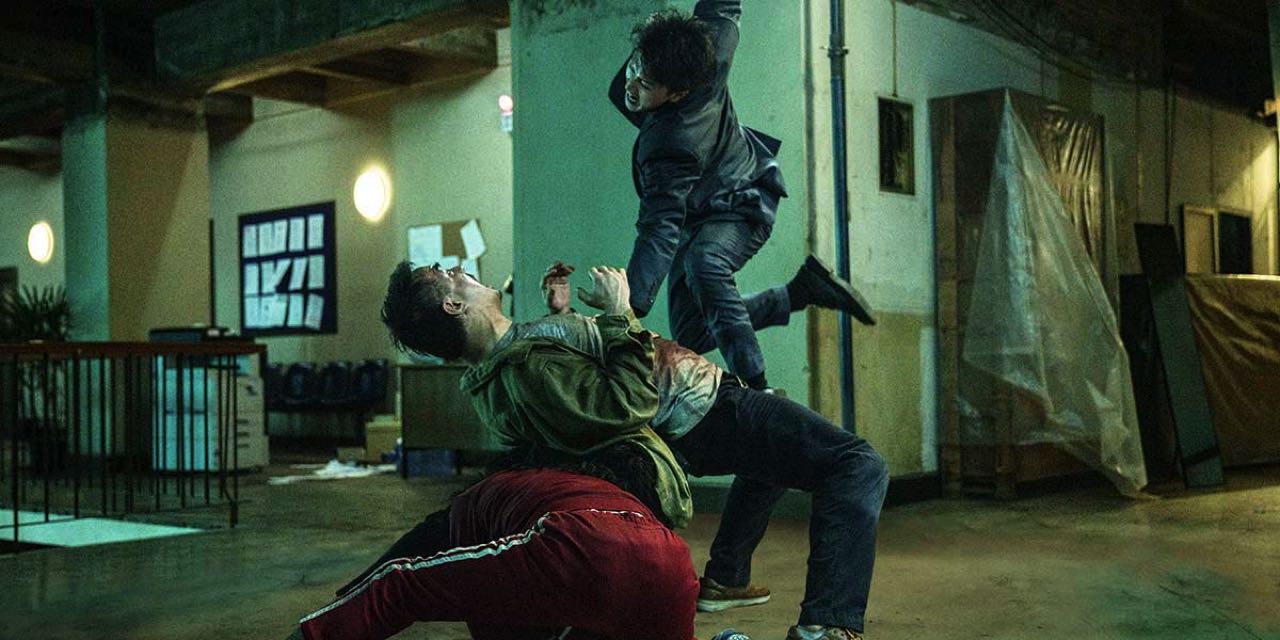
The Furious is Tanigaki’s sixth feature, and with its five lead roles—both heroes and villains—all from different Asian nations, the movie blends five different martial arts styles that combine in a way I’ve never seen attempted in a big-screen action work like this. The film focuses on a handyman named Wang Wei (Xie Miao), whose daughter is kidnapped by a criminal network as part of a child trafficking ring. After Wei gets no help from the corrupt police, he sets out to find her himself and unexpectedly receives help from Navin (Joe Taslim), a reporter whose wife disappeared, after the two realize they might be looking for the same criminals. Fueled by vengeance, this unlikely duo battle kidnappers in an explosive martial arts showdown, the likes of which we haven’t seen since The Raid films (a couple actors in those movies appear in The Furious as well).
I had the chance to chat with Tanigaki recently to talk primarily about his visual style when it comes to shooting action, whether it’s more important for his actors to be able to fight or act, and how the hell he pulled off a five-way fight scene in the film’s climactic battle. Please enjoy our talk.
Good to meet you. You came out of the stunt world before you took on directing. I know when I watch your movies, the stunts will be great. What I’m wondering is, what did you do to learn to be a director, both in terms of a visual language and working with actors?
Well first of all, I’m a fanboy like you . I’m a fanboy of films for years, especially of a lot of different kinds of action movies. Maybe this is a different style of Asian filmmaking versus American filmmaking. In Asia, especially Hong Kong, with stunt people, you can do anything you want. For example, I was working with Donnie Yen, the guy who played Caine in John Wick 4. When I work with him, he allowed me to choreograph, sometimes hold the camera, sometimes editing, maybe supervising sound effects. So the situation in Hong Kong film system allowed me to do everything, and that’s a good way to study and learn to be a director. When making an action movie, the choreography must be very good, the editing, using a camera, working with actors are all important. So action directors must know these kind of steps before becoming a director. I’ve been lucky to work with very good directors, like Guillermo del Toro or other great directors from Hong Kong. One thing these directors have in common is that they all trust their people, and they give the people the freedom and responsibility to do their work. But I learned so much from these very great directors. And I’m still in the learning process today, right?
Got it. The reason I asked that is because The Furious is such an emotional film; it’s the fuel that drives the action. What's more important to you: an actor who can do martial arts or a fighter who can also act?
Most of the time, a great actor is also great in a martial arts film because of their charisma—they connect to the people. They don’t have to separate the drama from the action—it’s the same thing to them. Of course, if the actor knows martial arts, it’s good, but they must be able to act. Characterization is important as storytelling, especially when you shoot in this genre.
In this film, you have actors from all over Asia coming together, and they all have different specialties when it came to their martial artistry. Did you use that to your advantage and try to blend their different styles? What was your process is making their differences become their strengths?
Yeah, like I said, characterization is so important. We have one lead actor from China, but we needed something different, so I called Joe Taslim because their personalities and styles are so different. We’re able to use their cultural backgrounds in martial arts and their personalities in conjunction with each other. We were so lucky, because their martial arts backgrounds are so different. One has wushu training in China, and the other has Indonesian judo experience—totally different. Some people have said that the ending is like Super Smash Brothers . That’s right! If everybody did the same style, it’s boring; I’m so happy with what we achieved.
When you’re shooting an action scene, do you have rules about how to shoot them? Do you insist we can see the whole body, for example?
It really depends on what point in the story we’re shooting and with which actors, because if we’re shooting a sci-fi movie, we need to leave room for effects. If the actor is not capable of the stunt work, we have to leave room for a stunt person or some effect work. But in the case of this film, we had talented actors who knew how to move. I hope logistically we are showing people how the fight is moving, so I’m hoping we can get a wider and longer shot, a cleaner shot. I love classic films like Buster Keaton, Harold Lloyd, and Gene Kelly, and of course Bruce Lee and Jackie Chan. They all have something similar in that they use a lot of wide, clean shots to show their movement. Gene Kelly, I so appreciate his dancing and acting; we don’t feel the edits in his films. If the production allows for it, I hope to keep that kind of flavor.
I want to ask about your cinematographer, Meteor Cheung. In that final sequence when there are five guys fighting each other, it feels like he’s part of the choreography. We’re in that fight. Does that add an extra level of work for him and for you, to have him in the middle of the chaos?
Of course. He’s the sixth person, right? Believe it or not, he’s a very good cinematographer, but he’s never shot an action movie before. He was curious to see if he could do one or not, but I was totally okay with it because sometimes a great cinematographer is what I need. He designed the look, the color, the atmosphere, and how he worked was very easy. My approach is like George Miller on Fury Road—just put the action in the center of the frame, whether it’s for just punching or a car. Put the object at the center, and it’s very easy to know what’s going on. I asked him to join our production one-and-half months before the start of shooting; I put him in the rehearsal room and asked him to shoot around the stunts as they are moving around. Sometimes, it’s a bit unfair to the camera team, because often the stunt team preps three months before, but most of the time, the company only allows the camera team in on the very last meetings of the stunt team. Many times on set, the stunt team knows what the choreography is, the actors too; but the camera team doesn’t have enough time to understand choreography. Sometimes their first take is our last rehearsal. First take is normally the best take, but often there is a technical problem, so we can’t get that shot. Then after the first take, the cinematographer will say, “Oh, now I understand how it will work.” That’s a waste of time. That’s why I asked the producer to let the DP join earlier; we save time and money on the set doing that.
Congratulations on this film. Best of luck with it. I hope you get to do a sequel to this down the line. Thank you so much.
Thank you, Steven.
The Furious is now in theaters
If you enjoyed this post, please consider supporting Third Coast Review’s arts and culture coverage by making a donation. Choose the amount that works best for you, and know it goes directly to support our writers and contributors.
