Ithaki Estiatorio, Greektown’s newest eatery, had a ribbon-cutting ceremony at 314 S. Halsted at Jackson on Wednesday, August 27, complete with local dignitaries, passed noshes and sips, and a “good luck” plate-smashing station, of course, where cries of “opa!” echoed over the brown wooden crate that caught the smithereens.
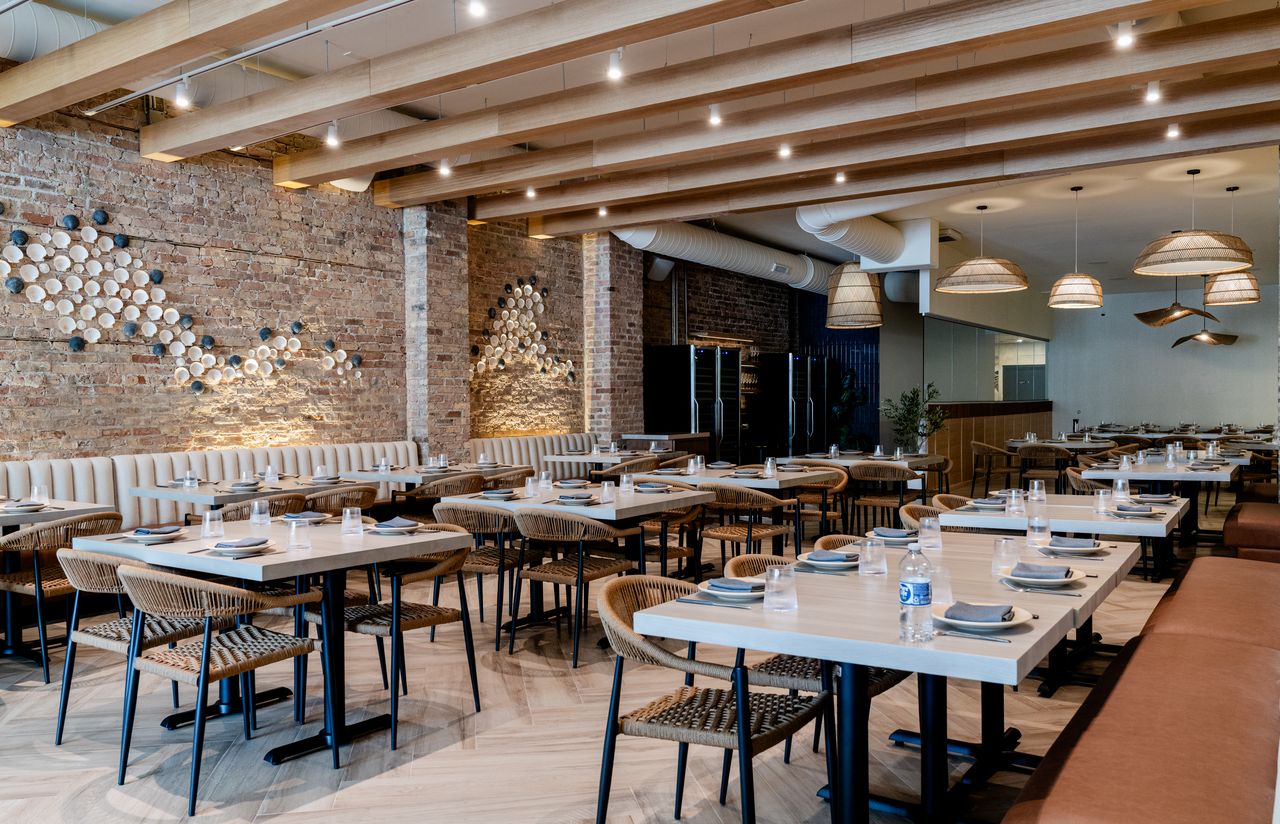
Helmed by Forte Hospitality (Sapori Trattoria and Butcher and the Bear), with partners Saul Ramos, Greg Poulos, John Lawson, and Kosti Demos, this 5,500 square foot, 180-seat seafood-forward restaurant has replaced and revamped the landmark Parthenon restaurant site after almost 50 years in this community, one of only four Greektowns in the US.
Demos grew up here, where over a dozen Greek family-owned restaurants populated the area during its prime. His family once owned Costa’s Restaurant, an institution that was replaced by a high-rise building when the district moved away from being a dining destination. So, “now, it’s our personal mission to spark a renaissance of Greek-owned businesses and restore the neighborhood to its former glory.”
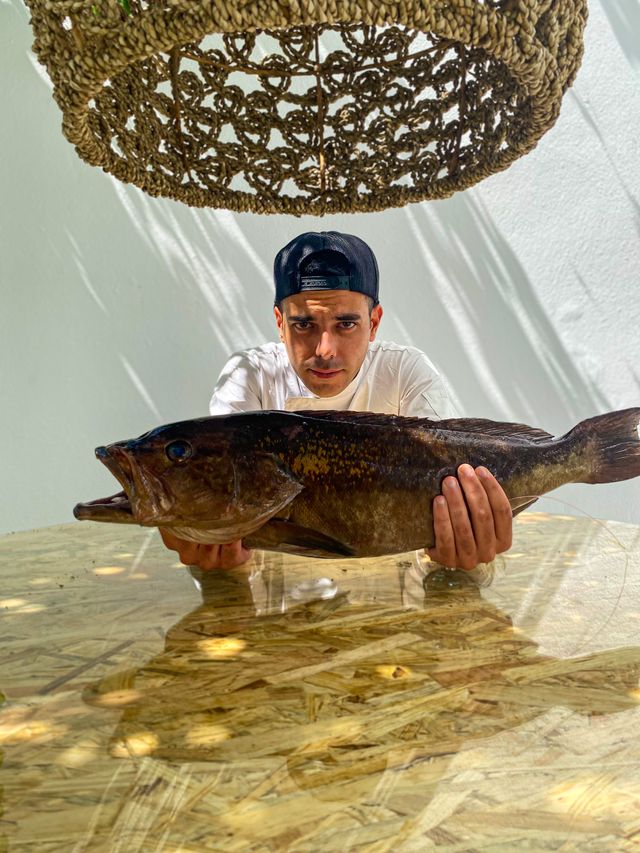
After training at a French culinary school in Athens, Executive Chef Konstantinos Ntalianis honed his craft in tavernas, luxury resorts, private yachts, and as a private chef before becoming a Top 10 contestant on Season 4 of MasterChef Greece. He later opened Barbounaki, a seafood-focused restaurant on the island of Folegandros. Chef Ntalianis’ style blends the soulful depth of Greek cuisine with refined Japanese influences, creating a menu rooted in tradition yet driven by seasonal Mediterranean ingredients.
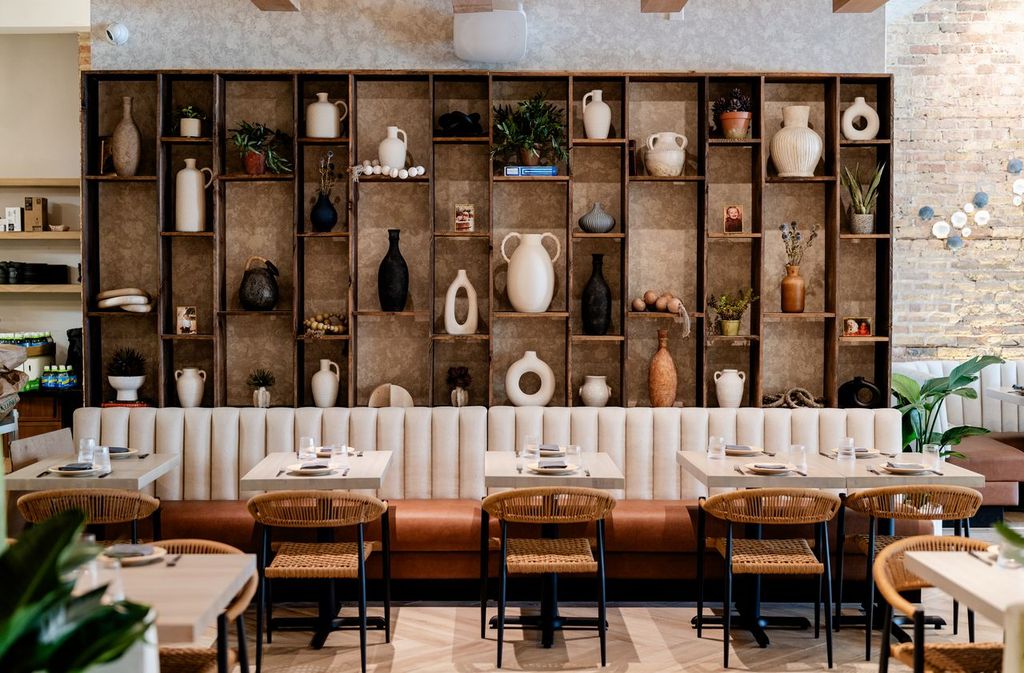
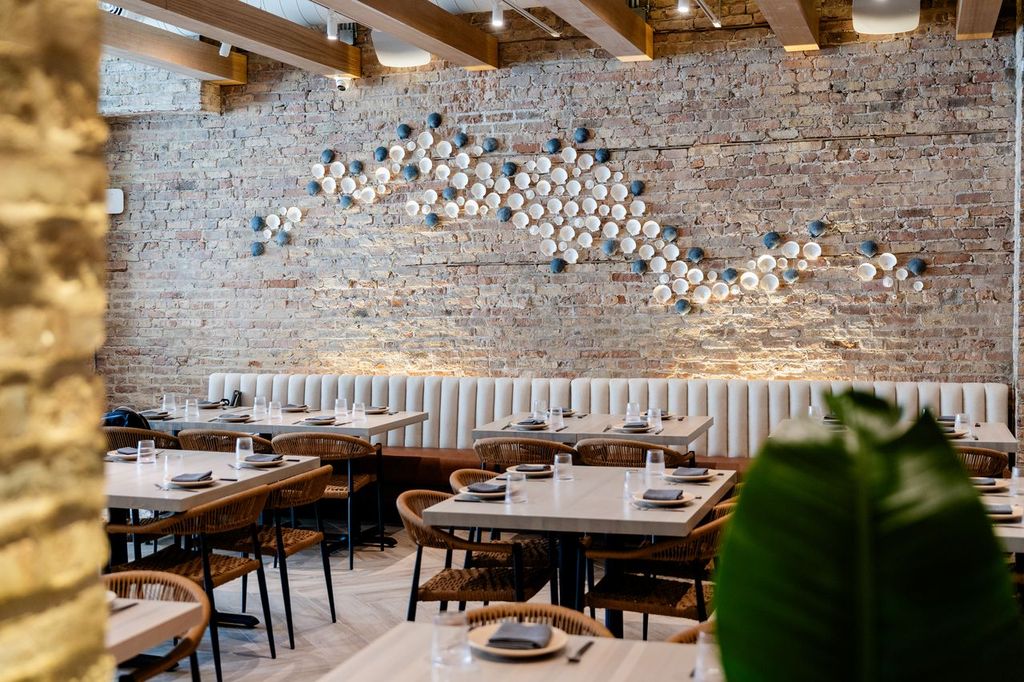
The light, bright and airy décor evokes the Aegean Sea and Mykonos with a broken stone and concrete floor, the dark slate playing off the white connective tissue. Overhead are wide wicker lampshades. The natural mottled walls display either boxy wooden shelves sporting family photos, ephemera, amphoras, vases and flowers, or a fluid array of shells and sand dollars.
The front of the restaurant features a 15-foot, 30-seat bar, and wide glass shutters opening onto the street, just north of the National Hellenic Museum. The back of the wide room showcases an open kitchen, with the whole fish flown in from Greece on display and then roasted over a wood hearth and rotisserie grills. The menu will also feature maroulosalata, moussaka, pork souvlaki, pastitsio, and grilled langoustines.
“At Ithaki, we honor the ancient tradition of Xenia, the sacred Greek custom of hospitality, which dictates that you must treat your guests as if they were gods themselves. The belief was that, in welcoming others with warmth and generosity, you might unknowingly be hosting Zeus in disguise. This ancient practice reflects the heart of Hellenic culture.”
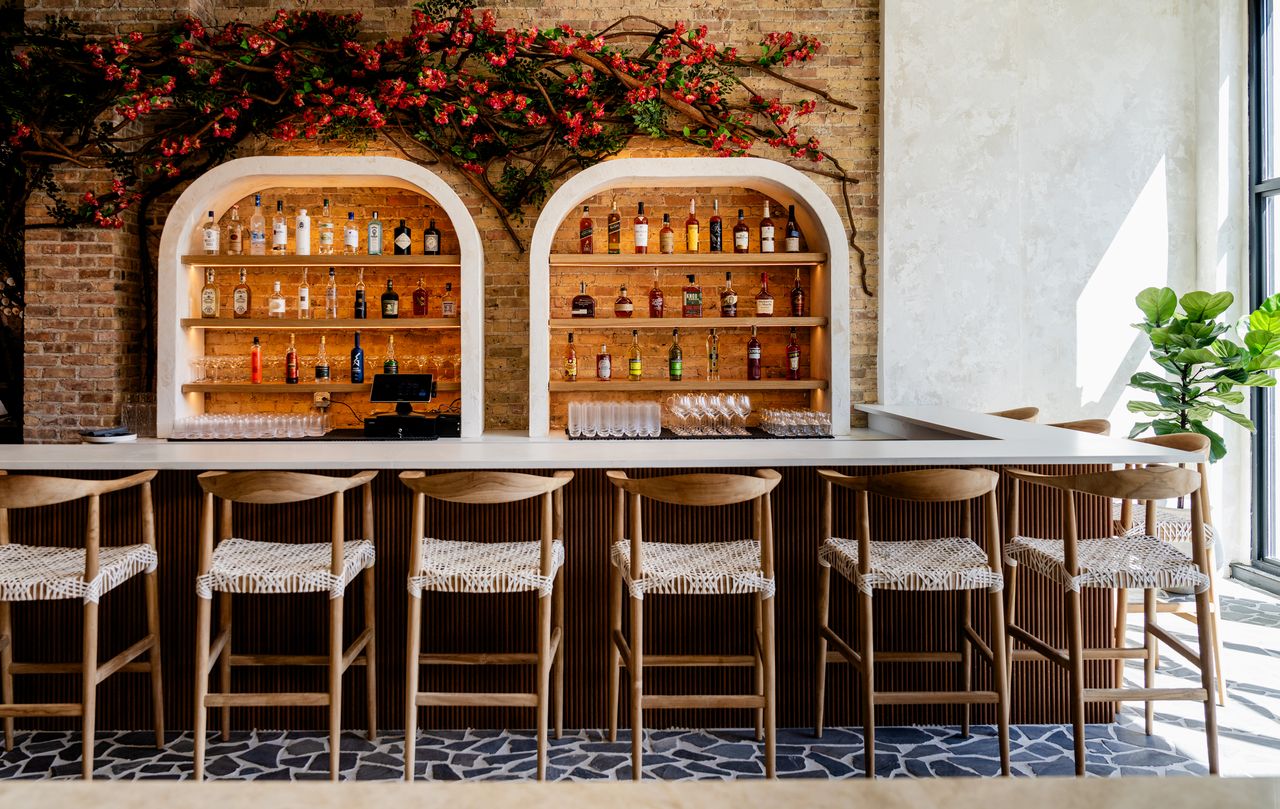
The knowledgeable and cheerful servers shared Ithaki’s desire to educate diners and drinkers about bright and lively Greek wine, usually more affordable than comparable French or Italian offerings (especially with tariffs on top), several of which were being passed at the event, including the Alpha Estate Sauvignon Blanc, Douloufakis Vidiano, Alexakis Kostifali/Syrah, Skouras Agiorgitiko “St. George,” and Le Pianure Prosecco, most imported from small boutique wineries. Some of the indigenous grapes that went extinct in the '70s are being resurrected for these offerings.
Featured cocktails included the Contrarian (Mitcher’s single barrel rye, ango bitters, plum), Santorini Garden (sweet liqueur mastiha, dill, cucumber, lemon), Labyrinthian (Wheatley vodka, lemon, beet/apple/carrot, ginger beer) and Siren Song (La Gritona reposado tequila, smoked pineapple, lime, ginger, hellfire spicy bitters).
The restaurant plans to carry bottles from Santorini, Nemea, Rapsani, and Crete; varietals like Xinomavro, Agiorgitiko, Robola, Moschofilero, and Assyrtiko; and Greek spirits including mastiha, ouzo, tsipouro, Metaxa, tsikoudia, and rakomelo.
The thick wine book’s foreword explains that Greek winemaking traditions are some of the oldest in the world, dating back to 3000 BCE, with grapes harvested from over 150 inhabited islands featuring unique terroirs, a combination of natural elements like soil, climate and topography. The largest and most general Greek wine areas are called Regional Protected Geographical Indications, which follow the same boundaries as Greece’s traditional regions.
“To taste these wines is to get closer to the life on these islands,” the narrative continues. “From the oceanic salinity of Moschofilero, to the aromatic herbal interplay in the rare Dafni variety, to the rich tapestry of Abiorgitiko…you will find yourself at home.”
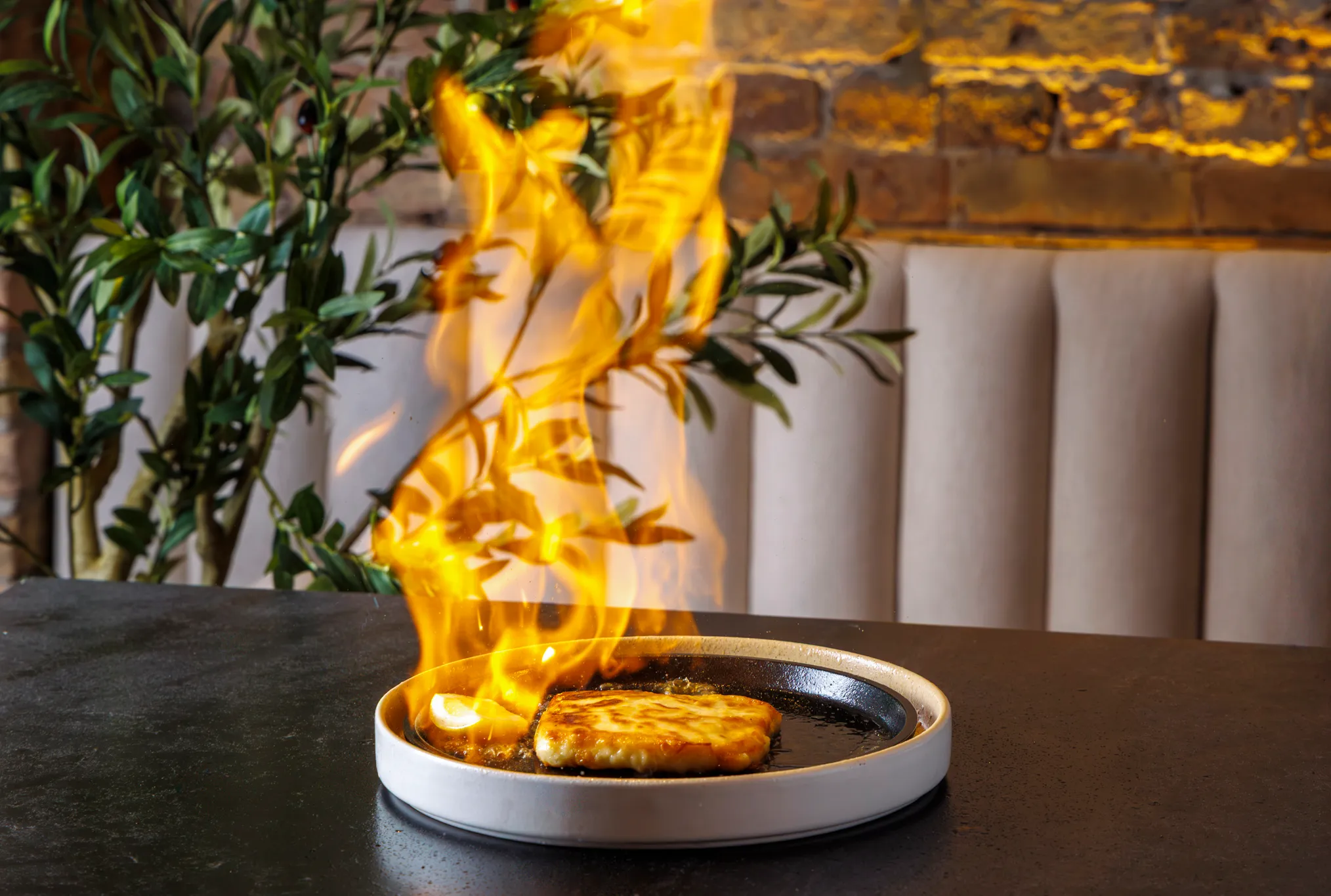
A full Ithaki dining experience took place a few weeks after opening, on a busy late-summer Friday night filled with boisterous diners and drinkers in front of the wide-open street windows.
The saganaki, a flaming cheese appetizer that originated here in Chicago’s Greektown, is a recommended opener. A firm cheese like Kasseri or Kefalotyri is dredged in flour, fried until golden, doused in brandy, set on fire tableside (with accompanying cries of “opa!”), and then extinguished with lemon, infusing a wide variety of flavors (including umami), textures and temperatures (and showbiz flair) into this appetizer, eaten with pita wedges.
A light, surf-inspired appetizer menu includes mussels and octopus alongside zucchini strings and grilled eggplant, plus a few more options. A multicolored platter of dipping sauces features melitzanosalata, taramosalata, tzatziki, skordalia and spicy feta, eaten with crudité and pita pieces.
Raw starter options include yellowtail Hamachi with green olive tapenade, salmon, oysters and seabass ceviche. For salads, the delicate watermelon carpaccio with feta, lemon and mint dill is a light bite for vegetarians and summer lovers. There are two mixed salad options, plus a roasted beet plate and egg lemon soup.
Main entrees from the wood-fired grill include a NY strip, red snapper, dover sole, plus a fresh and moist lavraki, the Greek word for sea bass (called branzino in Italy). This versatile white fish is delicate and buttery, with a flaky, tender texture plated with a simple presentation. In Greece, catching that fish is considered lucky, to the point that some journalists might refer to an exclusive news story as “catching a lavraki.”
On the turf side, there are two lamb dishes, the braised lamb and orzo youvetsi, and seared lamb chops, well-spiced with oregano and grilled lemon. Also featured are braised beef cheek with hilopites noodles, chicken roasted in the oven with bell peppers and tomatoes, and chicken or pork souvlaki skewers. The final large seafood entrée is squid ink spaghetti in bottarga butter with Dungeness crab and blistered tomatoes. Shared sides include hearty oregano potato wedges, braised okra and spanakopita.
Ithaki’s celebrated Greek wine selection lives up to its promise, from a light Peloponnese Moschofilero “Ode Panos,” to the tangy Dafni “Psarades” to the peppery Assyrtiko (both from Crete) to a grassy Macedonian sauvignon blanc. But with all that drinking, the restaurant could use more bathrooms in the back, just about the only downside to this bright, new venture.
Visit Ithaki to smash plates and/or get smashed while being treated like a goddess or god.
Ithaki Estiatorio is located at 314 S Halsted. Open Monday through Thursday 4pm to 9pm; Friday and Saturday 4pm to 10pm; and Sunday 3pm to 9pm.
