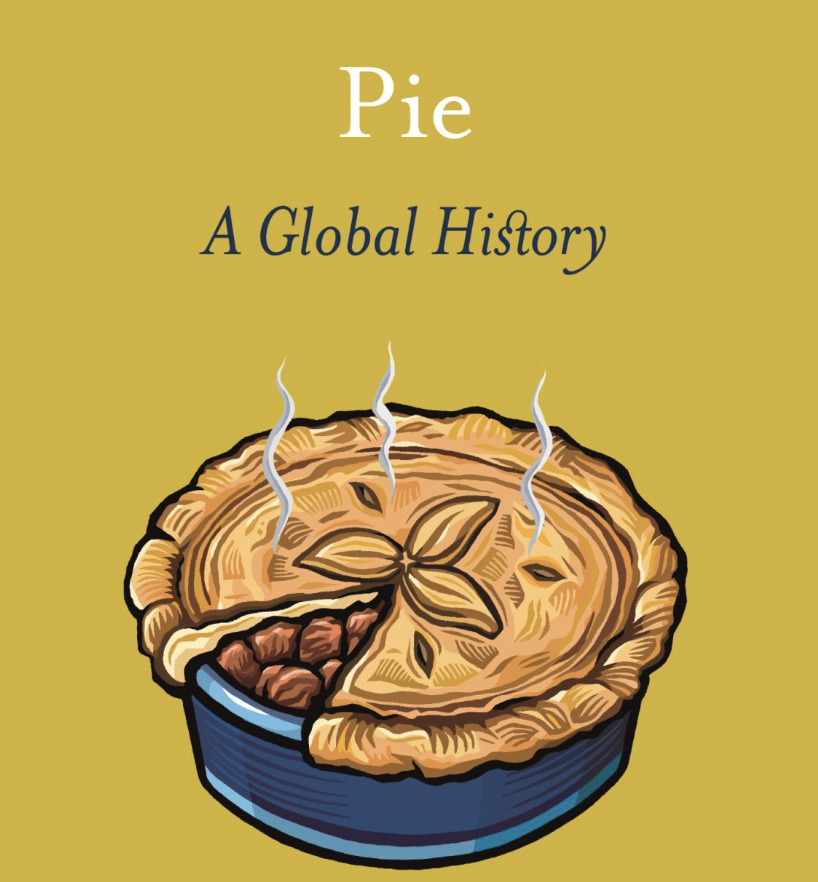
If you want to wow during the dessert course this Thanksgiving, don’t bother with the baking; all you’ll need is a stop at The University of Chicago Press for a copy of Janet Clarkson’s Pie: A Global History. Part of their Edible Series that has looked at the intricacies of Offal, Eggs, Champagne, and more, Pie takes you chapter by chapter into the depths of the history, appeal, and design of pies around the world. Barely over a hundred pages, you can devour this en route to Uncle Jimmy’s, ripe with conversation topics that will steer everything away from whatever will fly out of Uncle Jimmy’s mouth after five beers and a losing football game.
I never quite understood the allure of pie until I was older. It was only ever served properly at Thanksgiving—and although my mother did often create ice cream pies, or pudding pies in the summer, I don’t know if those truly count, since the crust was never pastry and more of a cookie crumble with added sugar and butter. Cake was always our go-to dessert, and every year, we would giggle at the story of my aunt who would request pie for her birthday instead of cake. And cherry pie, no less. A mound of gelatinous gooey balls, altogether too sweet and yet sour at once. It was the running family joke.
But now, as a proper adult at the age of 40, I can attest that pie is actually good. I do lean towards a savory concoction, or a cheese, or classic pumpkin. There’s a pie shop around the corner from me, and I find myself saying out loud, "Hey kids, you want to go get a slice of pie?"
After reading Clarkson’s full expose of this under-evaluated staple, it was clear that my mother’s pies did indeed count as proper pie. And that my whole life, I had been eating pie very consistently. The delicious joke is on me now. When it comes to pie, there are no real rules. They don’t need to be round or crisp. In fact, in Australia, there is an iconic dish called the pie floater. It is a meat pie served in the middle of a runny pea soup of sorts and drizzled with tomato sauce. The Europeans definitely take the cake on pie, though. The home of the pasty, the Stargazy Pie made with fish heads, eyes and all poking up out of the pastry, and of course, minced meat. Across the world, pie was both frugal and fancy, humble and opulent; it traversed social classes and sat upon frilly and hand-hewn tables.
The act of making a pie is an act of love, just as any meal made from hand and sweat and time is. Clarkson looks at the amount of mass-produced pies, and wonders, is the art and act of pie-making dead, or at least dying? And while some flavors may indeed perish in the name of ethics or palate, I do think that there is a shift in interest when it comes to the kitchen. There is a focus and tenderness and care that pie very much embodies, breathing resurgence. I can’t imagine buying a pie from Jewel Osco. I don’t even buy premade pastry. And there is no way that I am an anomaly. We are more aware than ever of what goes into shelved and frozen foods.
So, cheers to pie—may you all be thankful that eyeballs aren’t staring up at you from your slice and that someone’s doting hands created every flaky bite.
Janet Clarkson’s Pie: A Global History is available through the University of Chicago Press and various places where books are sold. For more information or to purchase the book, visit press.uchicago.edu.
If you found this post interesting, please consider supporting Third Coast Review’s arts and culture coverage by making a donation. Choose the amount that works best for you, and know how much we appreciate your support!
