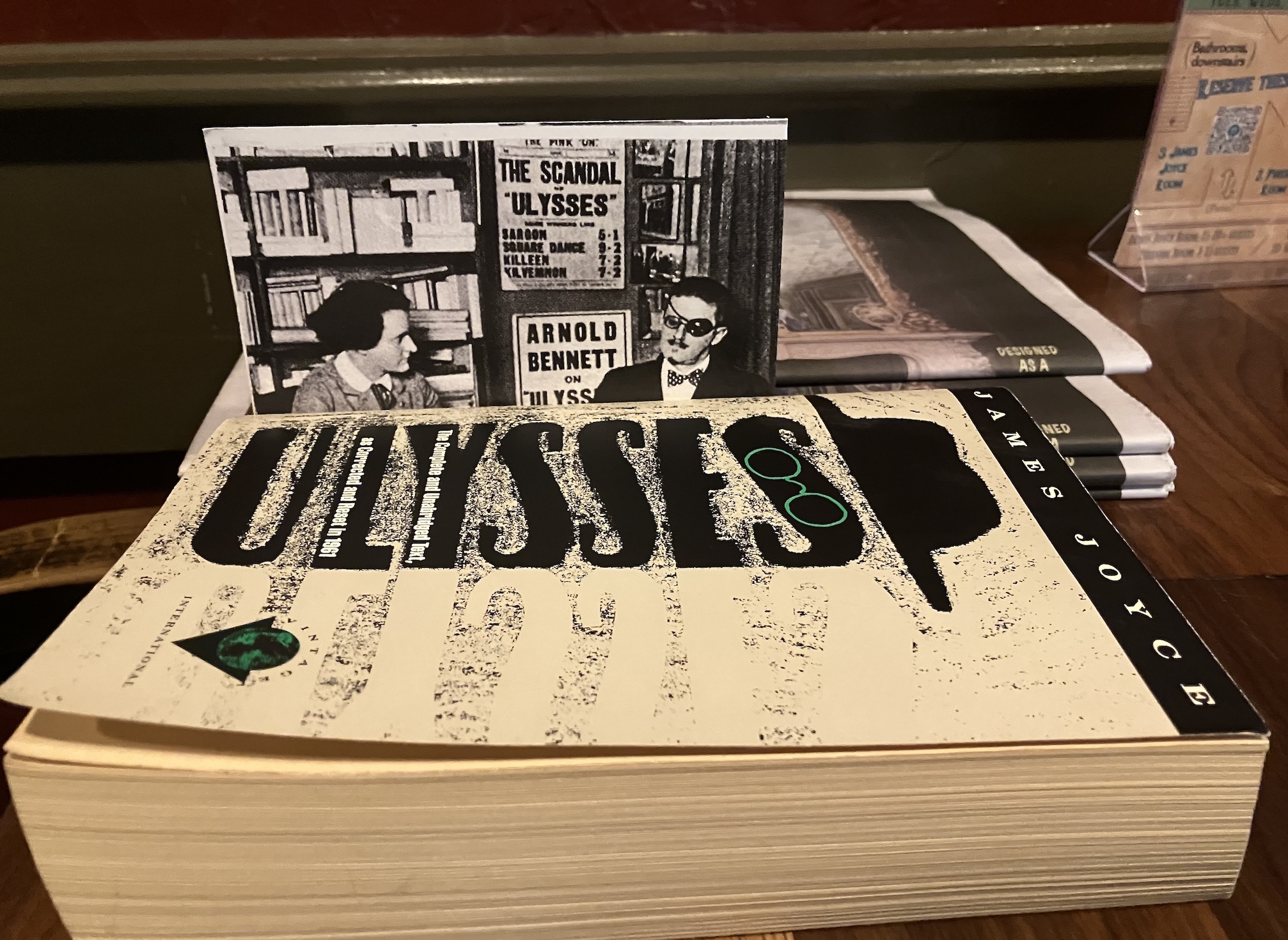
Ulysses. The book Sylvia Beach’s Shakespeare and Company published in Paris in 1922. The book that was banned in the US and the UK. The book people either love or hate. Some try to read it but give up in frustration, stymied by its unconventional narrative structure and obscure references, while others shake their head and wonder what the fuss is all about. Regardless, Ulysses made James Joyce both famous and infamous.
June 16—the date on which the novel is set—has come to be known as Bloomsday (named after Ulysses' iconic character, Leopold Bloom). While set in and celebrated in Dublin, Ireland, each year with various literary events, other cities also mark the date with praise and performances honoring the book and its author. Chicago is no exception.
I have seen Bloomsday events here several times over the years: at the Irish Heritage Center; at the Newberry Library, where readings were held at Oak Street Beach and we all ended up at the Kerryman, a River North pub; and at Chief O’Neill’s, which offered a musical take on the novel with singer Jamie O’Reilly at the helm.
Likewise, since 2004, Chicago playwright Jeff Helgeson has hosted “Bloomsday in Chicago” at the Galway Arms in Lincoln Park. On Monday night, a community of Joyce fans, literary lovers, and the just plain curious came together on Clark Street and met in the restaurant's cozy upstairs room surrounded by paintings of fox hunting and a large framed black and white cover of Richard Ellmann’s biography of the man himself. The evening featured cast members of a planned production of Ulysses in Nighttown and the book release of Do It Yourself Ulysses from Puddin’head Press.
Ulysses, inspired by Homer’s The Odyssey and divided into three books with 18 episodes, depicts a day in the life of Leopold Bloom—the Jewish Everyman of Joyce’s stream of consciousness novel—and various Dublin residents. Author Edna O’Brien once called Ulysses “eighteen novels between the one cover.”
“We’ve distilled it down to all the key beats,” said ebullient host Rory Barton. And with the words, “It’s now 8 a.m. June 4, 1904,” the show began. At Martello Tower in Sandycove, outside Dublin, we encounter Buck Mulligan, a medical student, and Stephen Dedalus, an aspiring writer and Joyce’s alter ego. Shortly after, we meet Bloom, an ad man for a Dublin newspaper, as he begins his day by going to a butcher shop to buy a kidney for his breakfast. He is very fond of offal, we quickly learn. Or as Joyce writes, “Mr. Leopold Bloom ate with relish the inner organs of beasts and fowls.”
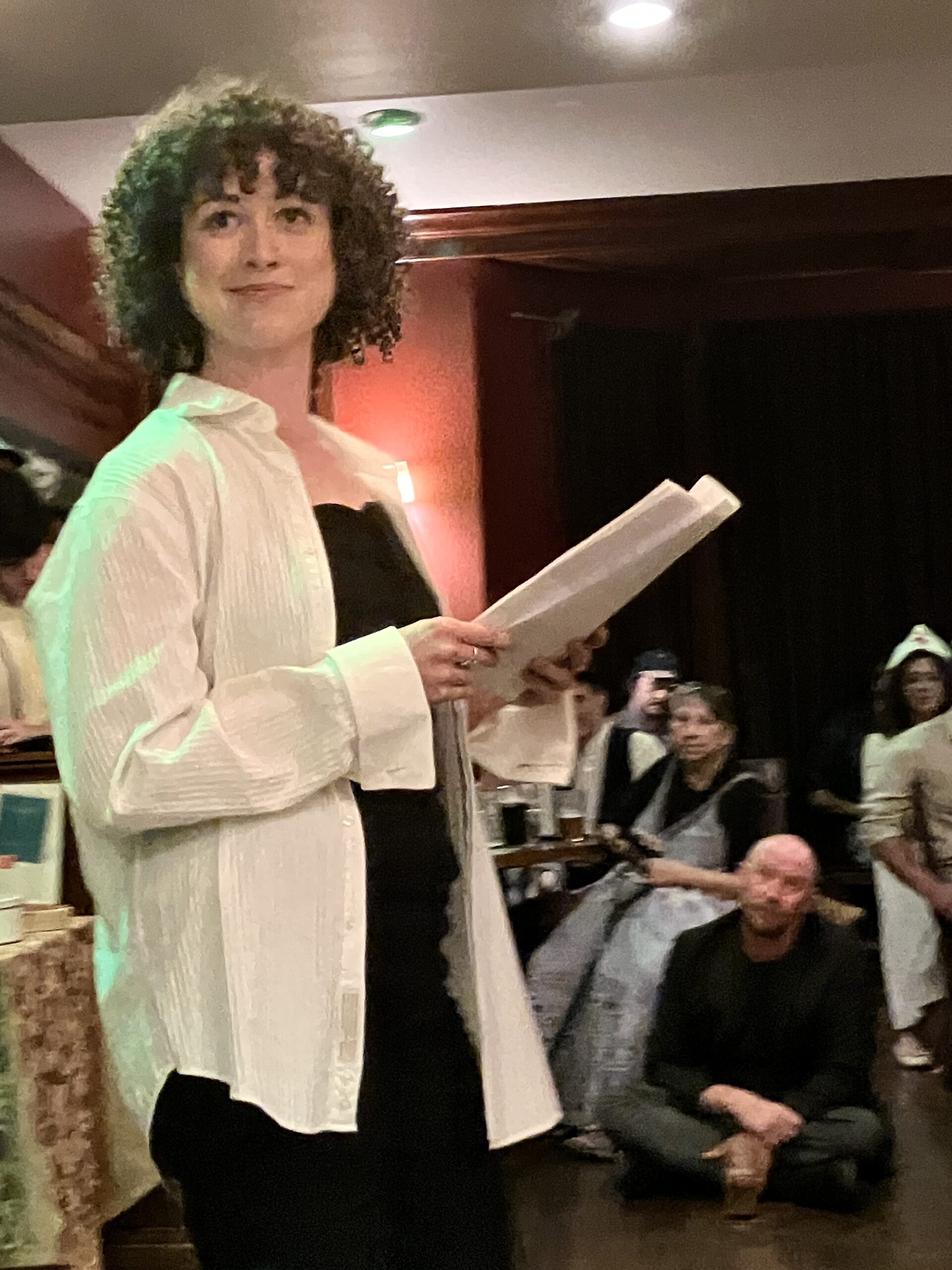
The cast was clearly having a grand ol’ time as they took turns reading sections of Joyce’s nearly 800-page tome. At a little under three hours, which included a lovely pre-show of Irish classic tunes and song (“Star of the County Down,” “Carrickfergus,” and “Down by the Salley Gardens”), the evening’s entertainment presented a shortened and PG version—although there were still plenty of racy bits to go around to a full and appreciative house. Some of the audience members were dressed in their Joycean best. One young woman wore a straw hat, a black band with the words “Davy Byrne’s,” wrapped around the brim—the pub where Bloom famously orders a Gorgonzola cheese sandwich and a glass of burgundy.
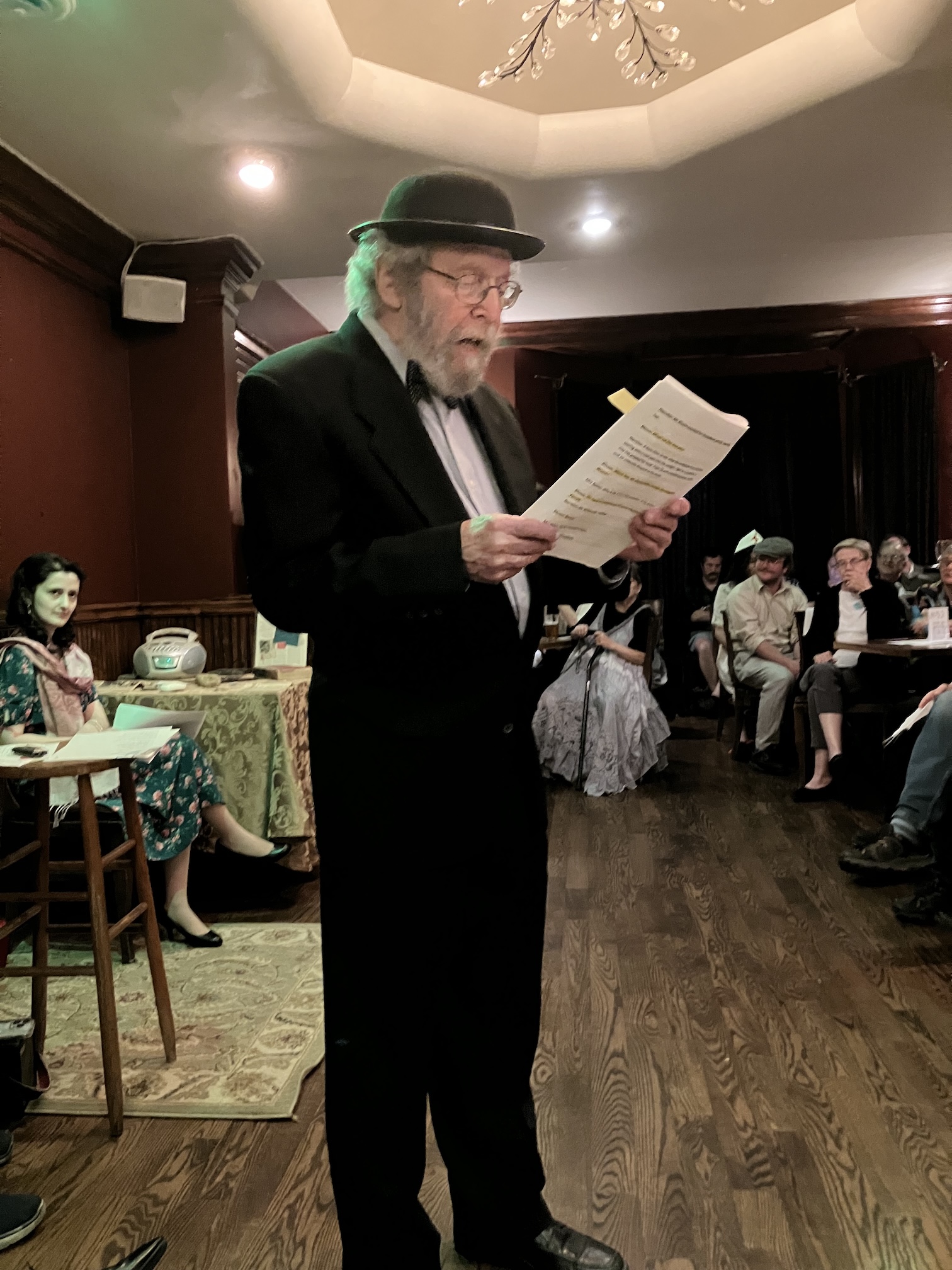
Some read from sheaves of papers, others from a copy of the Do It Yourself Ulysses (available that night for $10). Several were members of the Hyde Park Community Players. Among the standouts were Frank Roberts as Stephen Dedalus. Wearing a flat cap, suit and tie, and carrying a walking stick, Roberts brought young Dedalus to life. The vivacious and flirty Courtney Reid Harris was especially impressive as she read from the notorious “Nausicaa” section. (Why notorious? In 1918, The Little Review, a literary magazine founded in Chicago, began serializing portions of Ulysses, including the “Nausicaa” episode, which led to the issues being seized and banned by the US Post Office and its editors, Margaret Anderson and jane heap, convicted of publishing obscenity. The ban was lifted in 1933.)
Howard Raik made Bloom, the unlikely hero, a vulnerable and sympathetic figure. Dressed for a funeral, he wears a bowler hat, bowtie, and a black mourning suit. We follow him around Dublin as he has a series of encounters and incidents, some funny, some sad. In the Circe episode—the scene set in Nighttime, Dublin’s red-light district, Stephen has fallen to the sidewalk after a row with a soldier and after seeing a vision of his dead mother. As Bloom helps Stephen get back on his feet, he experiences a vision of his own, that of his deceased young son, Rudy. “Rudy,” Raik calls out, his mouth frozen in horror. It’s a haunting and powerful moment.
The night ends with Molly Bloom’s famous “Yes” soliloquy. A hearty roar erupts from the crowd as they downed their glasses of Guinness, savoring the camaraderie and going out into the unseasonably chilly night.
They would have to wait another year to do it all again.
But hold the kidneys.
If you enjoyed this post, please consider supporting Third Coast Review’s arts and culture coverage by making a donation. Choose the amount that works best for you, and know how much we appreciate your support!
