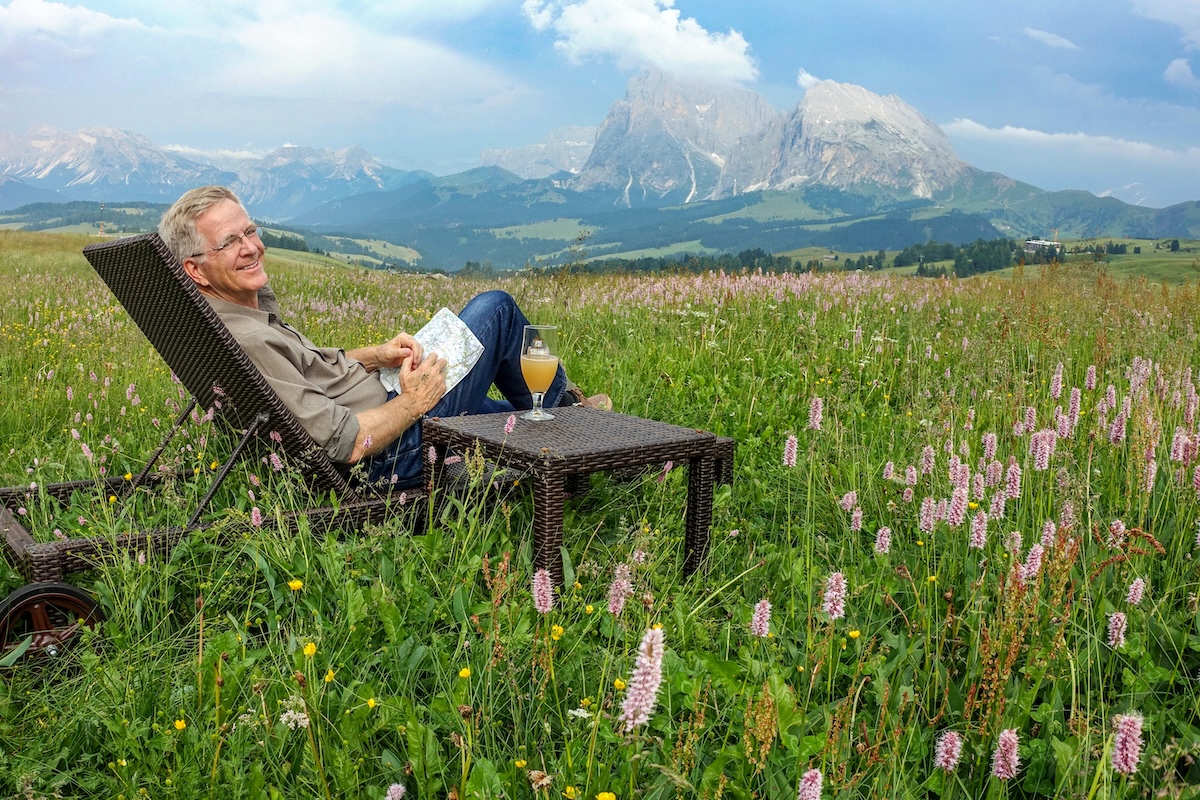
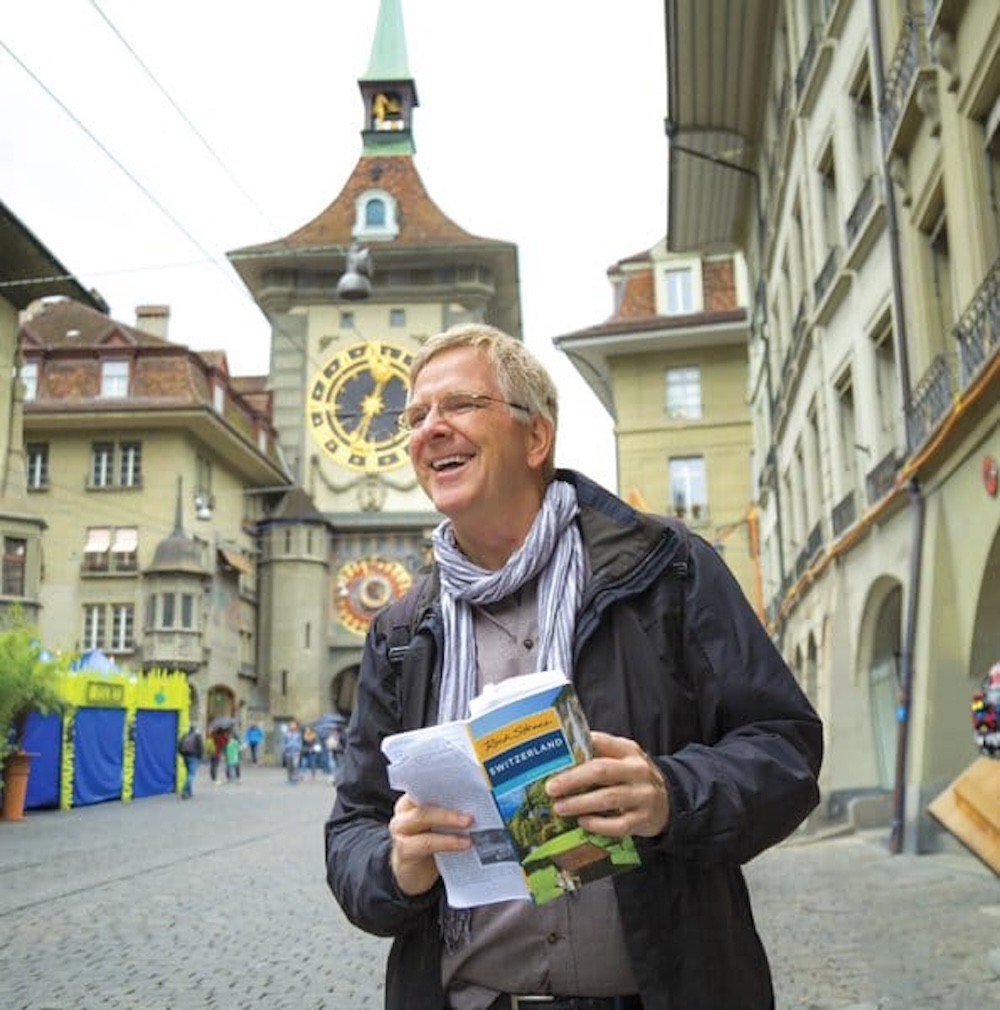
Rick Steves was in the spotlight this week for the Spring Chicago Humanities Festival. Steves is a travel virtuoso, activist, and humanitarian. He is known for his travel series, seen on PBS and Netflix. The series has focused on Europe since 1991, with forays into Africa and South America for a special on hunger, one of Steves' humanitarian interests. His latest book, On the Hippie Trail, was actually written nearly 50 years ago as a detailed journal of a trek from Istanbul to Kathmandu with his school pal, Gene Openshaw.
Steves regaled a full house in the auditorium of Francis Parker School with the funny and thoughtful recounting of his youthful adventures. The people that he met and the lessons learned ignited more than a love of travel. He met people in the process of living everyday life. He spoke of knowledge and trades passed through the generations, and how different it was from the American striving to succeed and make a lot of money. His travels took place before the advent of digital photography, cell phones, and credit cards. I got a good chuckle from his memories of a Pentax 35mm and film. It was always an adventure to see what showed up in the pictures when the film was developed.
A slideshow ran in the background as Steves spoke, with photos of the travel bus packed with people, perhaps at a rest stop. He mentioned the lack of service-station washrooms, where riders would have to go al fresco, with women shielded by hoopskirt-type shields for modesty. Dry sand and then wet sand. The sounds, smells, and tastes were a kaleidoscope for the young Americans. One particular smell was Steves losing his marijuana virginity. He described how everything was bright and enhanced, but he didn't feel a buzz. It was amusing, if queasily so, to hear about Steves and Gene's both getting worms from a dodgy meal or coming across a goat being skinned on the street.
I was in college in 1978 when Steves and Openshaw were venturing in the land where the Beatles had been hanging out with the Maharishi at an ashram in India. Iran was becoming restless with Mohammad Reza Pahlavi, aka the Shah, on the verge of a theocracy. The Soviet Union invaded Afghanistan and discovered that the people in that part of the world "had a spine," as Steves put it. By 1979, there was a hostage crisis, and the USA was involved in pitting Iraq against Iran. Steves has a unique perspective on what the citizenry of that region thinks of Americans.
The talk took on an activist and humanist theme, and I was there for it. Steves spoke about the trillions being spent on invasions that we will never win, and pointed out the folly of so few people guiding the narrative of what makes America great. It would cost $5000 to build a well in Ethiopia, but our leadership has gutted USAID, which saved lives and was on track to wipe out poverty. These are things that aren't on the news or social media, but they get exposure from Steves. Daring to travel and be respectful of other cultures is a political act, and is the name of another book by Steves titled Travel as a Political Act.
Experiences "carbonate your travel," according to Steves, and the proof is the man himself. His energy is effervescent and seemingly endless. He invited us to have our books signed in the gym next to the auditorium. He wanted us to form a layered circle around him so he could continuously sign. He was armed with a fine-tipped black marker, and I found myself in a travel-loving mosh pit. Steves is also active in the legalization of cannabis, so I took the moment when he signed my book to say "Happy 420!" It made him laugh, and for a moment, I could feel that energy up close.
I have seen America from coast to coast, but my only knowledge of foreign lands is from National Geographic specials and my Golden Book Picture Atlas set read many times over. I had never seen anything so exotic in person. Rick Steves ignited my curiosity and reminded the audience that they need to have the spine to meet people as they are, without being such "great" Americans. People are as curious about Americans as we are about them. They want to know how our political trajectory has shifted, so Steves recommends that we travel with a good explanation of the Electoral College. I'd better get cracking on that passport!
Rick Steves spoke at the Spring Chicago Humanities Festival on April 20 at Francis W. Parker School in Lincoln Park. His latest book, On the Hippie Trail, is now available from the publisher or your favorite bookseller..
Remember that Saturday, April 25, is Independent Bookstore Day in Chicago and nationally. Buy from an independent. To learn more about Rick Steves and to hear his podcasts or watch episodes, visit his website.
If you found this post interesting, please consider supporting Third Coast Review’s arts and culture coverage by making a donation. Choose the amount that works best for you, and know how much we appreciate your support!
