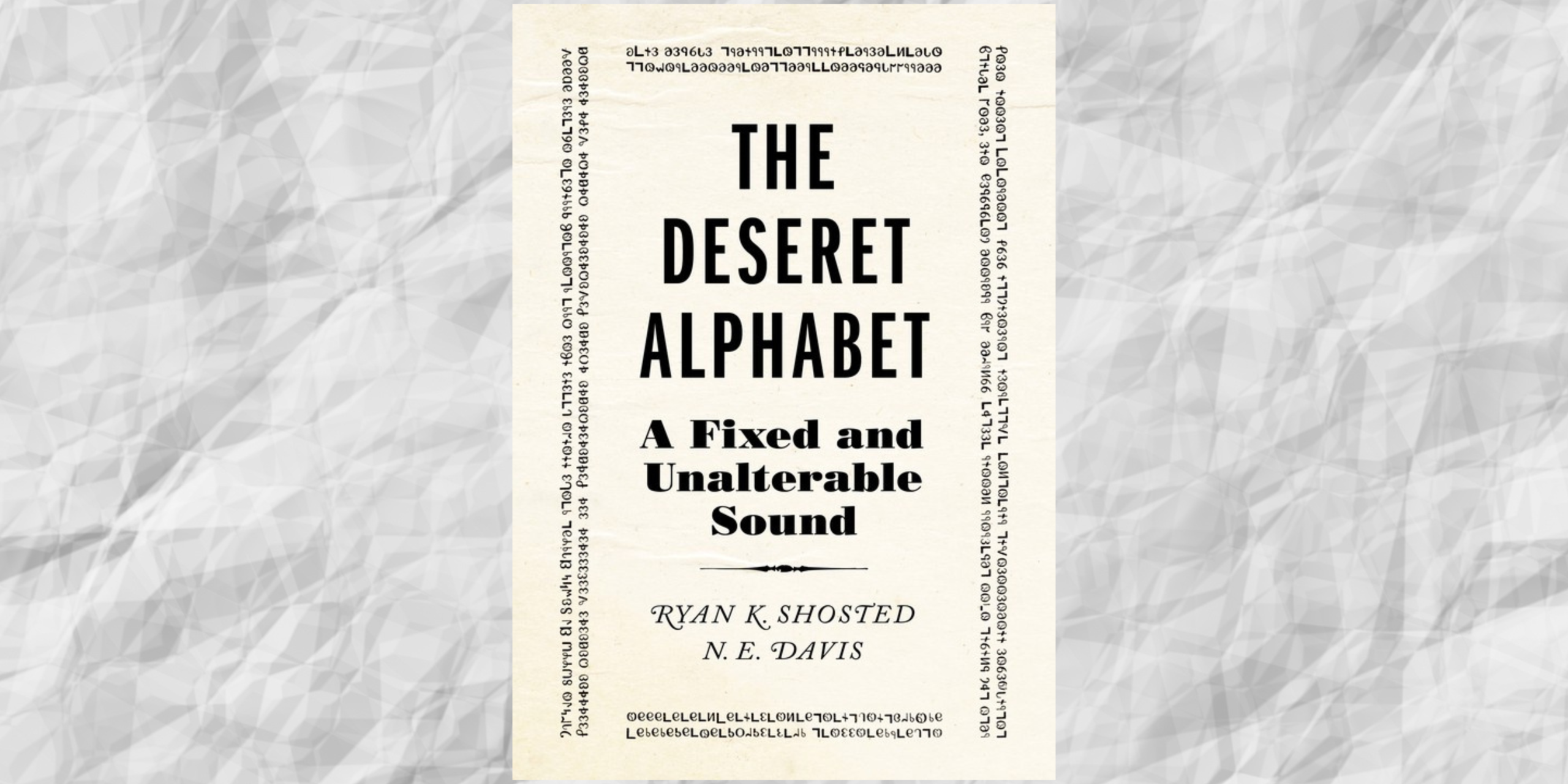
Reviewed by Donna Kossy

Through the history of an obscure alphabet conceived in the middle of the 19th century by Mormon church leaders, this fascinating work of scholarship reveals much about how language and culture infuse religious movements. Ryan K. Shosted, a University of Illinois linguistics professor, and N. E. Davis, a designer of computer languages, show how the Deseret Alphabet project was conceived as an attempt to create a pure language of God, uncorrupted by the Gentile world, but ultimately failed, due to practical issues. (The name Deseret as found in the Book of Mormon, translates to honeybee and is applied widely by Mormons to signify their various enterprises and place names.)
The story of the design of the new script, however, begins not with Mormon metaphysics, but with the wider culture’s interest in orthographic (that is, spelling) reform. In the 19th century, progressives and cranks alike set their sights on English as ripe for “simplified spelling.” This reformist zeal produced many attempts, mostly futile, to alter the spelling of English, in order to eliminate the myriad confusing features of English spelling such as the varied pronunciation of the letter sequence ough in such words as though, through, and trough. The new schemes sometimes used fewer characters, sometimes more, and, in other cases, a completely new alphabet. One such, Isaac Pitman’s shorthand, became the basis for the new Mormon script.
George Darling Watt, a British convert to Mormonism, promoted shorthand to fellow Mormons as a way to write by sound, and at first, the church leaders planned to use the Pittman characters for their publications, as a way to avoid “the script of the Gentiles.” Church President Brigham Young, besides craving an untainted “pure” language for his flock, also wanted a script where spelling and pronunciation would be the same, so that school children and non-English speaking Mormon converts alike, would find it easier to write and spell English. The new alphabet would also be a way to consolidate their community in the West, following their flight from hostile Gentiles in the Midwest.
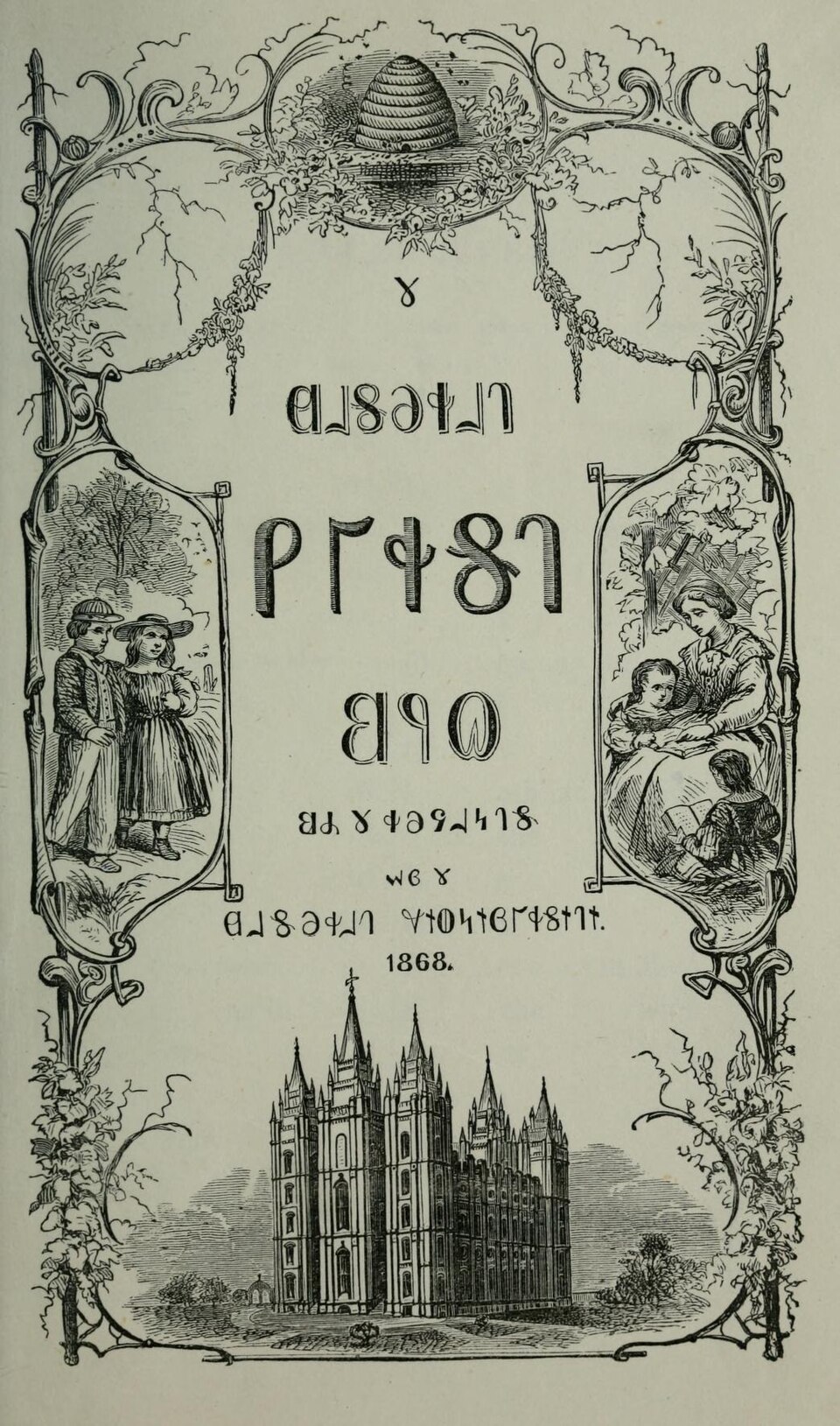
Though not riveting, the story of all the wrangling among the church leaders about the design and use of the Deseret Alphabet highlights an inevitably messy process. Divinely inspired or not, the new alphabet had to be created by human hands. Differences of opinion emerged on the question of whether to alter Roman type or to invent entirely new characters. They opted for the latter, and in the end, the church fathers ended up taking votes on every individual character of the 38-character proto-alphabet. Finally, on December 22, 1853, they voted to accept the final version of the Deseret Alphabet, intended to be a godly script, but which was instead the result of individual hobby horses.
Unsurprisingly, pragmatic concerns stymied the new alphabet’s dissemination and popularity. Teachers had to take the time to learn the new script before presenting it to their pupils. The leaders spent much of their time breathing over the shoulders of printers, and looking for type cutters to forge the new letters. In the end, the script penetrated the Utah territory in a limited way: a phonetic speller was developed to aid in learning the new script; the Mormon newspaper, The Deseret News, printed a different Bible verse rendered in the Deseret Alphabet in each issue. Mormon missionaries were dispatched to teach the new script to the tribes in the area, including the Hopi.
As it became known to the wider world, Mormon leaders were at pains to dismiss any charges that the Deseret Alphabet was a secret code used to hide their devious plans from the public at large. The authors discuss the limited evidence that some leaders did use the script sporadically in journals and letters, to conceal uncomfortable material regarding such sensitive topics as plural marriage (polygamy) and the Mountain Meadows Massacre. Outsiders were also suspicious that the Deseret Alphabet was being used as a means to control their members. These kinds of charges became moot however, as it was difficult to persuade ordinary Mormons to start using the new script, including teachers, who reportedly ignored it.
By 1867 the alphabet was characterized as “beleaguered,” and two years later, the leaders officially gave up on promoting the script. Ironically, this was the same year the Deseret Alphabet version of the Book of Mormon finally appeared. However, the Deseret Alphabet lingered on in fits and starts, even penetrating the nether regions of American popular culture. The 1995 cult film Plan 10 From Outer Space (ostensibly a sequel to Plan 9 from Outer Space), features the Deseret Alphabet along with other Mormon in-jokes. And Utah underground artist Robert “Bob” Moss (1953–2011) created multimedia Deseret Alphabet art beginning in the 1980s. In the political sphere, a revanchist Mormon online group, using the hashtag #DezNat, have been known to render their catchphrases such as “Deseret will rise again,” in the defunct script. The Deseret Alphabet may or may not rise again, but according to this illuminating volume, it never fully rose in the first place.
The Deseret Alphabet is available at bookstores and through the University of Illinois Press website.
Donna Kossy grew up in Evanston, and in days of yore published and edited zines (False
Positive, Kooks,and Book Happy) and authored two nonfiction books (Kooksand Strange
Creations). Later, she became a bookseller and now peddles weird old books, pamphlets, and
magazines from her den in Portland, Oregon. Through the years, she has also made hundreds
of cut-and-paste and digital collages. Follow her at @dkossy.bsky.social and browse her
book inventory here.
