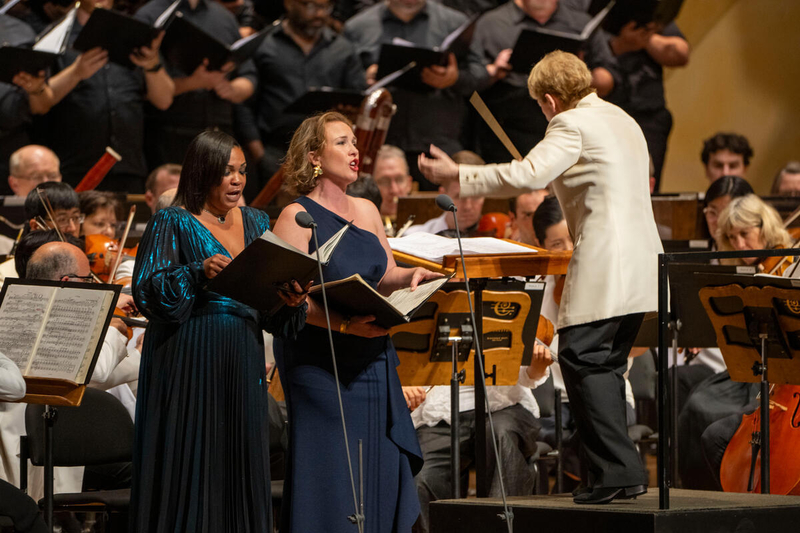

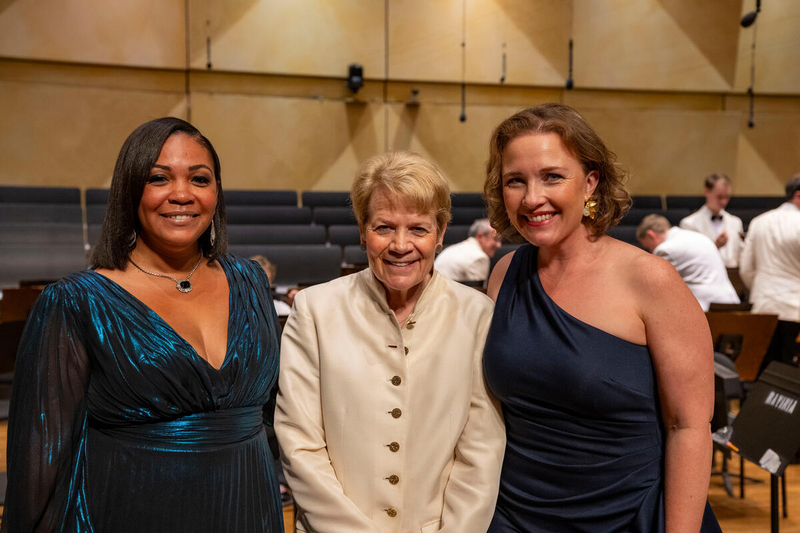
With Marin Alsop at the helm, the Chicago Symphony Orchestra and Chorus gave a huge performance of a gargantuan symphony in the Pavilion at Ravinia on Friday night. The chorus was joined by two soloists, soprano Janai Brugger and mezzo-soprano Sasha Cooke. This concert was part of the CSO’s annual residency at Ravinia.
The only work on the program was Gustav Mahler’s Symphony No. 2 in c-minor, Resurrection. Even by Mahler’s standards, this 90-minute symphony is way over the top. It requires just about every resource the CSO can bring onstage—and offstage, from where several horns, trumpets, and percussion instruments were played. While long, an excellent performance can be exhilarating, and that’s what Alsop presented on Friday night.
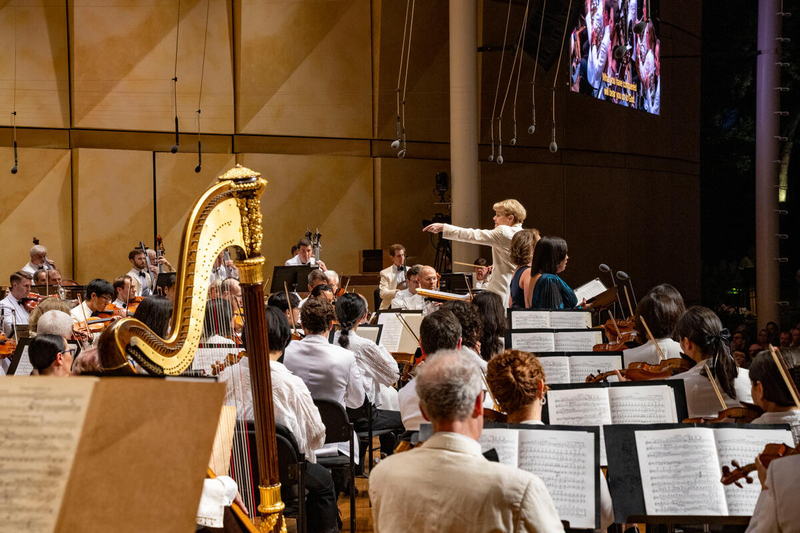
As an outdoor setting, the Ravinia Pavilion has several advantages over Millennium Park. There were no distractions from cars and sirens on adjacent streets or aircraft noises overhead. However, its setting in the woods allowed for crickets and other insects to sing in the trees. Unfortunately, they were out of tune and very distracting in quieter moments.
Two very helpful things inside the pavilion were large video screens perched over the sides of the stage. In addition to focusing in on prominent sections and soloists, they provided a front-on view of Alsop conducting. Crouching over the podium, she sports an avuncular, professorial expression. With baton in right hand, she had an engrossing rapport with the orchestra and would turn to face the sections as she cued them in. During the curtain call, she walked upstage and pointed out each of the many soloists.
This symphony in five movements tells the story of death and misfortune and the life that can emerge from tragedy. Mahler called the opening movement “Totenfeier,” or “funeral rite,” labeling it Allegro maestoso Mit durchhaus ensterm und feierlichen Ausdruck. It starts with a droning melody on the cellos and basses, with the other sections, starting with the winds, superimposing melodies of their own. Under Alsop, the CSO captured these funereal emotions with precise timing and phrasing. When the whole orchestra sounded at once, it was spectacular.
This symphony offers many examples of Mahler’s gift for blending intensity and serenity within fairly short time spans. Interwoven with the sad intensity were sections of exceptional beauty, where the violins paired with the horns and other instruments. Alsop was very effective in the dynamic transitions between very soft and very loud, especially noteworthy was a long crescendo in the first movement.
Most of the symphony’s intensity resides in the outer movements, with the finale taking up almost half of a performance. The middle movements explore happier feelings, with the second movement, Andante moderato. Sehr gemächlich. Nie eilen, starting with a lovely setting in the strings, which were fully up to the task.
The vocals start in the fourth movement, Urlicht: Sehr feierlich aber schlicht. On Friday night, mezzo-soprano Sascha Cooke gave a gentle performance over a brass chorale, creating a wonderful blend. With English translations on the video screens, she sang in German and her diction was very clear.
The finale starts somberly but the Resurrection eventually arrives; it just takes a bit long to get there. Everyone plays in the finale, and Alsop led the CSO, CSO Chorus, Cooke, and soprano Janai Brugger to meet all of Mahler’s requirements. Several horn and trumpet passages were played from offstage and created the intended effect of coming from a distance.
As the Resurrection was taking place, Cooke and Brugger sang well together and were clearly enjoying themselves. The chorus entered very quietly, while still seated. They stood up as the intensity grew. By the end, the celebration was exhilarating. Everyone sounded the glory.
The CSO continues its summer residency at Ravinia with Beck and conductor Edwin Outwater, Wednesday, July 23, 7:30 pm.
Marin Alsop leads the CSO on what is being called an exhilarating sonic journey across the globe in Breaking Barriers 2025. This program ends with Rimsky-Korsakov’s Sheherazade. Friday, July 25, 8:00 pm. For more information, click here.
