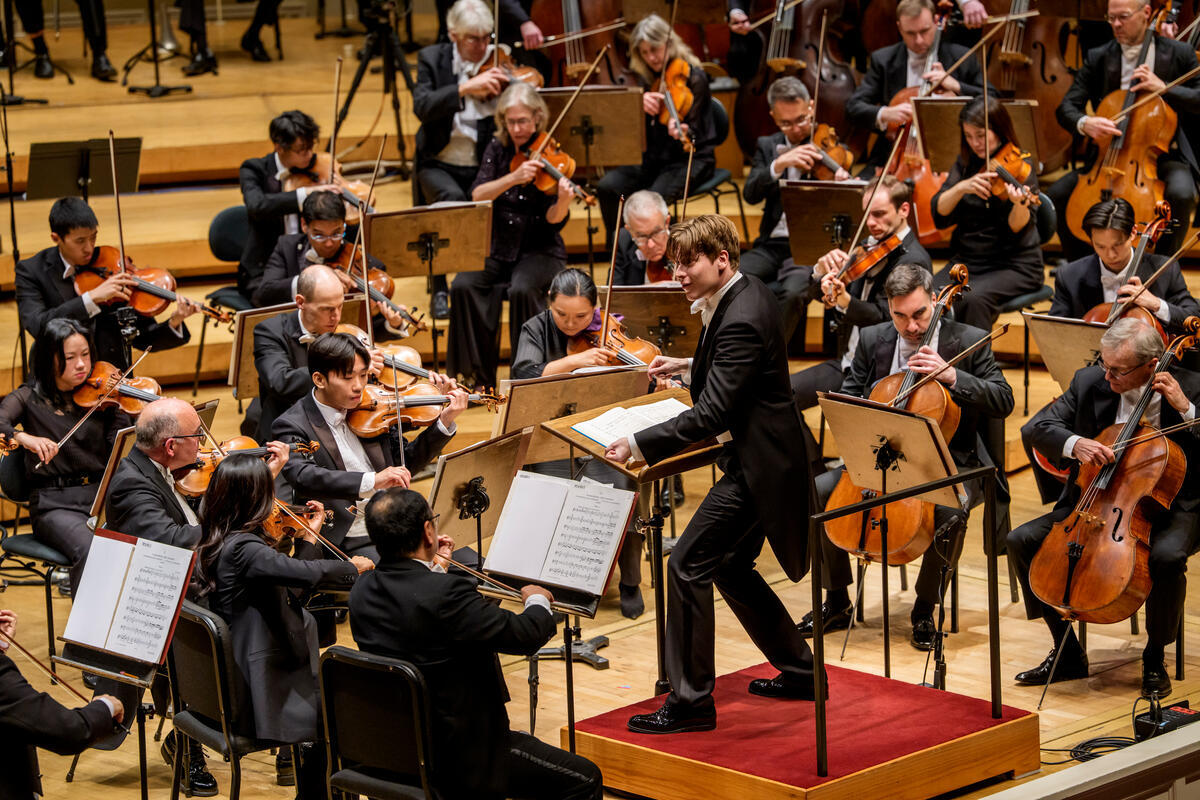

With an astonishing palette of sound and moods at his disposal, Music Director-designate Klaus Mäkelä led the Chicago Symphony Orchestra through tone poems celebrating heroes at Symphony Center on Thursday night. With the addition of guest principal flutist Herman van Kogelenberg from the Munich Philharmonic, the CSO relied on their own performers in several solo opportunities.
The first half was Lemminkäinen, a four-part work by Finnish composer Jean Sibelius. Intermission was followed by Ein Heldenleben by Richard Strauss. Notwithstanding a few challenges in the first half, the performance was dreamy, wistful, and fabulous. This music allows an orchestra to showcase aural colors and textures, and the CSO put them all on display.
As the printed program noted, Sibelius based Lemminkäinen on the Finnish epic poem Kalevela. Being new to this music, I was struck by how unusually florid and fluid it is. From the horns' opening notes of “Lemminkäinen and the Maidens of Saari,” Sibelius was able to create the sounds of boats in a port. This soon shifted to the sounds of swirling water in an open sea. Unfortunately, the horns were not precisely synchronous at the start. There were other instances when phrasing was a bit ragged, but this had little impact on the overall thrill of the performance.
Under Mäkelä’s direction, the orchestra’s sections were perfectly blended. When the woodwinds came in with a charming tune, the strings marched behind them with backing long notes. When the cellos took the melody, the brass kept the march going, and the basses did the same when the violins came to the fore. With the help of percussion, moments of maelstrom were followed by sounds of contemplation.
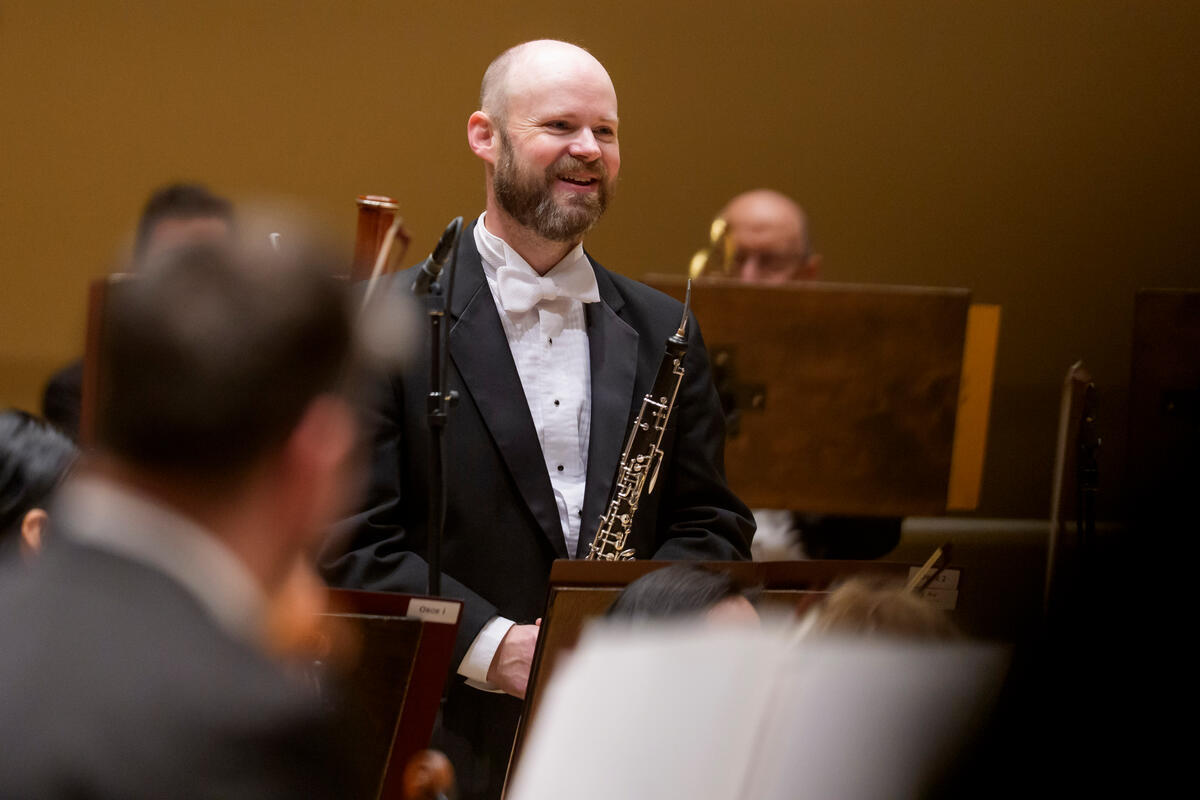
In “The Swan of Tuonela,” Sibelius turned to the moody and mystical, and the CSO turned to Scott Hostetler, who played the English horn solo with heart-rending aura. At first, he was accompanied by the muted strings, but the rest of the orchestra soon joined the action.
A very dark image was set by the basses in “Lemminkäinen in Tuonela.” They quietly played the rising and falling melody that pervades the movement. This sadness was completely overturned by joy and triumph in the finale, “Lemminkäinen’s Return.”
After intermission, we were treated to Richard Strauss extolling the virtues and struggles of a special hero, himself. Over several interwoven sections, we hear his heroic fanfare that returns throughout the piece. We then hear his critics, his life partner, his battles, and finally, complete serenity.
In the hands of Klaus Mäkelä it was sweeping and magical. From the first notes on the tuba, the orchestra reproduced the frenetic sounds of this music. Unlike occasions in during the Sibelius, the orchestra’s phrasing was exquisite. This is no small order given the orchestra’s larger size. Mäkelä was especially good at the layering of the sections, where middle instruments would sound the main melodies while the violins would soar overheard and the basses would rhythmically plod underneath.
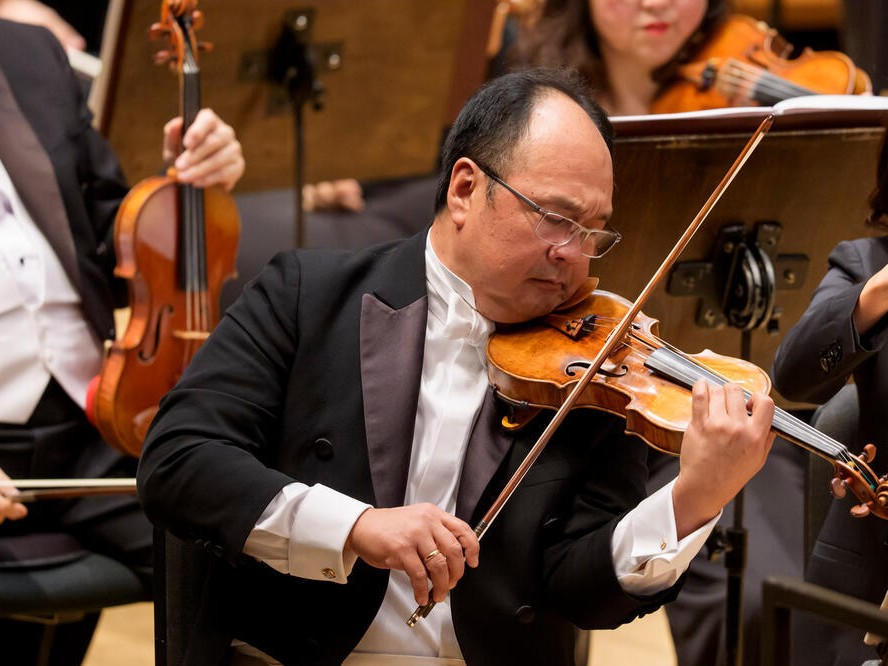
The woodwinds embody the role of the hero’s critics, and they snarled and hissed as Strauss requested. The music took on an air of pastoral poignancy as Strauss’s wife Pauline de Ahna came to the fore. Concertmaster Robert Chen, whose playing is always beautiful, had solo honors. Here, his violin took on the voice of a loving soprano.
As the piece was transitioning, trumpeters Esteban Batallán, John Hagstrom, and David Inmon crept backstage to lead the battle charge from a distance. Using a rather restrained posture with his arms close to his chest, Mäkelä led the orchestra through this dazzling show of frenetic wonder. Closing my eyes, with the help of strident percussion, I imagined shrapnel flying everywhere.
The battle ends with the hero’s fanfare, and things proceed to an unexpectedly charming ending. The CSO’s full aural color was on display, and the effect was awesome. It was a real treat to sit back and allow swirl.
Klaus Mäkelä and the CSO repeat this program at Symphony Center tonight, Saturday, February 21, at 7:30 pm. For more info, click here.
If you enjoyed this post, please consider supporting Third Coast Review’s arts and culture coverage by making a donation. Choose the amount that works best for you, and know it goes directly to support our writers and contributors.
