
In 2021, the Music Institute of Chicago launched One Composer, One Community, to give underrepresented composers the exposure they deserve. They have honored Black composers William Grant Still and Florence Price, both of whom have received more notice in recent years. There was also Hector Villa Lobos of Brazil and Indian-American Reena Esmail. This year, the focus is on Mexican composer Manuel Maria Ponce. The academic year at the Music Institute of Chicago includes the composer in the curriculum, professional development, and the composer's music in concert.
Ponce was born in Fresnillo, Zacatecas, Mexico, in 1882. He was a child prodigy and started composing at age 5. Ponce became the first Mexican to broaden access to Mexican-influenced classical music. He studied classical music in Germany before returning to Mexico to teach and perform. His influence on classical music cannot be understated. Ponce opened the door for classical music to be written in non-European countries. Keynote speaker, Jeordano Martinez, said, "When you hear Manuel Ponce's music, you can smell the pulque!" Pulque is a liquor that can be made at home for convivial games of dominoes or after a family dinner. Ponce wrote his most famous song, Estrellita, in 1912.
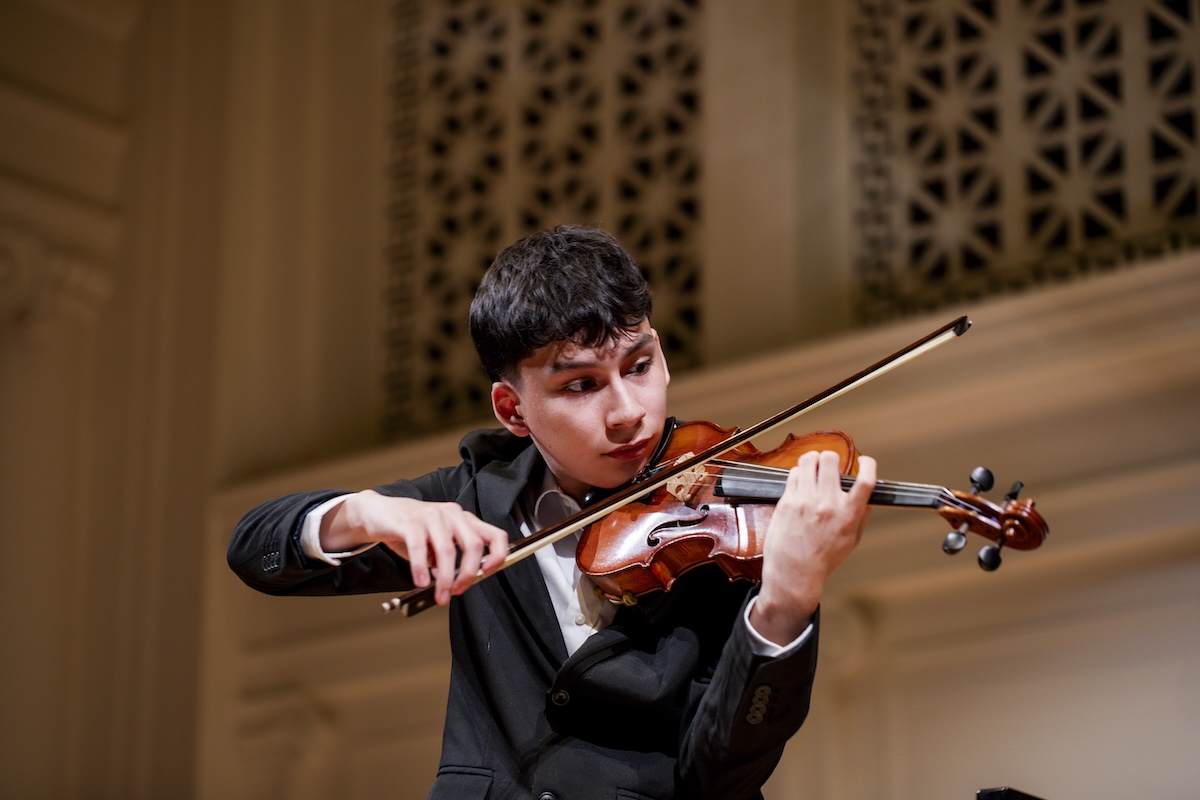
Estrellita was performed on the piano by students in the Academy String Quartet. It was a very good performance, as was the following Preludio, by a poised and young Emma Packer. I also enjoyed watching and listening to Gabriel Martinez, accompanied by faculty member Elaine Felder, playing Lejos de Ti, which translates as Far From You. Martinez's skill and the emotion he put into his playing were very impressive. He leaned into it as a professional would, sometimes closing his eyes. It seemed as if the player knew that the music and the instrument were an extension of themselves.
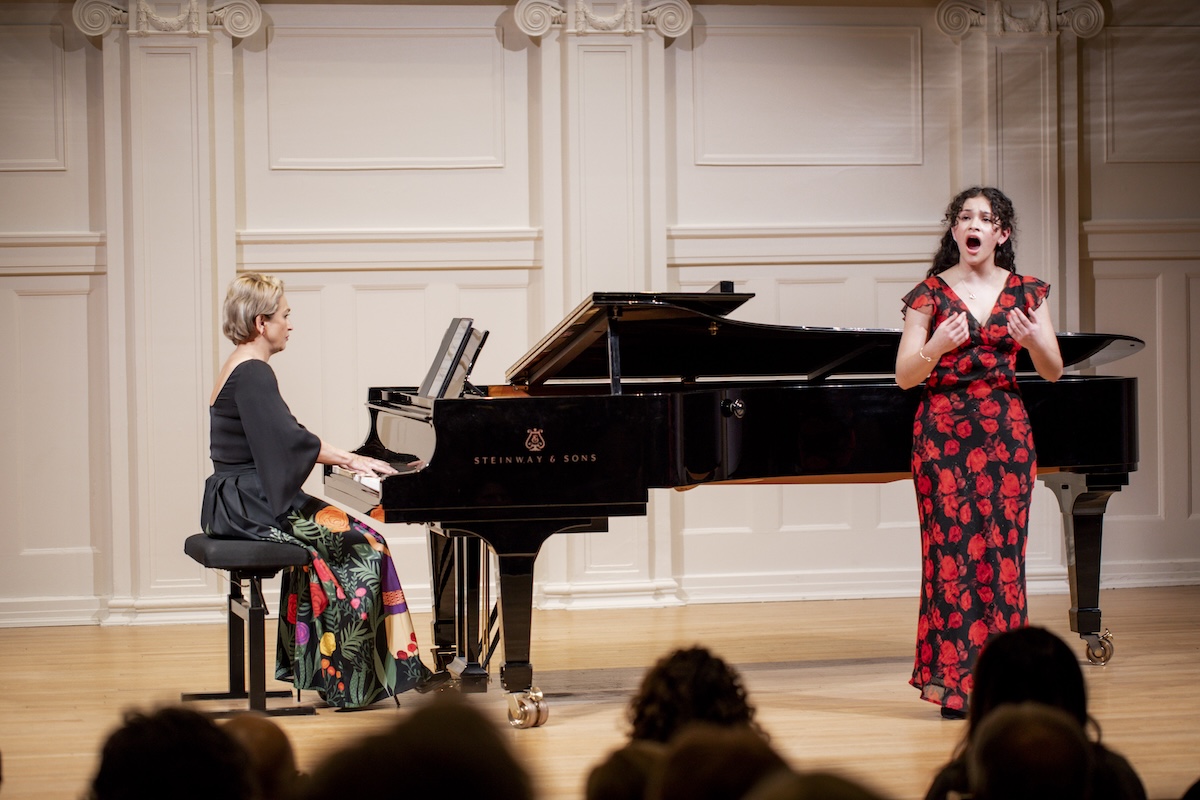
All of the students were good, and some sounded more accomplished. Singing "Estrellita," soprano Scarlet Newman, accompanied by piano instructor Elif Allenfort, was very impressive. I hear a future for Newman and will be looking. The keynote speaker was Jeordano Martinez, who directs the Naperville Chorus and is music professor emeritus at North Central College. He talked about how Ponce's music reflects a Mexican sensibility, and how the phrasing, rhythms, and articulations gave Mexico in a traditionally European genre.
Sang Mee Lee and James Kang performed Sonata a Duo para violin y viola (1938). Lee and Kang are both faculty at the Music Institute of Chicago. I also recognized Kang from a fantastic Ear Taxi Festival featuring Viaggio Profundo by Chicago composer Gustavo Leone. The concert finale was a stirring, beautifully nuanced Rapsodia Mexicana No. 2, performed by faculty member Marie Alatalo.
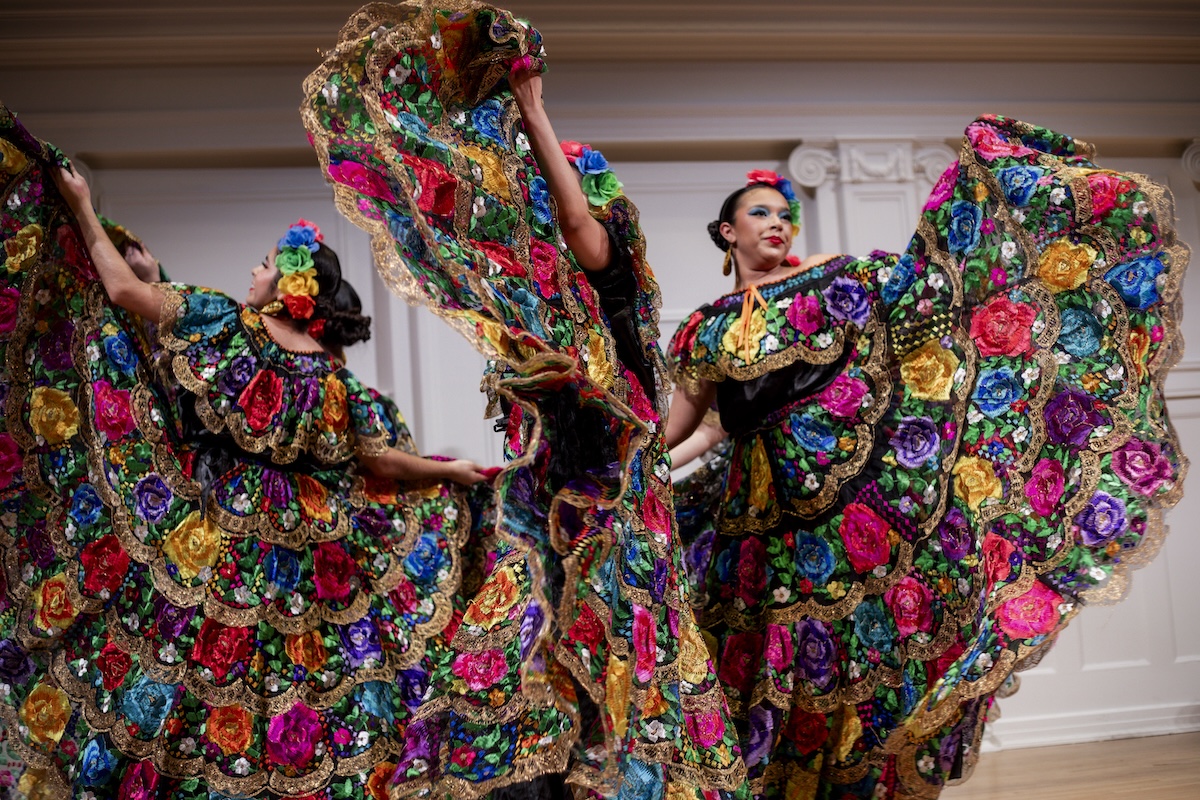
The second half of the evening featured the Mexican Folkloric Dance Company of Chicago. The company's artistic director and choreographer, José Luis Ovalle, introduced the program. The performance was authentic and beautiful to see. The movements were highlighted by the brilliant colors of Mexico's different regions. Ovalle explained the many influences on Mexican dance and music. Mexico had been colonized by Spain, which also brought enslaved African people to Mexico. The influences from Europe and Africa can be heard in the music and seen in some of the dances.
The state of Veracruz still has a large Black population. Three dances: La Presumida, El Caballito, and El Caimán featured marimba music. The marimba is an African percussion instrument made of wood. In Mexico, the sound is created by water-filled gourds, giving the music a distinct Mexican character. Some of the notes sound a half-step or more flat or sharp, which is a characteristic of Mexican folk music. It is the music and dances of the campesinos (country and indigenous folk), and a smooth European style would not fly.
Other European influences include German and Polish, which are heard in the addition of horns and accordions. The dances from the state of Zacatecas in Central Mexico feature that distinct heavy tuba and polka accordion. The ensemble danced La Chirrionam Los Gogoritos, and Los Colorados. The dance steps were formation-based with a touch of polka.
The evening concluded with dances from the state of Jalisco in the Central Pacific region. This is the region of the Mariachi. The most famous song-and-dance is Jarabe Tapatío, aka The Mexican Hat Dance. It was done in the traditional manner with the man laying down his hat to ask the lady permission to court her. If she picks up the hat, it's a date. If she doesn't pick it up, take your sombrero and split. Las Abajeñas and Son de La Negra are also considered patriotic dances and music. The costumes for the finale were the brightest, with red bands for the men. Jalisco is also the home of the agave plant from which we get tequila. It is closest to what is now the United States, and that may be why mariachi is one of the better-known music or dance art forms.
It was a nice performance, but I could have done with less narration. I believe that people should be left curious about a culture when they see a program like this. Ovalle also emphasized that all his students were born here and in school. I get why he felt that was necessary, but it is an example of what the country has been through in the past year. I hope that the audience learned something new and has a new appreciation for our neighbors south of the border.
I highly recommend listening to the music of Manuel María Ponce and attending a performance by the Mexican Folkloric Dance Company of Chicago. I believe in taking a chance to broaden our minds and experiences. The Music Institute of Chicago's One Composer, One Community is a wonderful way to learn something new or to remember that we Americans are not exclusive to the planet. Everything we have is a beautiful coalescence of other cultures and places.
The Music Institute of Chicago presented One Composer, One Community on Friday, March 6, at 7:30 pm, at Nichols Concert Hall, 1490 Chicago Avenue in Evanston. Since this was a free concert, I also recommend checking out their website.
Support arts and culture journalism today. This work doesn't happen without your support. Contribute today and ensure we can continue to share the latest reviews, essays, and previews of the most anticipated arts and culture events across the city.
