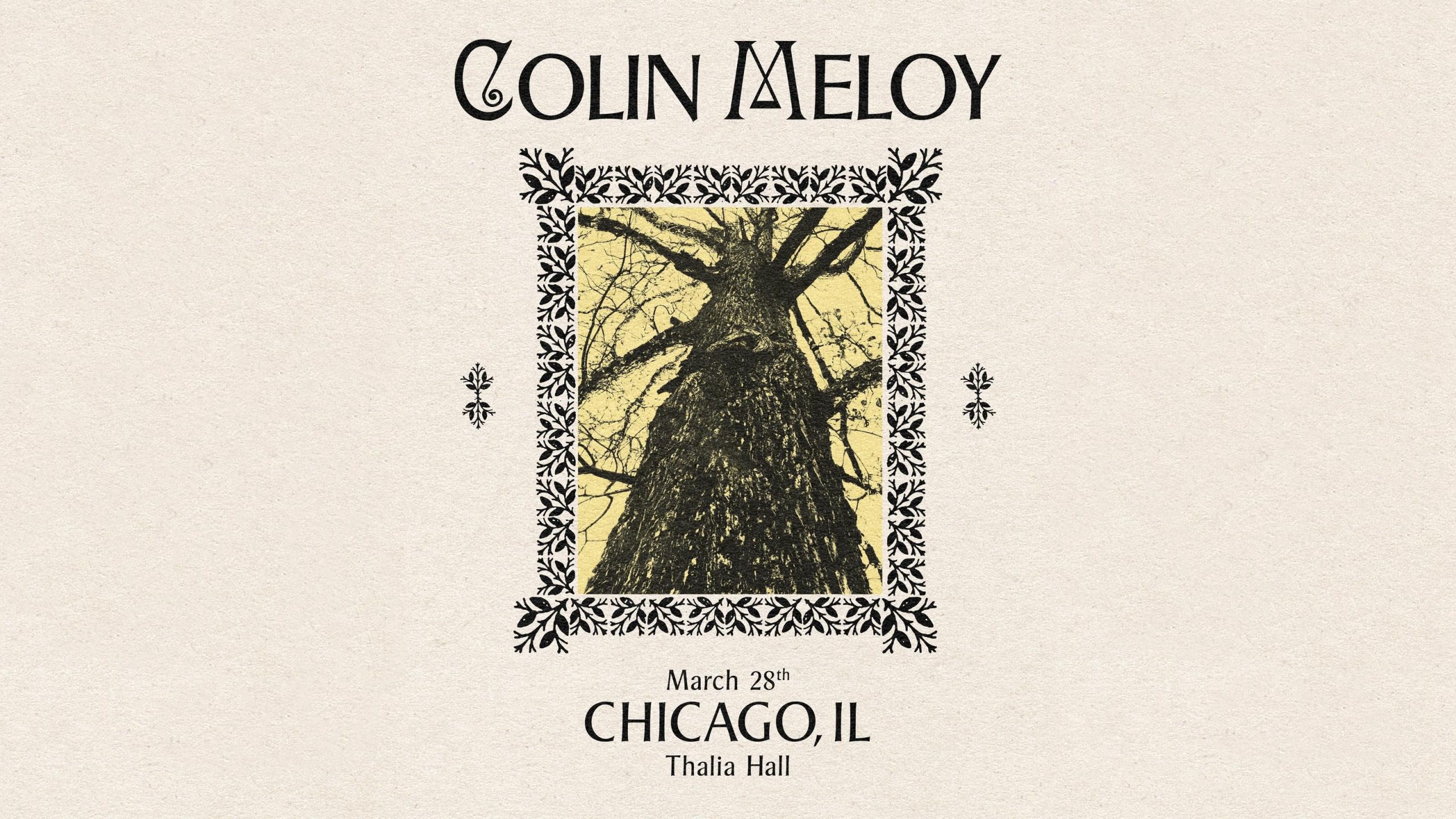
He ambles onto the stage to the roar of the crowd. Within minutes—no, sooner—they are eating out of his hands. On a cold Saturday night in Pilsen, Colin Meloy, lead singer of the Decemberists, treated Thalia Hall like it was his own private living room. And everyone was invited.
No one can make mournful music sound as good as Meloy.
“You’re very loud,” he says to the audience. And then, “My name is Colin Meloy,” as if we needed to be told. It is his first time playing here, he reminds us. Looking around at the hundreds of people standing on the main floor and the rest sitting in the balcony, it is clear he is impressed by what he sees. “Nice little spot. It’s cool.”
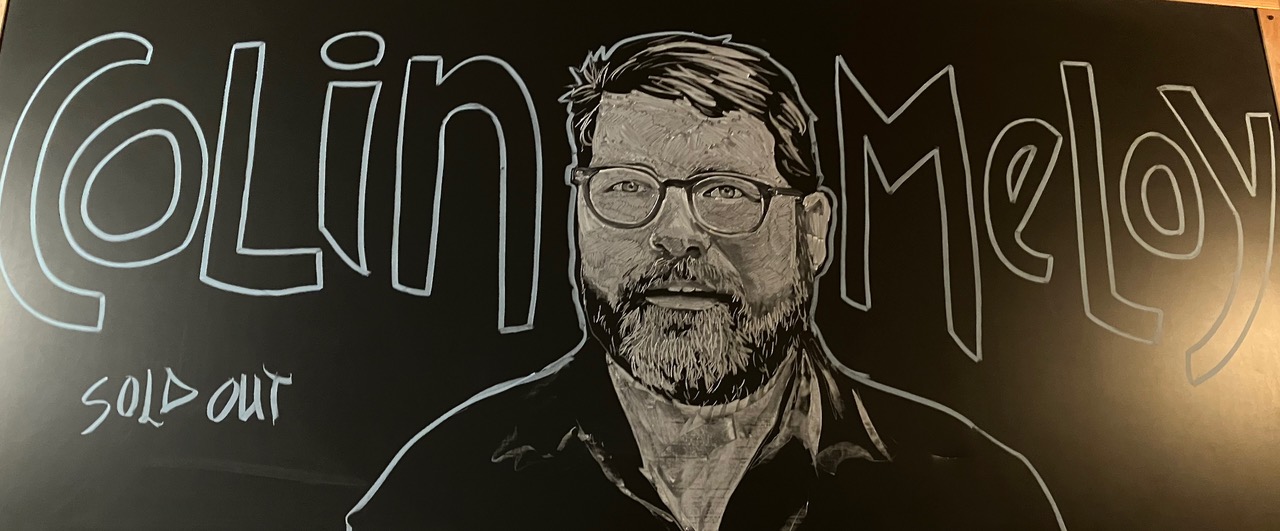
Onstage, Meloy is affable and self-deprecating but also at times acerbic. He mentions his wife, the artist Carson Ellis, by name and that his new book, Cascadia, his debut adult novel, will be published next year. He warns the crowd: “I’m going to play a lot of downer songs,” and referring to those standing, “Your knees are going to hurt,” before reassuring them. “We’re in this together.” He calls tonight’s set list, which differs from other set lists on his solo tour, as “the weirdest set list scrawled out of the moment of distress.” The distress he is referring to is a water bottle containing lemon-cucumber water that spilled and damaged his laptop. He mentions it several times during the evening (“No, I will not let it go,” he jokes).
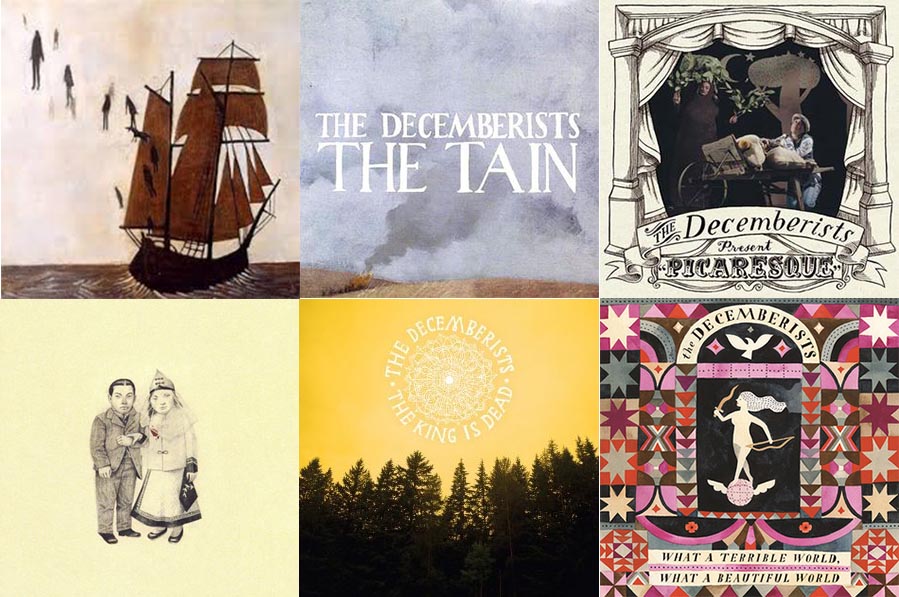
Singing selections not usually performed by the Decemberists, Meloy’s sold-out solo show featured songs culled from numerous Decemberists albums––Castaways and Cutouts, The Tain, Picaresque, The Crane Wife, The King Is Dead, and What a Terrible World, What a Beautiful World––as well as earlier work when he was with the band Tarkio. A few covers were thrown in too, most memorably a terrific version of Richard Thompson’s motorcycle ballad “1952 Vincent Black Lightning,” where Meloy got to show off his proficiency on the guitar.
Accompanied only by an acoustic guitar he sings in his clear and distinctive voice, warm and folksy, stripping the songs down to their basic elements: songs inspired by Japanese folk tales, songs set in his adopted city of Portland, Oregon, songs about existential nihilism, and songs about outlaws and questionable characters with unseemly motives. What they all have in common is a strong narrative thread, often with a dark lyrical content.
Opening with the catchy “The Apology Song” and the poignant “All Arise!”, the show reaches its high-water mark with the mesmerizing “The Crane Wife #1” followed immediately by “The Crane Wife #2” but not, for some reason, “The Crane Wife #3.” Too much of a good thing or, as one fan said after the show, a lost opportunity? Either way, it was great to hear two out of three in a live setting. Another highlight was the gorgeous “Carolina Low.” With a hypnotic melody that is instantly memorable, it is as dark and moody, creepy and chilly, as any Appalachian murder ballad.
Halfway through the show he asks the audience, “Did you go to the No Kings rally?” Many in the crowd reply with a resounding yes. This leads to one of the jaunty singalongs of the evening, the energetic “We All Die Young” followed by the somber “Severed” (“This is a song about fascism,” he says by way of introduction). Placing a harmonica rack around his neck, he ends the too-short set with one of the Decemberists’ biggest hits, “Down by the Water,” which leads to another rowdy singalong.
Returning for the encore, he admits that Chicago has always been good to the band and to himself. Although he can’t recall the first place they played here, he does remember that one of their early gigs was at Schubas. “Is it still there?” he asks. “Yes,” the crowd responds.
After a final singalong, the nautical “Oceanside,” from the Decemberists' first recording, he bows and exits the stage, leaving the audience wanting more.
Did you enjoy this post? Please consider supporting Third Coast Review’s arts and culture coverage by making a donation. Choose the amount that works best for you, and know how much we appreciate your support!
