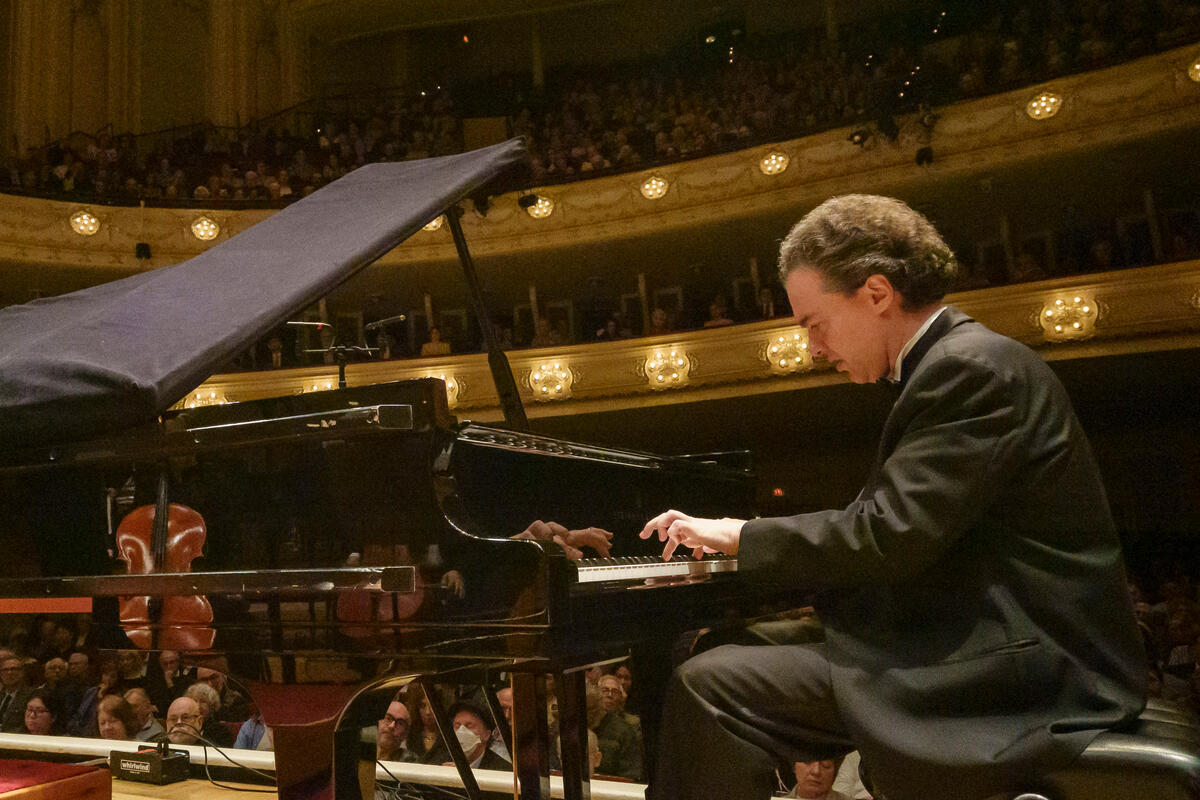

Almost a year after his amazing solo recital in May 2025, and a month before his recital as a soloist, pianist Evgeny Kissin returned to Symphony Center on Thursday. Instead of going solo, this year he joined the Chicago Symphony Orchestra and conductor Andre Boreyko. It was unusual because he performed two piano concertos, neither of which are frequently heard: Wolfgang Amadeus Mozart’s Concerto No. 12 in A-Major, K.414, and Alexander Scriabin’s Concerto in F-sharp Minor, Op. 20. Hearing them was a treat.
The same goes for the two pieces by Nicolai Rimsky-Korsakov that made up the program, Russian Easter Overture and a Suite from The Tale of Tsar Saltan. The later work did contain one of Rimsky-Korsakov’s most well-known concoctions, the infectious “Flight of the Bumble Bee.” Even with that chestnut, the CSO had not performed any of this music more recently than 2011. A couple of pieces were last performed in the 1990s. This enjoyable performance made me wonder, why not? It also made me very glad to be there. They’re repeating the concert tonight.
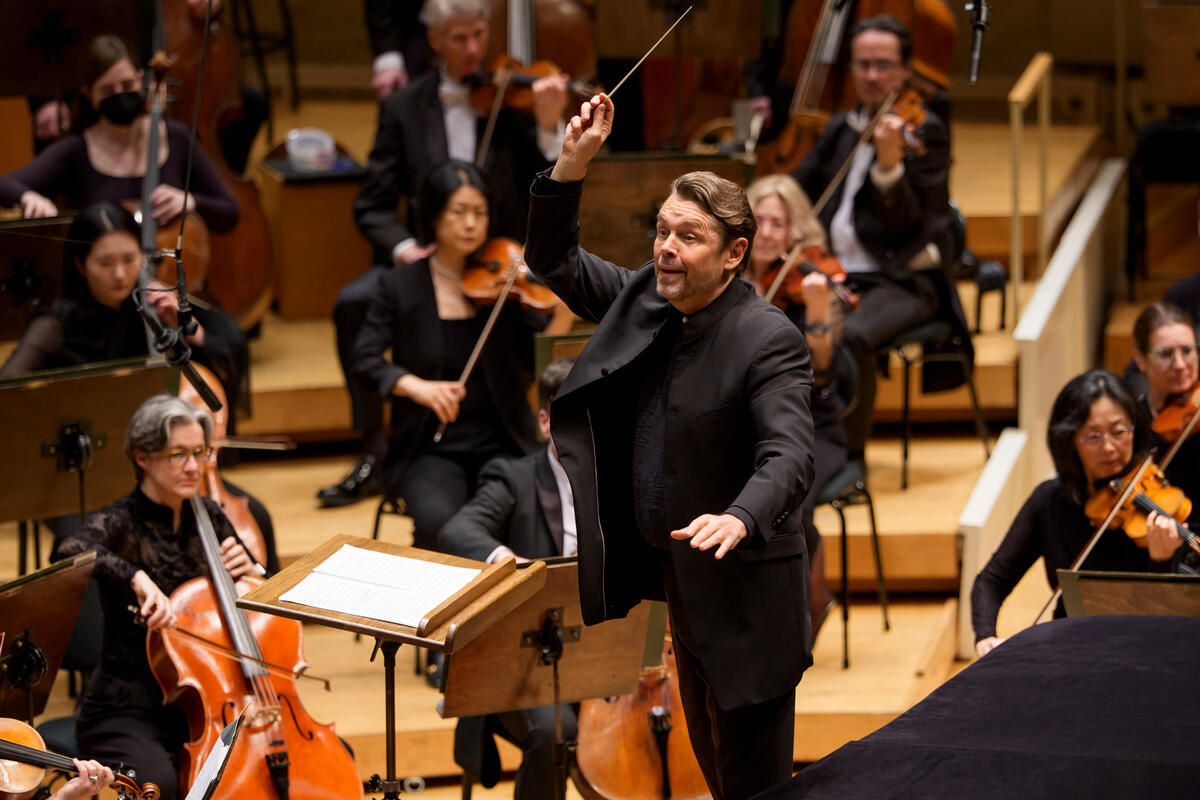
Under Boreyko’s leadership, the orchestra was super tight and precise in the opening of Rimsky-Korsakov’s Russian Easter Overture. The woodwinds started in perfect simultaneity. The strings joined quietly and concertmaster Robert Chen offered the first of many tender solos.
Two visiting performers Guest Principal Flute Jessica Sindell from the Cleveland Orchestra and Guest Principal Harp Katherine Ventura from the Pittsburgh Symphony Orchestra and the Annapolis Symphony Orchestras made their presence felt in the swirling sounds.
There were several occasions of extraordinary instrument pairings, such as principal tuba Gene Pokorny and principal bassoon Keith Buncke. The trombones also played well with the lower strings. The seven-person percussion section also had a great impact, closing things down with clangs on a large bell.
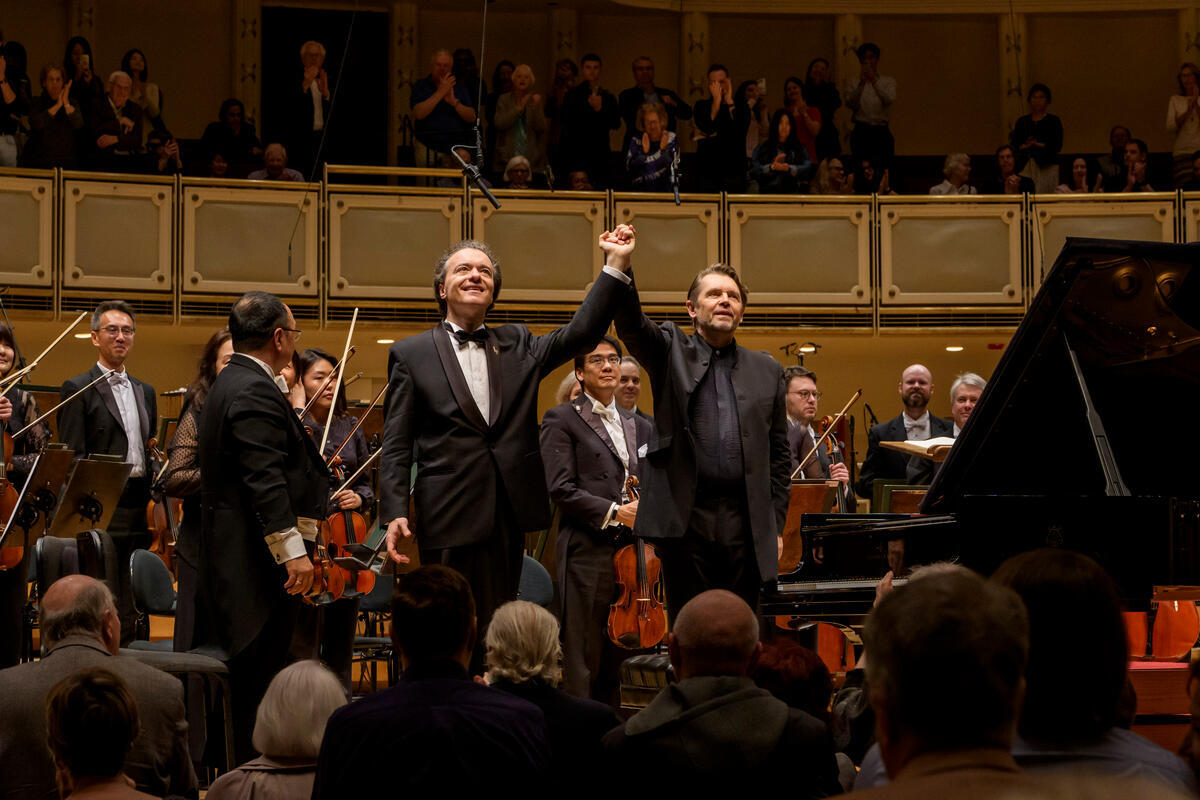
Kissin took the stage in both halves showing delightful artistry whatever the vehicle. Mozart’s piano music is generally less challenging than that by later composers, and to hear a top-level performer like Kissin play it so smoothly and graciously expands my admiration of him. Following the CSO’s great opening tutti, Kissin played as if he were singing from the bench.
Especially noteworthy was the slow, middle movement, Andante. Boreyko molded the opening orchestral passages into a sublime aural landscape. Combined with Kissin’s delicate but forceful playing and two cadenzas, the movement was engrossing. Kissin often rocked back and forth on the bench, which increased the dramatic effect as his torso approached the keyboard.
During intermission the piano was lowered below the stage. To start the second half, Boreyko led the CSO through Rimsky-Korsakov’s lively Suite from The Tale of Tsar Saltan. The “Tsar’s Farewell and Departure” starts on the trumpet with woodwinds and snare drum giving it the feel of a march. Throughout, Boreyko held the orchestra together with great balance between the sections, although the phrasing wasn’t quite as precise as in the concert’s first half. He usually uses a baton in his right hand. Seen from behind, he arms got very animated.
The second movement “The Tsarina in a Barrel of the Sea” gets very moody with the waves rising and falling. Naturally, the audience gave rapt attention during the 88 seconds of “Flight of the Bumblebee” and offered a quiet applause after it was finished. The finale of “The Three Wonders” gave a celebratory feeling.
The piano was raised back onto the stage for Evgeny Kissin to perform his usual intense perfection with Scriabin’s only piano concerto, which offered less contrast to the Mozart than was expected. Like Mozart, the Scriabin has lots of quaintness and finesse, which is how the first movement Allegro began with quiet melodies in the horn, strings, and woodwinds, and Kissin softly joining the action. The piano part is very difficult, but not especially flashy.
The program notes suggested similarities to Chopin, and those were apparent in the passionate and romantic way the harmonies progressed and the sound gelled. Boreyko ensured that the interactions between various solo instruments, orchestral sections and Kissin were lovely. However, when the whole orchestra was playing, Kissin was sometimes hard to hear.
The second movement, Andante¸ started very wistfully, with the strings muted and Kissin’s fingers flowing over the piano key. Eventually it broke into passages of greater excitement and louder piano chords. The Allegro moderato finale offered nice contrasts between an intense main theme and lovely secondary melodies. Very beautiful.
Evgeny Kissin, Andre Boreyko, and the CSO repeat this great concert tonight—Saturday, April 18—at Symphony Center. 7:30 pm. For more info, click here.
Evgeny Kissin will be returning to Symphony Center for a solo performance of Beethoven, Chopin, Rachmaninov, and Myaskovsky. Sunday, May 17, 3:00 pm. For more info, click here.
Support arts and culture journalism today. This work doesn't happen without your support. Contribute today and ensure we can continue to share the latest reviews, essays, and previews of the most anticipated arts and culture events across the city.
