Burt Bacharach’s music is famously hard to play and all‑too‑easy to cheapen.

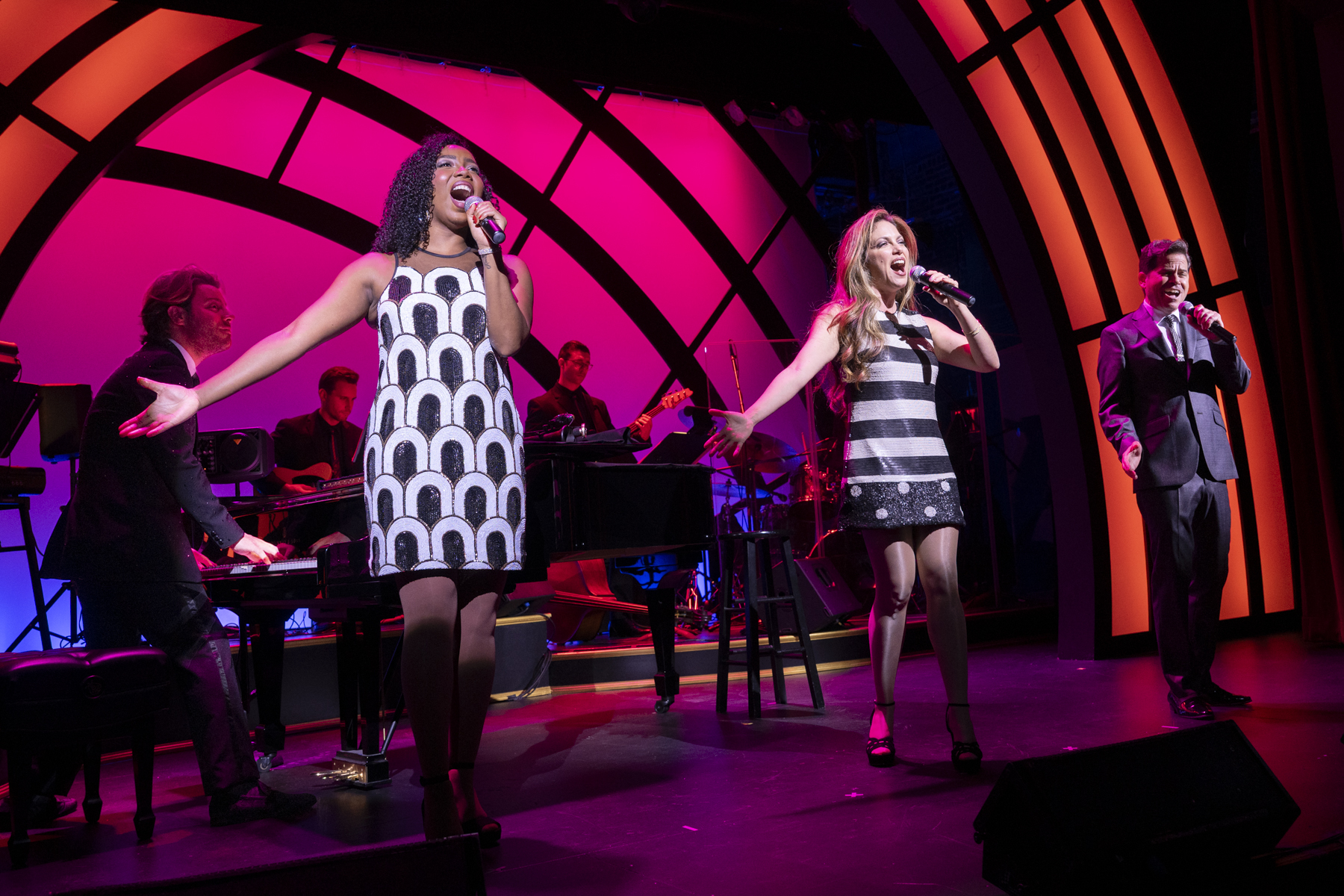
The show’s excellent Chicago‑based band proves the former with dazzling precision, while the production ladles on the latter with a showbiz artificiality–part Vegas, part Sweeney Sisters—that coats the evening in more cheese than the material can bear. It’s a matter of taste, but the tension between the revue’s musical sophistication and its Velveeta‑sheen never resolves into a coherent style.
Music director Adrian Galante’s arrangements are the evening’s true architecture: rhythmically alert, harmonically attentive, and full of the telling choices that reveal how Bacharach’s songs actually work. Galante himself—a prodigy from the lonely west coast of Australia with a touch of enfant terrible energy, mop of unruly hair and all—moves between piano and clarinet with uncanny fluency, and it’s clear that these arrangements, often brilliant, are creatures of his nimble mind. The band follows his lead and gives the score the clarity and swing it deserves.
The vocalists (New York cabaret luminary Hilary Kole, Broadway vocalist Ta‑Tynisa Wilson, and Bacharach stalwart John Pagano, who toured with the composer for 26 years) are directed in a style that feels imported from a different show entirely. Their patter leans toward sketch‑comedy banter; the personas tilt Vegas‑lite; their interactions carry a greasy sheen of something rehearsed past spontaneity.
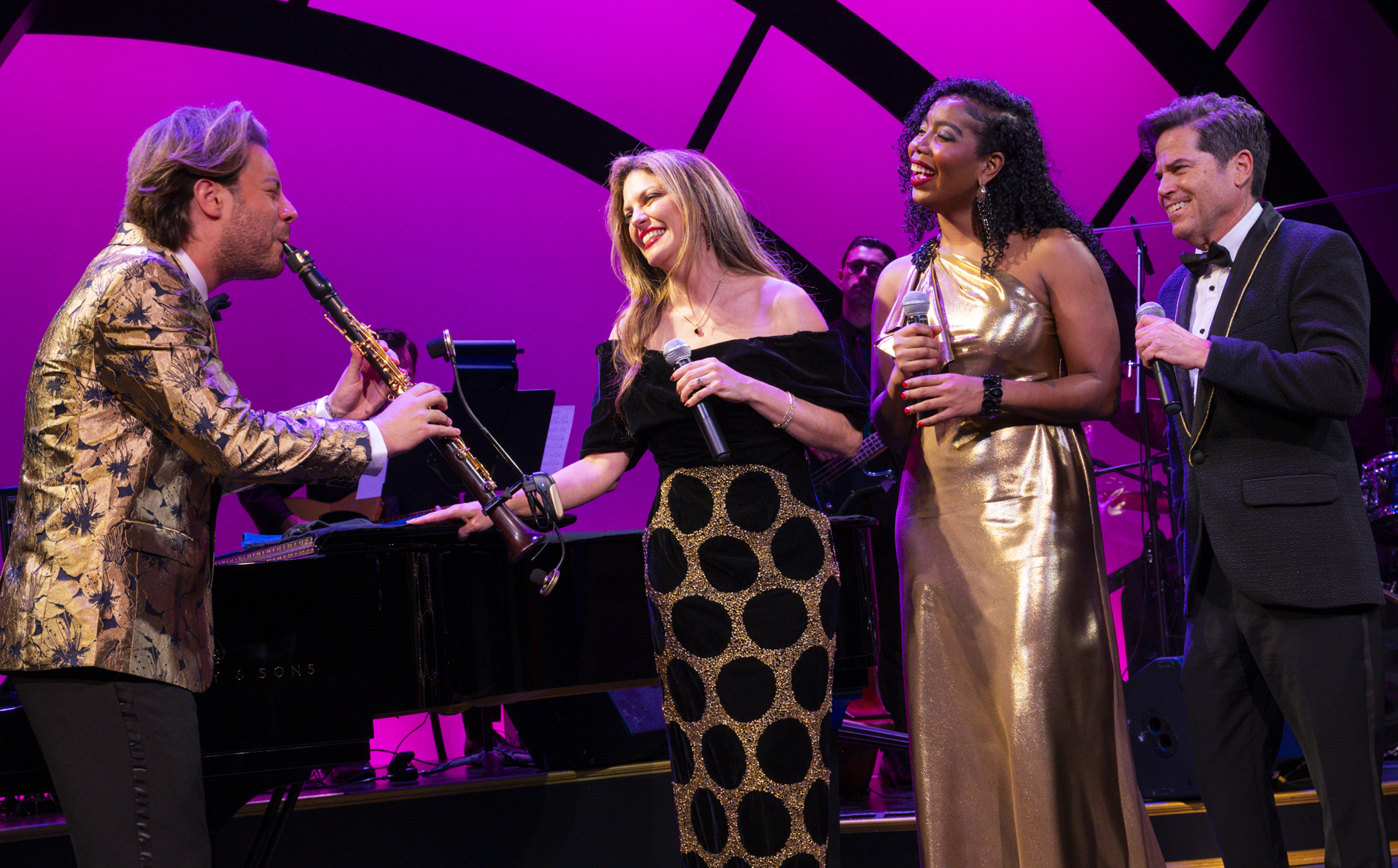
None of this reflects on their individual abilities—all three are capable singers—but the production keeps pulling the evening away from the music’s natural elegance. Bacharach’s songs don’t need winks, nudges, or faux‑breezy lounge‑act charm; they need emotional precision and a light rhythmic touch. The show’s aesthetics ring a false bell and keep getting in the way.
This disconnect becomes most apparent as the revue seems unsure whether it wants to be a musically serious tribute or a camp cabaret act. The band keeps arguing for the former; the staging keeps drifting toward the latter. The result is an unmistakable layer of falseness that sits atop the evening. Even the styling—high‑gloss, glittery, and more in line with a New York cabaret room than a relaxed Chicago audience in jeans and T‑shirts—contributes to the sense of mismatch.
And that’s the frustration: the musical values here are exceptional. Galante’s arrangements alone justify the night, and the instrumentalists execute them with a craft that honors Bacharach’s legacy. But the production choices surrounding them—the banter, the personas, the aesthetic wink—dilute the qualities that make the music endure.
Chicago audiences are generous, and the Apollo’s intimate configuration is a smart fit for a Bacharach evening. But Going Bacharach ultimately feels like two competing shows: one built on genuine musical intelligence, the other on a thick layer of theatrical cheese that the material neither needs nor benefits from. I left admiring the band, appreciating Galante, and wishing the production trusted the music enough to let it stand on its own pure brilliance.
Going Bacharach plays through May 17 at Apollo Theater, 2550 N. Lincoln Ave. The show runs two hours, with one intermission. Tickets at www.apollochicago.com.
Did you enjoy this post? Please consider supporting Third Coast Review’s arts and culture coverage by making a donation. Choose the amount that works best for you, and know how much we appreciate your support!
