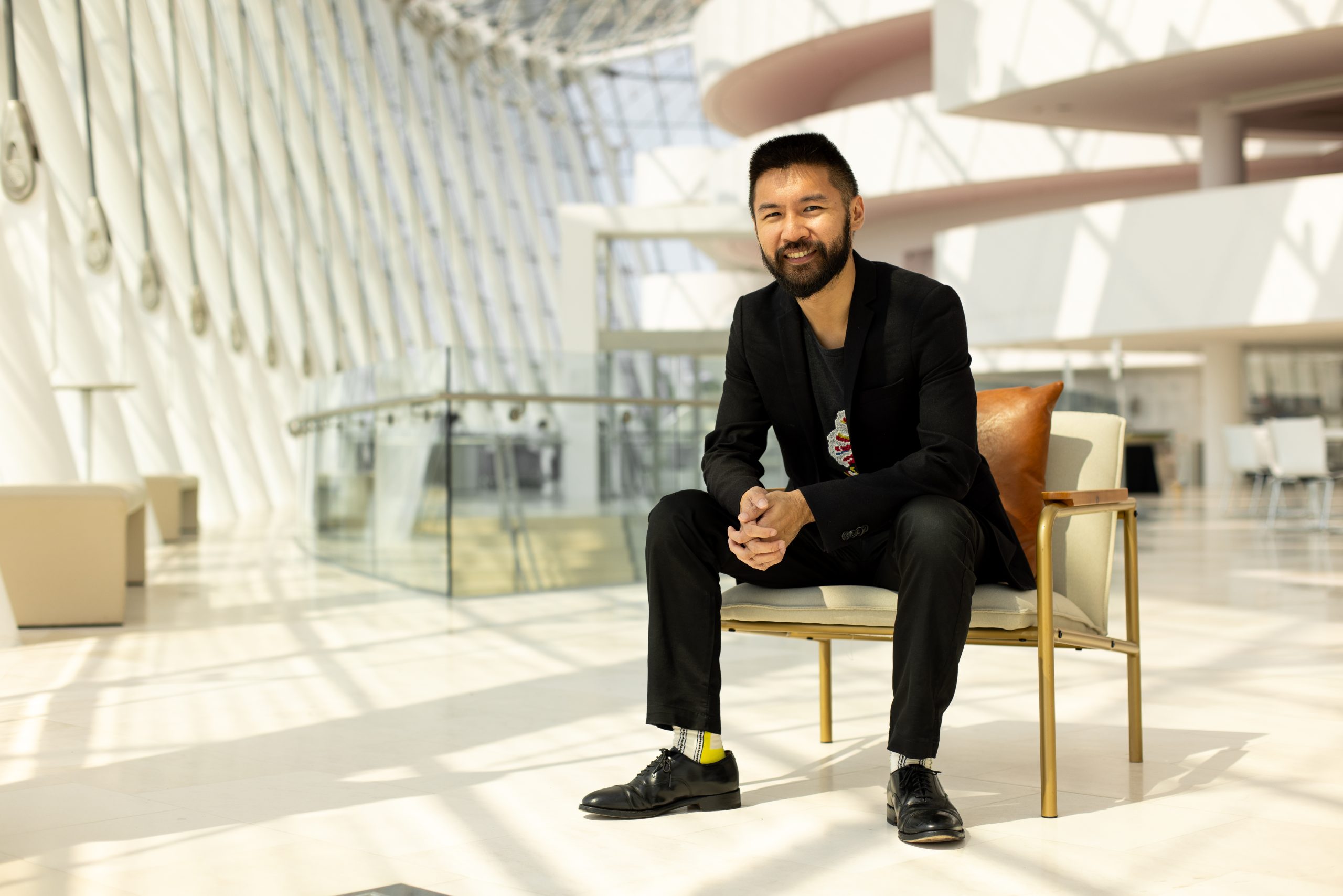
There is an old home video of Conrad Tao that captures the modest beginnings of a prodigy. In the footage, a very young Tao sits at the piano, pawing out “Mary Had a Little Lamb” one note at a time. He does not actually remember a time before playing the piano.
“We had a piano in the house,” he recalled recently. “My parents say that I kind of just gravitated towards the instrument and started picking out tunes.” Tao’s parents were both scientists, a background that offered few traditional clues that their son would become one of the most versatile musicians of his generation.
Today, Tao represents a different variety of artist. He has rejected the old, rigid division of labor that required an individual to develop a singular talent in music, by being only a touring virtuoso, or a composer, or a concert curator. Instead, Tao is three at once. This triptych of performance, composition, and curation has defined his career, even if audiences usually encounter these facets one at a time.
Chicago audiences have been enjoying the rare opportunity to observe each side of Tao’s musical personality. His appearances across the city this season are an unplanned retrospective: beginning with an intimate, experimental evening of contemporary works last September, followed by a recent subscription performance with the Chicago Symphony Orchestra, and culminating in June with a wide-ranging solo recital at Orchestra Hall. Taken together, these performances reveal a musician guided by an appetite for variety. “Interest is the main driver,” Tao said. “And I honestly think of it as being kind of greedy.”
That greed developed early, accelerated by a significant change of scenery. When Tao was 9 years old, his family moved from the Chicago area to New York City. The move meant leaving behind a localized, traditional Midwestern musical community for the professionalism and competitive striving of Manhattan. Yet, the transition also brought an unexpected freedom. By age 10, Tao was studying composition, piano, and violin.
“I got lucky,” he said. “I got a lot of exposure to a lot of different things pretty young. I look back now and I realize it was unusual that I had a composition teacher when I was 10 who introduced me to John Adams and Steve Reich. I was obsessed with Reich’s Tehillim.”
Exposure to the avant-garde at an impressionable age prevented Tao from viewing the classical canon as a fixed monument. To him, new and old music are part of the same landscape. Over time, he learned to balance his omnivorous interests with a critical sense of focus. “I had to train myself to listen to my instinct and be sensitive to it,” he said.
That instinct was on display during his most recent visit to Chicago, where he performed Béla Bartók’s Piano Concerto No. 3 with the Chicago Symphony Orchestra under the guest direction of Karina Canellakis. Unlike the first two piano concertos, which are famously percussive and combative, Bartók’s Third is intimate and elegiac. Written during the final months of Bartók’s American exile, the piece is often described as a financial safety net and a love letter for his wife, the pianist Ditta Pásztory-Bartók.
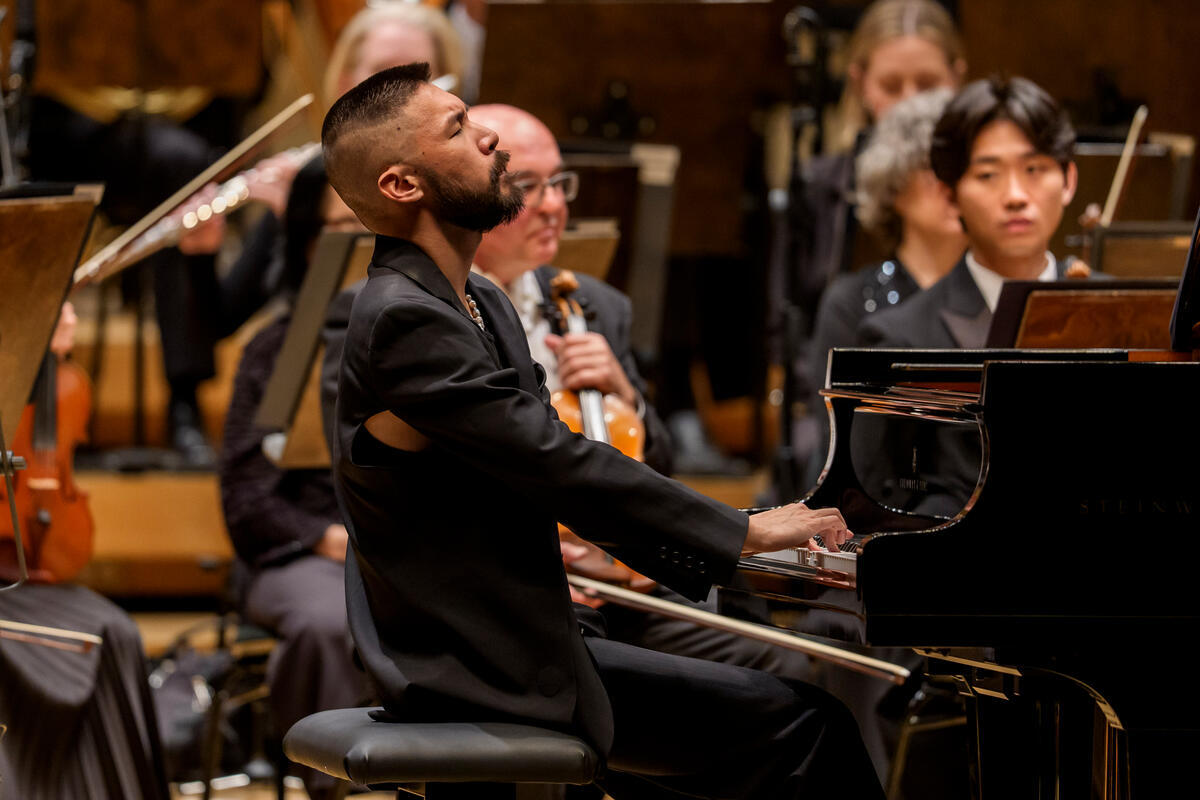
Tao had not performed the work in nearly eight years. “It was a delight,” he said of the invitation. “The piece is just not done all that often, and it’s so beautiful. I jumped at the opportunity.”
On the stage of Orchestra Hall, Tao avoided the temptation to over-dramatize the score. He smoothed out the music's edginess, giving the phrases a fluid, human quality that emphasized the work’s underlying vulnerability. His interplay with the orchestra was balanced and conversational, never degenerating into a volume contest, and Canellakis maintained a taut but flexible frame around his playing. The performance, his first CSO subscription appearance since 2023, showed Tao at his most disciplined, working within the strict confines of the traditional orchestral program.
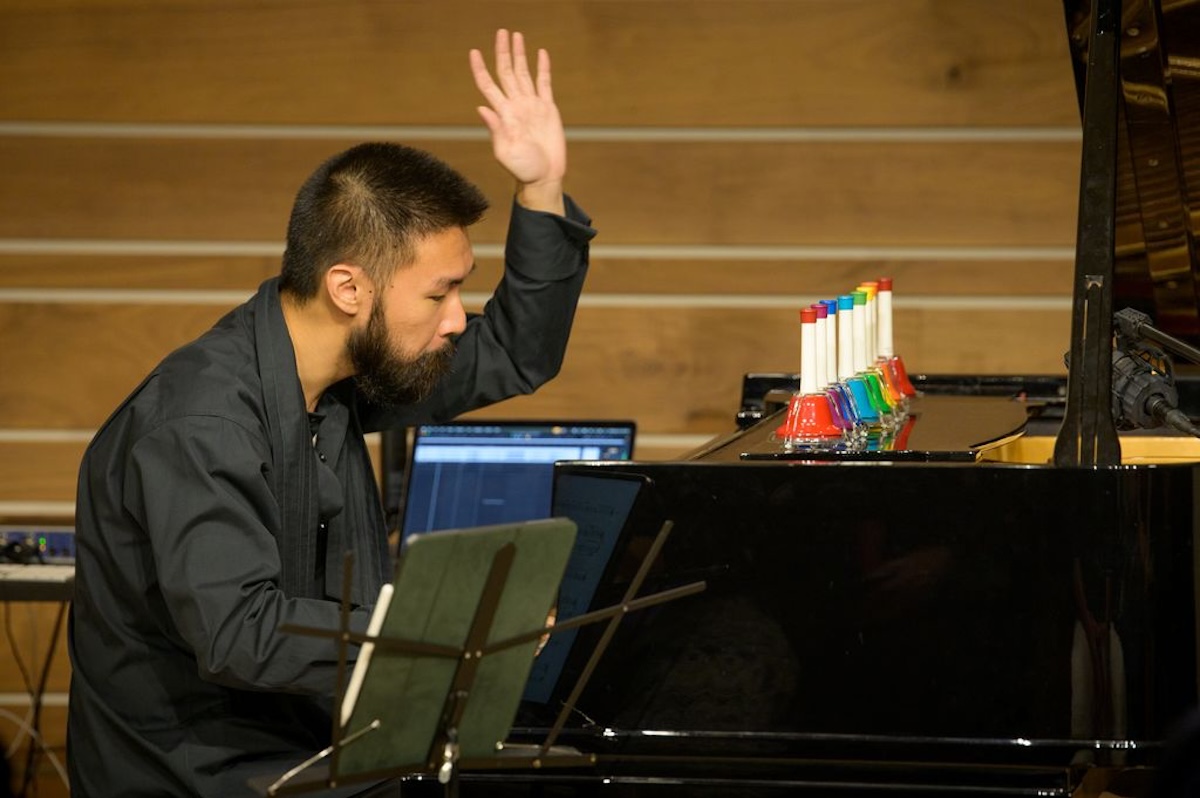
Several months earlier, Tao had revealed an entirely different side of his artistry at Guarneri Hall, a small performance space in Chicago’s Loop. Curating a program for the contemporary music presenter Nova Linea Musica, Tao built an evening that resembled a laboratory rather than a conventional recital. The project began simply with his desire to perform John Supko’s One Hundred Thousand Billion Pieces, a work that uses software to generate random combinations of acoustic and electronic sound. To complement it, Nova Linea Musica commissioned a new piece from composer Chris Mercer, titled Impromptu: Fluorescing.
“I really like Chris’s music,” Tao said. “He does interesting things with electronics and computers, and so the program kind of developed out of that.”
The resulting concert blurred the boundaries between the acoustic piano and digital manipulation. Sound took instructions from computers, and computers reacted to the physical touch of the performer. The pieces on the program rarely behaved like traditional musical arguments. Instead, they functioned as commentary, a series of deliberate collisions that explored the unstable relationship between modern technology and the human artist.
The third panel of Tao’s Chicago triptych will arrive on June 7, when he returns to Orchestra Hall for a solo recital that helps launch Symphony Center’s contributions to the nationwide celebration of the country's 250th anniversary. The program is the result of several years of historical curiosity, specifically Tao's fascination with Sergei Rachmaninoff’s years in America and the subtle ways the American idiom crept into the late style of the exiled Russian romanticist.
Tao has constructed the recital as a web of historical cross-currents. The afternoon program blends selections from George Gershwin’s songbook with Irving Berlin’s “All By Myself,” Harold Arlen’s “Over the Rainbow,” Billy Strayhorn’s “Chelsea Bridge,” and Scott Joplin’s “Maple Leaf Rag,” before concluding with Tao’s own solo arrangement of Rhapsody in Blue. These American standards are interwoven with piano works by European modernists and impressionists, including Claude Debussy, Maurice Ravel, Erich Wolfgang Korngold, and Arnold Schoenberg.
“When you look at my program, the oldest piece on the program is the 'Maple Leaf Rag,'” Tao said. “All of this was happening at the same time. These points of contact happened. Gershwin and Schoenberg ended up being connected, and there are well-known stories about Gershwin and Ravel meeting.”
The inclusion of Schoenberg on an American anniversary program might seem perverse to listeners who associate the Austrian father of the twelve-tone method with the cold corridors of European academic modernism. But Schoenberg spent his final years in Los Angeles, surrounded by a peculiar and rich community of fellow émigrés, conductors, writers, and film composers.
“I always like playing Schoenberg’s piano music in some sort of context that includes popular song or some sort of American jazz,” Tao explained. “Something about putting it in that context always seems to animate the Schoenberg and opens up ways of hearing it that dislodges it from some of the preconceptions we might have around what the music is or how it sounds.”
By stripping the academic varnish off Schoenberg and placing him next to Berlin and Joplin, Tao forces the listener to hear the shared anxieties and energies of a single historical moment. It is an act of curation that demands as much intellectual effort as the physical performance demands finger dexterity.
At 31, Tao seems less interested in maintaining the standard career of classical industry milestones than in discovering how to bring his full identity to the stage. As the traditional boundaries between genres continue to erode, his multi-faceted approach looks like a blueprint for the survival of the idiom.
“It’s been a journey, at first subconsciously and then gradually much more consciously realizing that it’s important to me to feel like I have some ownership over these choices,” Tao said. “My attitude has shifted and I’m choosing to bring myself. I don’t feel like I fully figured out who I could be as a musician until I made a commitment to follow my own instincts.”
Ultimately, Tao’s work is an invitation to listen without prejudice, to trust that a single performer can navigate the distance between a Bartók concerto, an electronic synthesizer, and a Scott Joplin rag without losing his way. “I’m just very grateful that people are on board and listening,” he said. “I’m really just kind of out here committing to sharing my point of view and my love for this music.”
More information about Conrad Tao’s upcoming recital on June 7 and ticket information can be found here.
