
Grant Park Music Festival opened their concert at Millennium Park on Friday in an unexpected way. It being Juneteenth, Mezzo-soprano Leah Dexter and pianist Christopher Guzman celebrated with a charming rendition of Lift Every Voice and Sing by J. Rosamond Johnson. Copies of the lyrics were distributed to the audience, which was invited to join in. It was very nice way to reflect on the occasion.
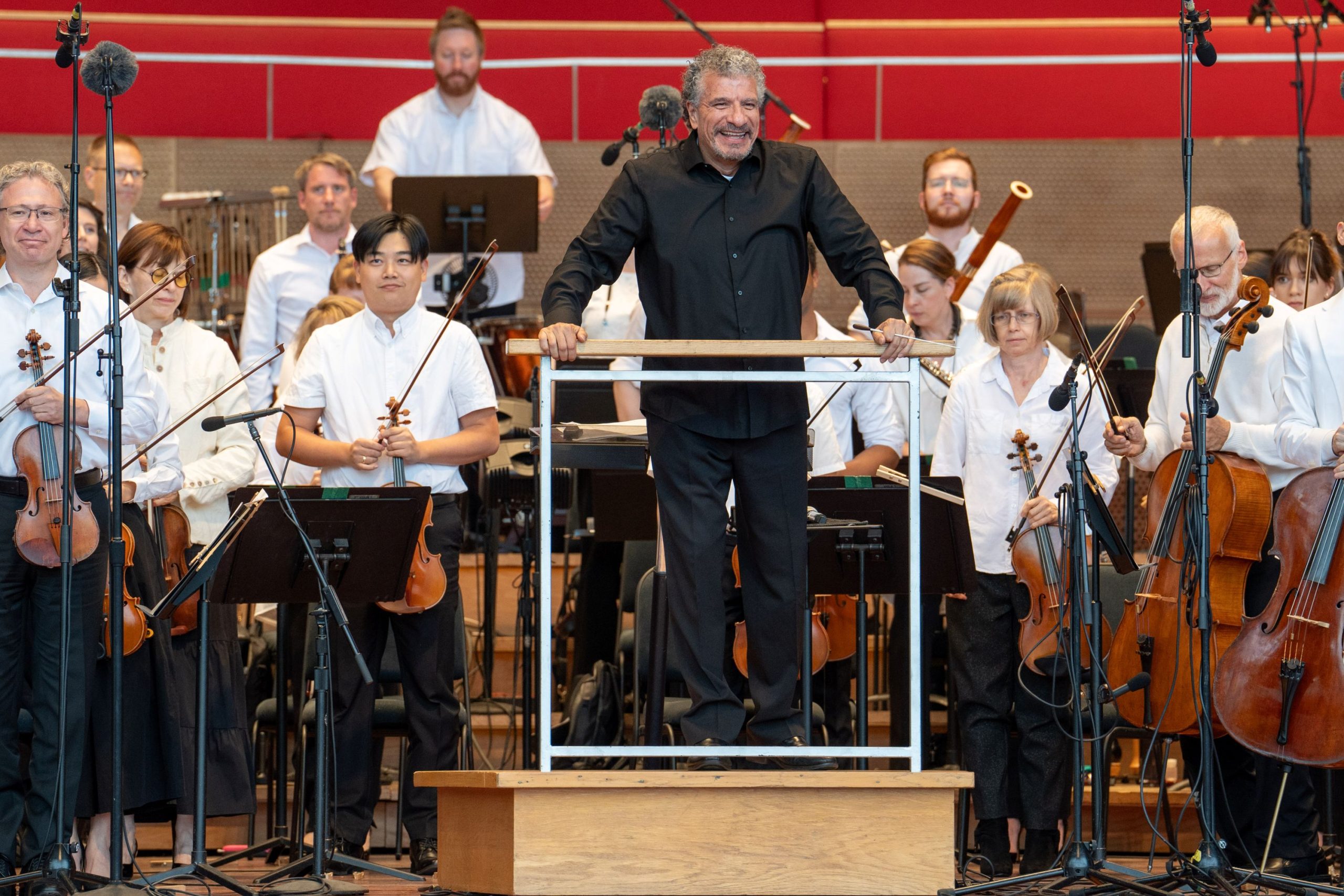
After the piano was removed, Giancarlo Guerrero quickly entered the stage and broke into the first work listed on the program, Black Iris by Reena Esmail. The program also included Sergei Prokofiev’s Piano Concerto No. 3 and Aaron Copland’s Symphony No. 3. Performing the Prokofiev was piano sensation Stewart Goodyear.
It had all of the makings of a wonderful experience. Unfortunately, the ambient noise surrounding Grant Park got really bad after intermission. The culprits were helicopters and revved-up engines, which, by the end, were constant. It sounded as if a drag race were circling Millennium Park. At least the weather behaved. While cloudy and breezy, there was no rain.
Even without the Juneteenth celebration, the program was long. Unlike performances over the past week, Guerrero did not address the audience.
Indian-American composer Reena Esmail wrote Black Iris in response to the #metoo movement in 2018. It was commissioned by the Chicago Sinfonietta, which included it under the name #metoo on their Project W release on Cedille Records.
Now called Black Iris, it incorporates the Hindustani musical form known as “bandish,” which came across on Friday night as a swirling of sounds created by rapid three- and four-note melodic riffs repeated constantly. Over this base, Esmail laid long notes and melodies from various sections of the orchestra. At times there were violin solos, and interplays between a cello and English Horn.
Guerrero managed the sounds very effectively, and the pauses were precise. Toward the end, the sound stopped, and the women in the orchestra added vocals one by one, in the order in which they joined the Grant Park Orchestra.
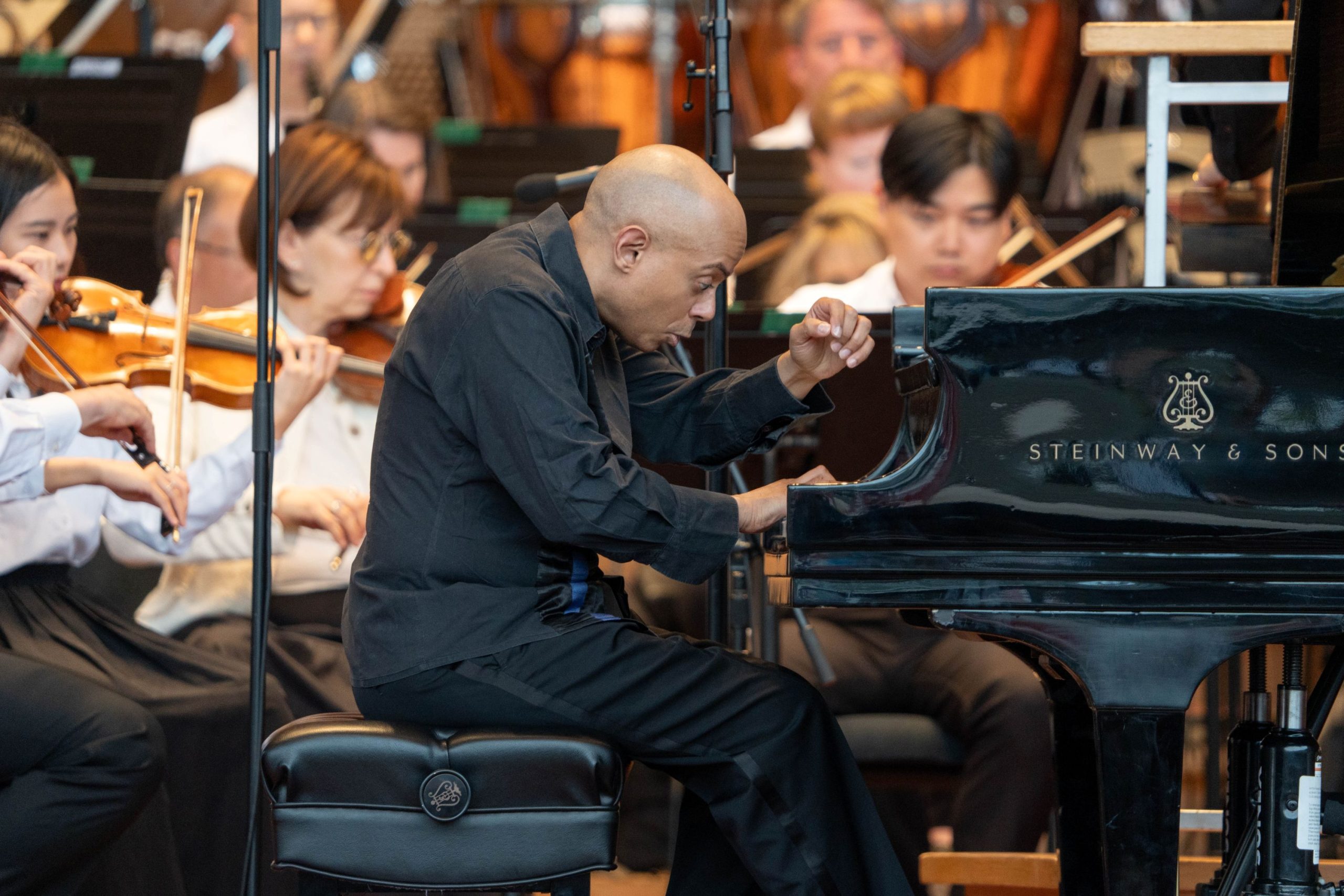
As enjoyable as Black Iris was, Stewart Goodyear’s performance of Prokofiev’s Piano Concerto No. 3 in C-major stole the show. Following a melancholic clarinet in the opening movement Andante-Allegro, the orchestra broke out in the sunny C-major, and Goodyear entered with complete abandon. He is not a large person, but, hunched over the keyboard, his chord playing is powerful, and his fingers are supple enough to play rapid runs perfectly. Even when his hands are stacked on top of one another, the main melody clearly sounds over all of the surrounding notes. Whether he's playing softly are loudly, Goodyear's touch is amazing.
Throughout the concerto, Guerrero kept the orchestra abreast of Goodyear. He conducted very energetically. Toward the end of the finale in waltz time, Allegro ma non troppo, he looked toward Goodyear and swayed to the music as the piano was being torn to shreds. Stewart Goodyear is in a class of his own.
The rousing standing ovation was well deserved. In his very high-pitched voice, Goodyear announced his choice of encore, Panorama, his own composition. He noted it’s in the style of his background of Trinidad and England. It was very lively and danceable, but it was the only time in his performance where small mistakes were evident.
Following intermission, I was hoping for a thoughtful rendition of a very thoughtful work, Aaron Copland’s Symphony No. 3. It certainly started that way, with the violins sounding mournful, with a brass chorale coming in and out. That’s when a helicopter arrived, followed by lots of engines being revved. Occasionally the ambient noises at Grant Park contribute to the sound. As the quiet third movement Andantino quasi allegretto started, a gentle whir sounded overhead. The helicopter was actually in tune!
This symphony is notable for the finale, Molto deliberato – Allegro risoluto, which Copland built around his most famous composition, Fanfare for the Common Man. As they do in that work, the brass sections play a big role throughout the symphony. In the opening movement, Molto moderato; with simple expression, Guerrero carefully interweaved the various sections, keeping a nice balance when the brass sounded off.
Especially wonderful was the transition between the third movement and the finale, which starts in the woodwinds before the brass take over. Under Guerrero’s direction, it sounded like silk. It’s hard for me not to tear up when I hear this music, and Friday was no exception.
Tonight Stewart Goodyear and Giancarlo Guerrero repeat this program; Saturday, June 20, 7:30 pm. For more info, click here.
This Wednesday, Kolina Bovell takes the baton and is joined by violinist William Hagen and the Lookingglass Theatre Company for Jessie Montgomery’s Starburst, Samuel Barber’s Violin Concerto, and Peter Boyer’s Ellis Island: The Dream of America. Wednesday, June 24, 6:30 pm.
Support arts and culture journalism today. This his work doesn't happen without your support. Contribute today and ensure we can continue to share the latest reviews, essays, and previews of the most anticipated arts and culture events across the city.
