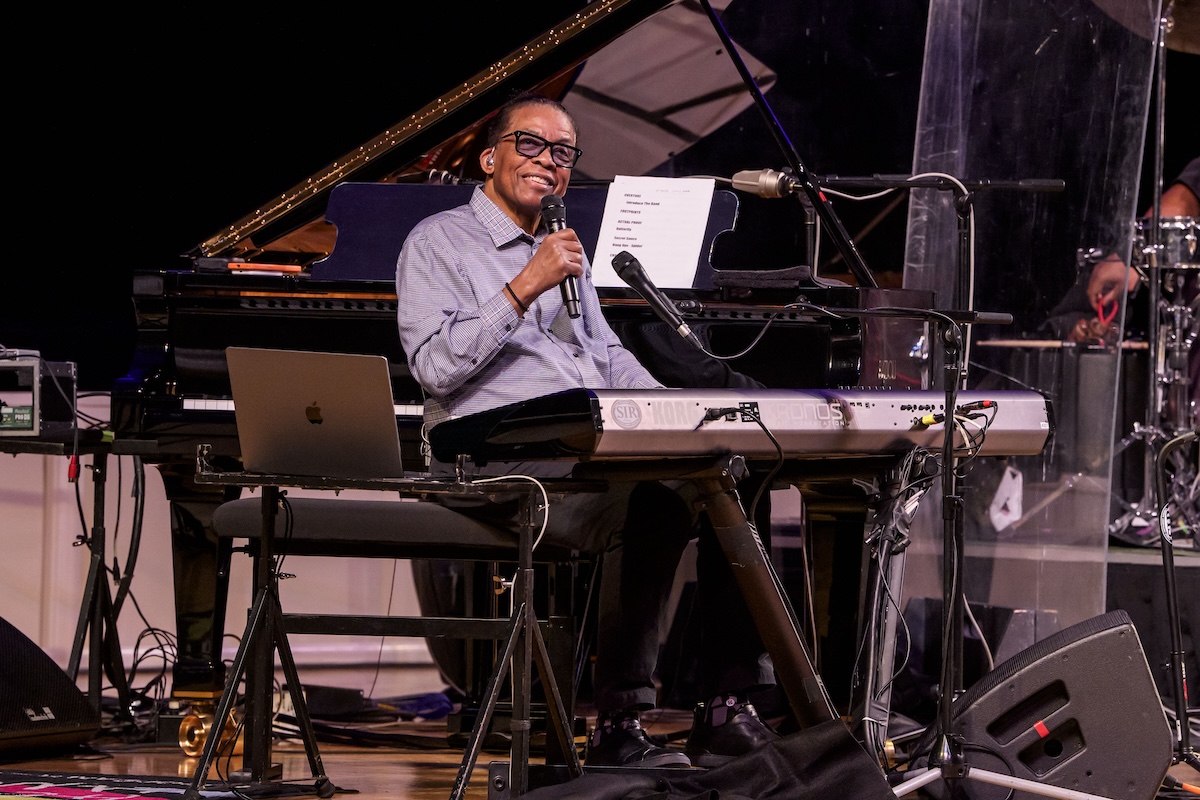
Herbie Hancock landed in Chicago for his fifth appearance in a Symphony Center Presents Jazz performance. His band included another jazz master, Terence Blanchard on the trumpet, James Genus on bass, Lionel Loueke on guitar, and wunderkind drummer Jaylen Petinaud. Hancock calls Chicago his hometown and lauds it as a world-class city. It was a fantastic show in the acoustically perfect Chicago Symphony Center. He first appeared at Orchestra Hall when he was the tender age of 11.
When Hancock jogged out to the stage, the applause was literally thunderous. He does not look, move, or sound like an 85-year-old man. "Hello homies!" he said to the happy crowd, and then he described what to expect from the program. He promised some favorites and some "weird stuff" before the band launched into what he called Overture. He promised bits and pieces and asked if we thought about dinosaurs, and then produced some atmospheric sounds on the Korg synthesizer. The music had texture and color as I visualized water creatures, raptors, and larger dinosaurs. Then Blanchard entered with his trumpet—perhaps a woolly mammoth or a dreaded Indominus Rex from Jurassic Park (1993). Genus's bass line was the jungle floor rumbling. Lueke played ethereal sounds that mimicked the sounds of birds and insects. All the while, Petinaud was jamming with complicated tempos that kept perfect time in this improvisation. That was just the opener.
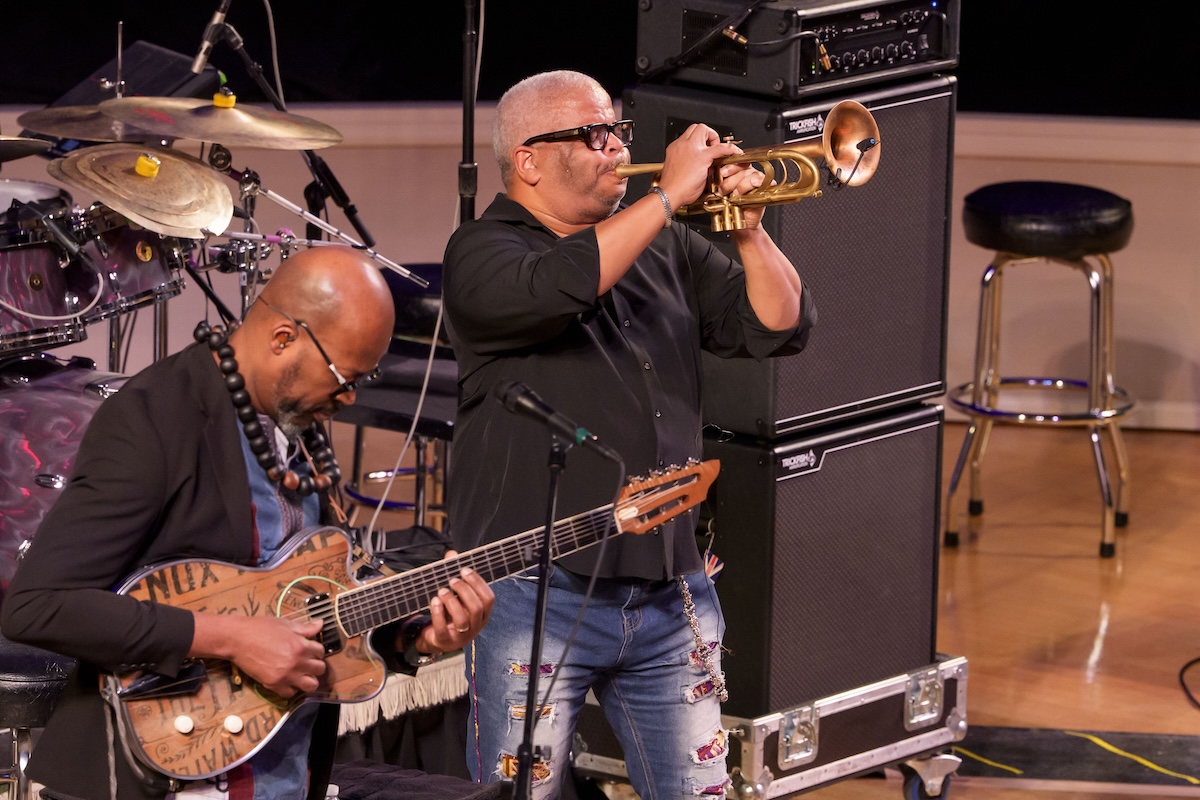
Hancock paid tribute to his fellow musician, Wayne Shorter, by playing Footprints, arranged by Terence Blanchard. Shorter was a supreme saxophonist and composer, deeply respected in the music world, who passed away in 2023. Each member of the Hancock band layered in music in perfect time, and again, Petinaud was perfection on the drums. They delved into the Jazz Funk of the Headhunters era with Actual Proof from Thrust (1974). The band also played Butterfly from the same album. It is a classic, lilting slow jam that Norman Connors covered on the album This is Your Life (1977). I think that I played the grooves out of both albums in my college dorm.
There was a taste of the 1978 album Sunlight, with Hancock altering his voice on the Korg and Lueke looping riffs and playing guitar in real time. Lueke is a gifted singer from Benin and sang in an African dialect that used the click sound (! in script or in the lyrics). Hancock is generous in sharing the stage and giving respect to the musicians sharing the stage. The towel wave was the vehicle for giving each other props. This music is physical on many levels. The strength and endurance to be a drummer, blow a trumpet, or play any instrument is impressive to me.
Later in the performance, Hancock took the microphone to discuss AI technology and how it may save us, because as humans, we are killing each other. He also said that it could become a Terminator situation. He spoke at some length about all of humanity as one family from the Motherland, Africa, and spreading out all over the planet. Hancock is a Nichiren Buddhist, which informs his music and his life in the constant journey of becoming a better human being and, of course, a fantastic musician.
I knew that Hancock was about to set it off when he pulled out the keytar. We enjoyed a triple whammy of Hang Up Your Hangups, Spider, and Rockit. The audience was cheering as Hancock did jumping jacks with his kegs, while playing that enormous keytar. He and Leuke were mirroring each other, and it looked like Hancock barely broke a sweat—85 and jamming like a youngblood. This tour introduced a couple of new-to-me musicians, including Jaylen Petinaud, who is 26 and touring with Herbie Hancock. Lionel Lueke is a journeyman musician who has been playing for a long time, but I am new to him. His blending of African sounds, lyrics, and rhythms fits like a glove in the jazz-funk world of Hancock.
Terence Blanchard is a phenomenon. He is a flawless trumpet player and composer who has written more soundtracks than I can count. He is also distinguished in the opera world as the first Black composer to have their work played at the Met in New York. There have been plenty of Black composers from the 19th and 20th centuries, but they were never played on that stage. Fire Shut Up in My Bones and Champion both played at the Lyric Opera, and are supreme examples of the uniqueness that jazz can add to classical music.
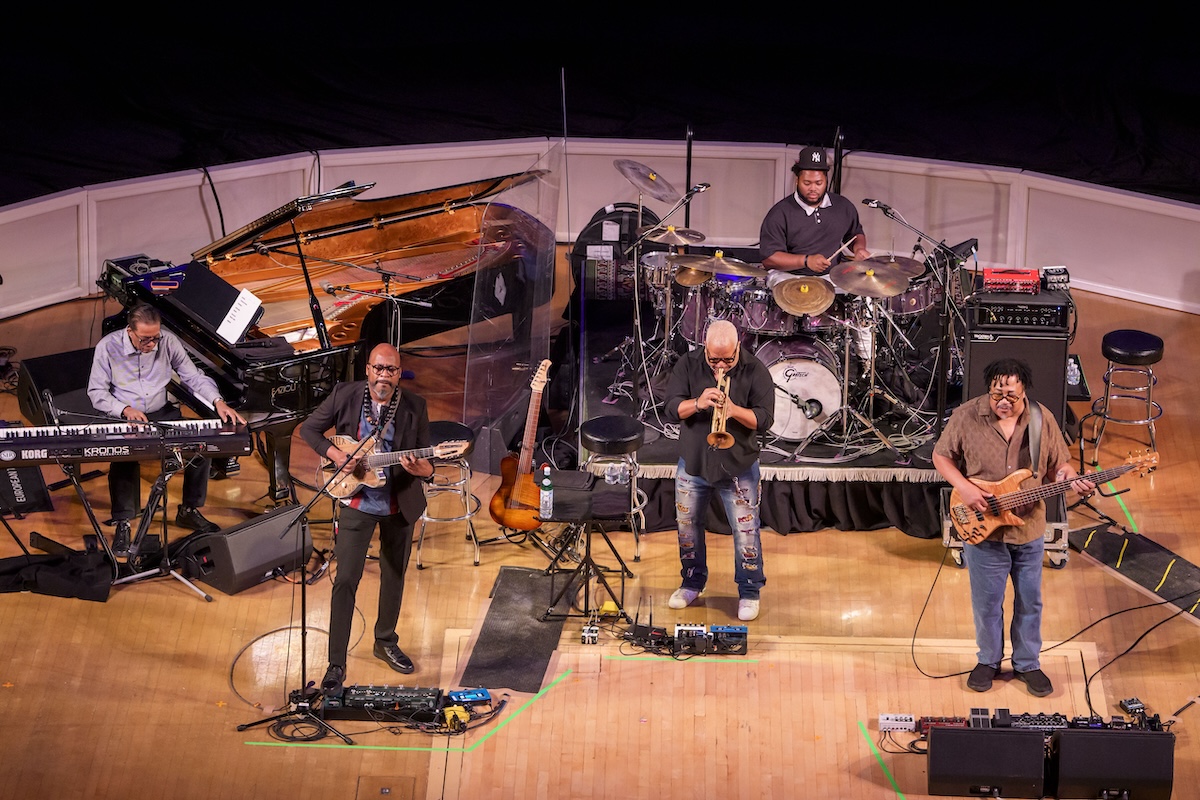
You have probably seen bassist James Genus many times, but you didn't know it. Genus has played in the Saturday Night Live band for 26 years and counting. He played a magnificent bass solo in the Hancock performance. I have an affinity for the bass because I played it in the high school orchestra, but I never knew it, and I am still discovering the breadth of its sounds.
Herbie Hancock had his first performance at Orchestra Hall 74 years ago. I had to let that sit in my brain. His flawless playing and composing genius is a rare and precious gift. I feel privileged to have heard him and that magnificent band perform. He will be part of International Jazz Day 2026 here in Chicago. The United Nations Educational, Scientific, and Cultural Organization (UNESCO) chose Chicago, the birthplace and nurturer of Jazz, to host the day. I am a big booster of Chicago, especially in light of certain opinions of our beautiful city. I am jazzed to know that Herbie Hancock will be returning with his Fazioli in tow and a fantastic band. Four Stars.
Herbie Hancock played on October 26, 2025, at the Chicago Symphony Center, 220 South Michigan Avenue in downtown Chicago. For more information on the Symphony Center Presents Jazz Series, please visit their website. It is worth the time and effort.
