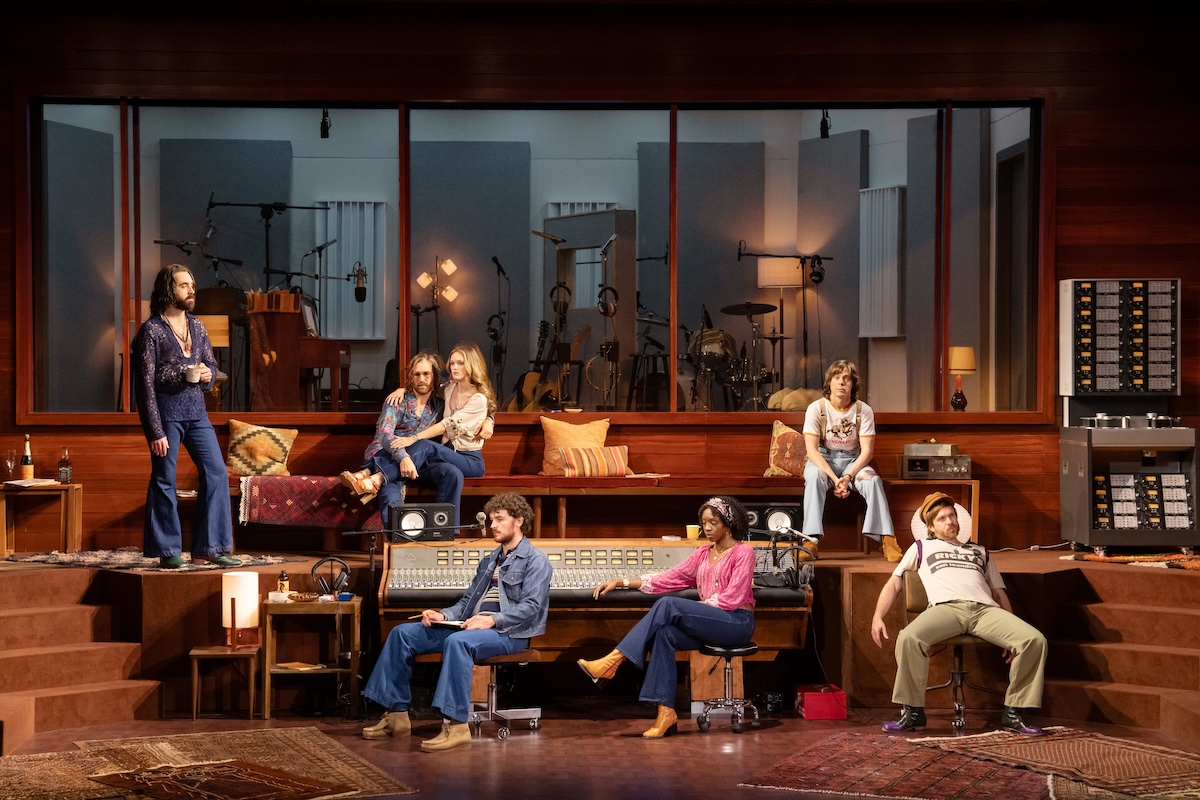

Stereophonic is a play about a year in the life of a rock band (never named) and the personal and musical trials and tribulations it goes through during recording sessions to complete a new album. The four-act play is written by David Adjmi and directed by Daniel Aukin with music by Will Butler, formerly of Arcade Fire. The setting is Sausalito and Los Angeles, California, in 1976-77. If you’re thinking this sounds like a jukebox musical with lots of songs played by groovy musicians, you’re in the wrong theater. (That might have been why there were empty seats in our row after intermission.)
No, Stereophonic is a play with realistic dialogue, more like Who’s Afraid of Virginia Woolf than The Million-Dollar Quartet, the only other play I can think of set in a recording studio and actually is a jukebox musical. Stereophonic is about real artists—five musicians and two engineers—and their stoned conversations, arguments over nothing, debates over the recording process and where the music is going, a physical attack, romances carried on and romances ending. Also the coffee machine is broken, although there’s plenty of pot and a giant bag of cocaine. It’s real life, played out on a stage for three hours. And the ending is sublime.

It's a gorgeous play about the creative process that shows us performers (actors who are also fine musicians) who are so real we want to believe they are the actual characters, not simulacra.
Peter, the frontman (Denver Milord), is trying to get his bandmates working together in these recording sessions to get all the tracks down so they finally can release a finished album. He’s also a control freak, as he admits to his girlfriend Diana (Claire DeJean) late in the play. She desperately wants to be a respected singer/songwriter and thinks Peter isn’t supportive enough. Diana performs one of the few fully developed songs we hear when she sits down at the piano in act one to play and sing her composition, “Bright,” a lovely folk/rock ballad.
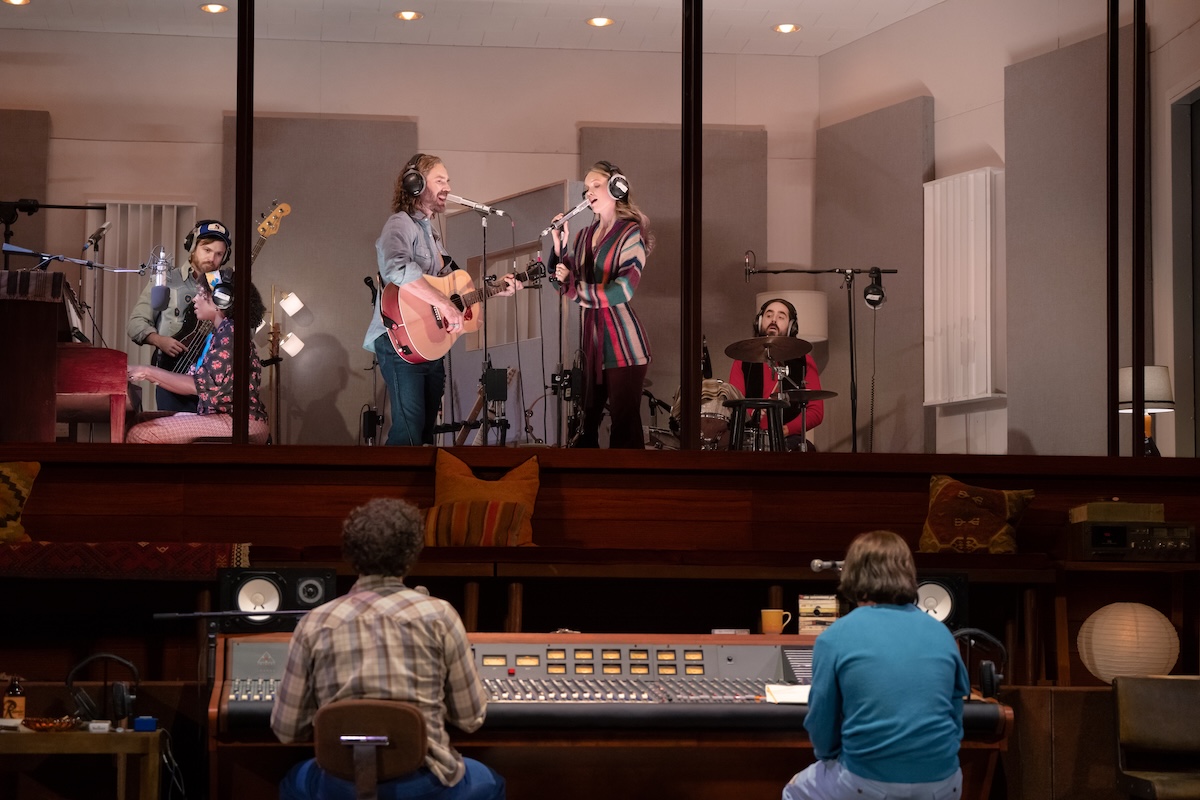
Most of the music, however tantalizing, is interrupted after a few bars or half a minute when something goes wrong or Peter or another musician calls it to a halt. We would like to hear more of Butler’s compositions, but it ain’t happening.
Simon (Cornelius McMoyler) is the drummer, the man who keeps the beat; an Englishman, he’s been away from his wife and family for years—for a gig that was supposed to take six months. At one point, something goes wrong with his snare drum and the usually calm Simon erupts in anger.
The other band members are Holly (Emilie Kouatchou), the keyboard player and vocalist. She’s in a relationship with Reg, the bass player (Christopher Mowod), who is boozy but can be a calming influence.
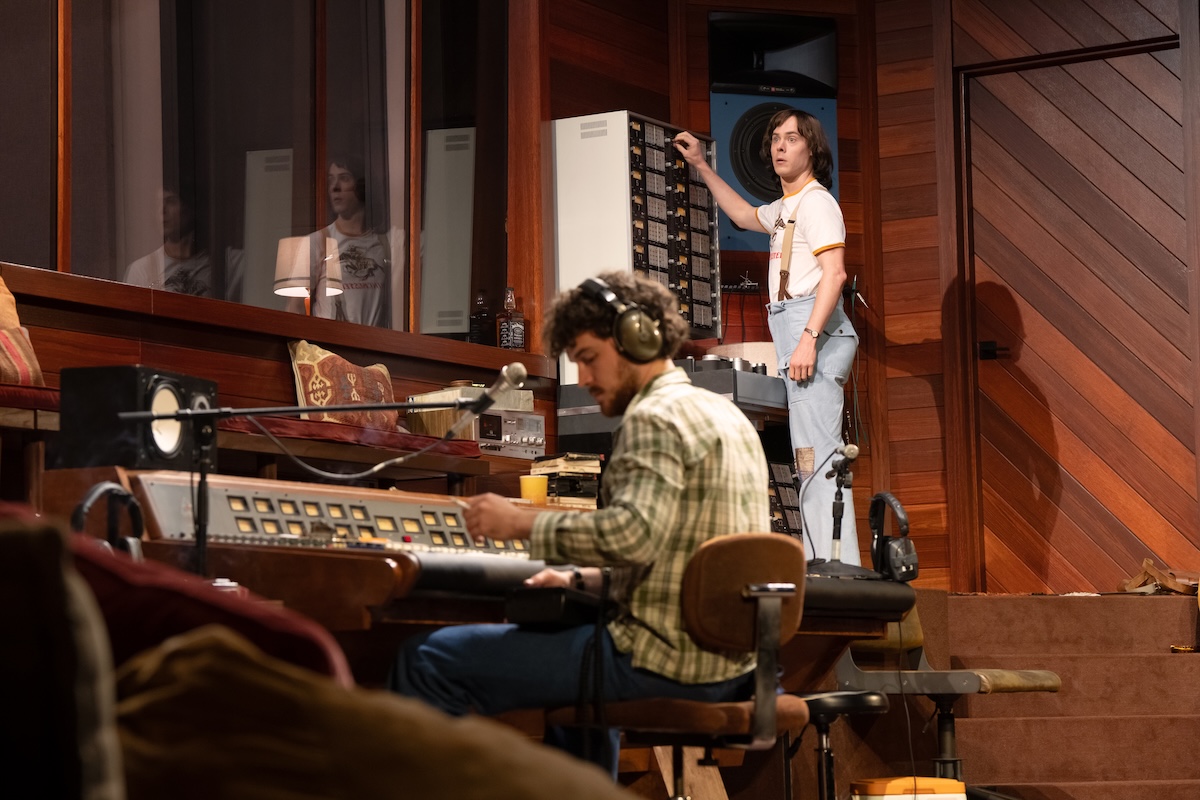
On the tech side, we have Grover (Jack Barrett), the lead engineer and producer, who seems to grow in his professional stature as the play proceeds. Charlie is the second man on the sound board, played by Steven Lee Johnson.
Throughout the play, we sense the growing frustration and animosity between the musicians and the engineers. Grover wants desperately to get this album produced properly; he came in to the job with less than sterling credentials and is learning and gaining confidence on the job about how to be a producer.
The beautiful scenic design by David Zinn divides the single stage into four areas. The two main ones are the realistic sound board/control room downstage and the recording studio upstage. There are also conversation/seating areas on both left and right sides of the stage. The studio design mimics that of the iconic Sausalito recording studio known then as the Record Plant. The perfectly rendered lighting design is by Jiyoun Chang. Sound design is by Ryan Rumery and music director is Justin Craig. Gigi Buffington is vocal, text and dialect coach. And those so-‘70s nylon print shirts and flared trousers are the costume design by Enver Chakartash.
Does the story of Stereophonic sound familiar to you? It may if you’re a longtime Fleetwood Mac fan. Stereophonic is considered a fictionalized version of the recording sessions for Fleetwood Mac’s 1977 album Rumours, often listed among the greatest albums of all time. The band’s sound engineer sued the creators of Stereophonic in 2024, claiming that they used elements of his 2012 book, Making Rumours: The Inside Story of the Classic Fleetwood Mac Album, without permission. (The parties settled out of court.)
As I watched Stereophonic, I was reliving the experience of watching Thom Zimny’s 2013 documentary, The Promise: The Making of Darkness on the Edge of Town. I saw it the first time at a Bruce Springsteen symposium, an academic symposium at Monmouth University in Monmouth, New Jersey. The film shows the misery that Springsteen dragged his musicians, producers and manager through in 1977-78 as they worked to get those 10 tracks perfected, starting with “Badlands” and ending with the title track. That perfectionism is a problem that Springsteen has dealt with throughout his career. (See the recent film Deliver Me From Nowhere as a later example.)
Stereophonic, which played on Broadway in 2024, was the most Tony-Award-nominated play of all time, with 13 nominations and five awards: for Best Play, Best Direction, Best Featured Actor, Best Scenic Design, and Best Sound Design.
Stereophonic is presented by Broadway in Chicago at the CIBC Theatre, 18 W. Monroe St., through February 8. Running time is three hours, including one intermission. For more information and tickets, see the website.
For more information on this and other productions, see theatreinchicago.com.
Support arts and culture journalism today. This work doesn't happen without your support. Contribute today and ensure we can continue to share the latest reviews, essays, and previews of the most anticipated arts and culture events across the city.
