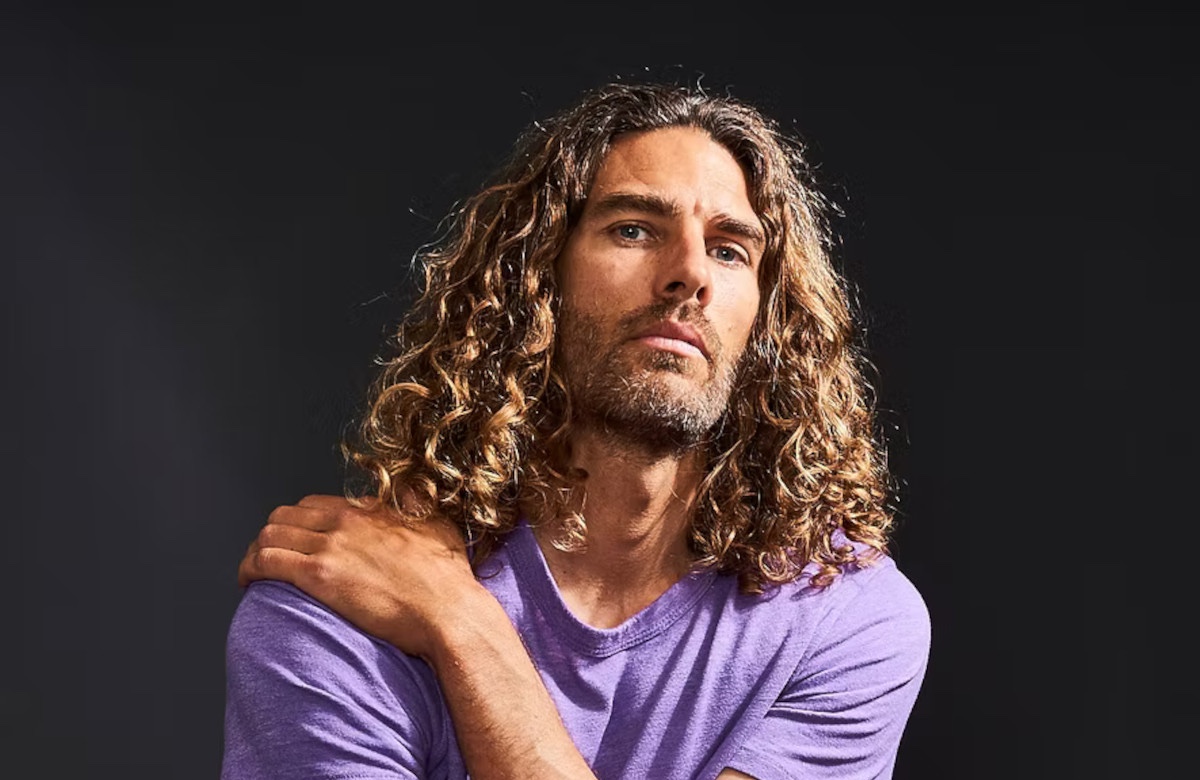
With his long hair and droll delivery, once you see Lachlan Patterson’s standup, it’s unlikely you’ll forget him. His clever observations have made him a draw for over a decade, leading to opening slots for Nate Bargatze. We talked with Patterson ahead of his headlining show at the Chicago Improv in Schaumburg about his breakout appearance on Last Comic Standing, a recent stint on the Nateland at Sea cruise, and why he wishes he’d left certain jokes out of his 2020 special Dark White.
I remember discovering you on Last Comic Standing back in 2014.
Yeah, that was a huge moment for my career in comedy. Nobody really knew who I was until that show came out. It kind of exposed a lot of people to my comedy, and it was incredible for me. All of a sudden, I had shows all over the country and a large audience. People really loved that show, and I was fortunate that I did fairly well on it.
When you look back on it, what stands out exactly?
Oh, a lot of things. I think I learned to believe in myself more. Before that show, I didn't think I was that good. Then you hear the judges tell you how funny they thought you were. It just gave me goosebumps.
I remember being on stage, and when they told me I made it through, I had no expectation. No one really knew who I was, but I had been working really hard up to that point. I hadn't had a lot of success, but I did have a lot of experience not having success. I think that prepared me for it. The judges saw all the material that I had and the experience that I had, and that made it very successful for me.
How did you end up getting on the show?
A comedian recommended me—Andy Smith, apparently. I really wasn't doing much. I was doing shows in L.A. and walking dogs. They called my agent and said, “We want Lachlan to come audition.”
My agent called me, and I said no thanks, because I just didn't have the confidence to be judged. I had a little bit of a fear. Then my agent said, “Well, what else are you doing?” I was walking dogs. I said, “That's a good point.” So I got off the couch and went down and auditioned with absolutely no expectation to do well. I had once auditioned before, and it was embarrassing. I was expecting the same. It was entirely the opposite. The judges made me feel amazing. They laughed, and they knew who I was. It was great.
I’ve always been curious what comics who participated on that show thought of the competition aspect. How did that impact the way you did your sets, and do you think it was ultimately a good or bad thing for comedy?
Well, I understand the necessity for it. You're trying to get people to watch your show. I think competition excites people, and we all love competition. We watch it all day in sports. I get that aspect, but I don't know if it's really real that I'm somehow better than another comedian. I think we're all so different. Comedy is so different. It's not a competition. There's room for everyone.
So that part was difficult—to say the line, “I know I'm funnier than blank.” It was really hard. A lot of people, a lot of comedians took it personal, and it created sort of a bad energy. It was a lot easier when the judges picked than when we picked. It was almost like Lord of the Flies. So I didn't enjoy that part per se. I think, though, I understood it.
I figured out a strategy that I was able to use to survive and not eliminate anybody, but that came with its own challenges. It became not about comedy. It became about tactics. It's funny, too, that if you get chosen for elimination, it's seen as a negative. But in actual fact, you're getting an opportunity to perform on television for the entire country. So being challenged for elimination, everyone was all sad. But also, you're getting more television time than anyone else on the show.
That definitely seems like a positive trade-off.
Yeah. To avoid being eliminated would mean that you wouldn't really get to perform at all. Some of the comedians just performed like twice on the show and made it all the way to the finals, but really didn't get to showcase their comedy.
Let's fast forward all the way to last month when you just did a cruise with Nate Bargatze. You've been opening for him for a while. How was your time on the inaugural Nateland at Sea?
Oh, man, that was incredible. To pull up to that giant ship—I mean, huge cruise ship—and see that lineup of people, it's incredible. The whole boat is Nate Bargatze fans and Nateland fans, and to walk around and they all knew who I was, it was incredible. His fans are so nice, and it was so relaxing. I got to do shows with Dusty Slay and Brian Bates and hang out with all of the other comedians, who are—I don't have a bad thing to say about any of them.
I've worked with comedians, and a lot of the people around the comedians are hard to be around, but all of Nate's crew and comedians are just such an easygoing group. There's no stress. It was great.
That's awesome. What have been the takeaways that you've learned from opening for him for the last couple of years?
Kill. I mean, that's the thing with Nate, he's so good that he pushes you. He's so dedicated. I'll be hanging out on the tour bus and he'll be on his laptop going over his set. And then I'll just feel like I’ve got to get working. He pushes you. He motivates you. As soon as my run's over with him after a week and I go home, I immediately take everything I learned from that trip with him and put it into my own career.
What should audiences expect from your upcoming show at the Chicago Improv?
They should expect to laugh really loud. I really love where my set's at right now. It’s a really fun show. I mix a little audience interaction with my material. I like to surprise people, keep people guessing. It's great if you bring someone with you. I have a lot of material on relationships and going through them. I'm bringing all my experiences with me. And I think my experience will show.
I have a lot of years. I'm coming up on 27 years doing this. So you get an experienced show. And I think everything else that we do, that we buy, we want that experience behind it. You want an experienced plumber. You want an experienced comedian. When you go see a show, you want to be confident that you're going to get someone who knows what they're doing. And I think I deliver.
You mentioned that you're really proud of where your set's at right now. It's been about six years since your last special, Dark White. How do you know when it's time for a new one?
Wow, that's a good question. I ask people, and they're like, "You just do it." I just don't agree. I think that it's tough because a joke evolves so much. The more you tell it, it shapes and changes. I have jokes from Dark White that I still do that have changed so much that I almost regret putting them on that album because they weren't finished in my mind.
Mechanically, I think a really strong closing joke is important. I like that. It's kind of the crescendo. It's what you leave on. And I like to have that in my pocket before I start recording, to know no matter the journey they go through, at the end I'm going to knock their socks off.
You're obviously very clever when it comes to callbacks and tying up the set nicely at the end. My favorite bit of yours is about three-star reviews, and I've seen so many different iterations of that. Talk me through the process of making an observation like that and then extending it into such a clever bit.
First of all, it has to keep coming up in my head. You almost have to see it a few times. When a computer asks you if you want to leave—that's the option. You can leave three stars if you want to. And then they say, explain. That passed through my head, like, why would I ever do that? Why? Why would anyone leave a three-star review? Who would read that? And just kind of asking myself questions about it, and then asking the audience questions about it, I think, is how the joke begins.
It's sort of—I'm working with the audience to help me understand, and them, where the joke's going. And then when I start getting a laugh, then I start to kind of see the path through the joke. And then it's kind of just inserting the best language, and that language changes all the time. Once you have the path, you can kind of groom it several different ways to—to create enjoyment and laughter. And so I'm constantly—that joke, for example—I'm constantly reworking it to keep it fresh.
How do you think you uncovered your comedic voice, and how do you think it's evolved over time?
Uncover is a good word for it because, truly, you can't make it. It already exists. It's out of your control in a way. I tried to be so many other comedians when I was first starting out. Not on purpose, but you admire them, and you don't know how to do it. So you kind of do a version of them. But it never works. You're gonna end up looking like a bit of a hack. So I learned early on that whether I like it or not, this is who I am. And I am going to have to be the best me I can be. So I've kind of adapted to this sort of very laid-back character that I am in real life.
Someone once told me you have to weaponize it. You have to find what it is about you that is weird or quirky or different and weaponize it, so I try to do that. I try to find the things people think about me and use those against them.
Like how you start Dark White by acknowledging your distinct hairstyle. You obviously have a very different appearance than in your Last Comic Standing days. This may sound like a superficial question, but what prompted you to change your look?
I let go of sort of that image that Last Comic Standing helped me create. I understood what they were trying to do and really appreciated it, but it was just kind of a sort of a grinding part of my journey where I just didn't really want to be shiny. I just wanted to really get down and be great at this. And, the shininess—I didn't have it in my materials, so I didn't want it in my presentation.
So I kind of just slacked off a bit in my presentation for a while. What ended up happening is I ended up really liking it. There is a way to be well-groomed and still shaggy. I like long hair. I never had long hair, so I tried it out. And I think people seem to like it as well. It's kind of become me, and I'll probably cut it again as soon as people get used to it.
I used to always ask comics their advice for other comics coming up, but I’d like to flip the script: What is the worst piece of advice that you could give an aspiring comic?
Worst piece of advice I'd give any comic: listen to anything people tell you. (Instead), listen to the audience. Listen to your heart. Ultimately, that's where the joy is. I mean, there's a lot of distractions in this business that seem like joy—like, a lot of followers, a lot of success, a lot of money. Those things are great. A full schedule—that's great. But ultimately, the joy is in telling a joke and in an audience.
(Another piece of bad advice is) that you'd need to hang out at a club to get spots. I think that you need to work on your comedy and be funny and be special. All that hanging out never worked for me. People will respect you for what you do on stage, not for what you do off stage.
Lachlan Patterson appears at the Chicago Improv (5 Woodfield Rd,, Schaumburg) on Thursday, May 7, at 7pm. Tickets ($29.49) are on sale now.
Did you enjoy this post? Please consider supporting Third Coast Review’s arts and culture coverage by making a donation. Choose the amount that works best for you, and know how much we appreciate your support!
