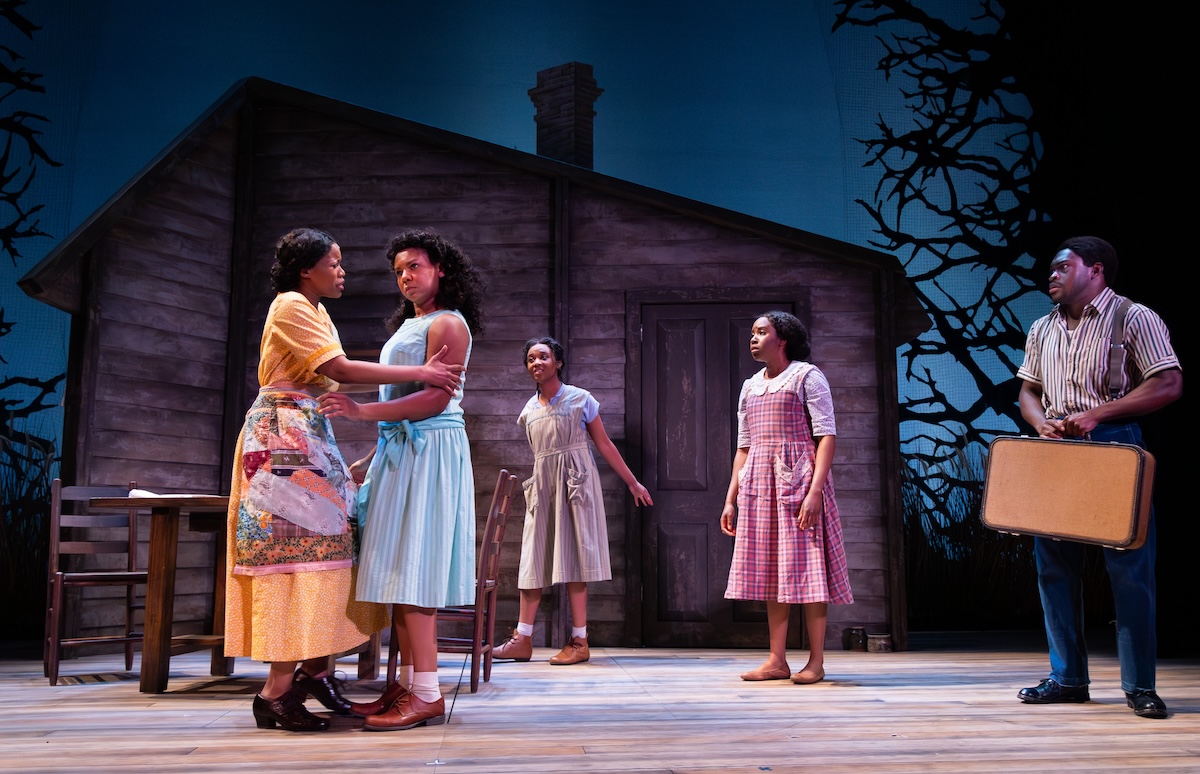

Chicago native York Walker's play Covenant is filled with stories of superstition, religious fanaticism, and secrets. It is skillfully directed by Malkia Stampley, who keeps the audience guessing and on the edge between folksy humor and taut suspense.
I am a descendant of the American South. The stories run through my blood, as they do for so many other children and grandchildren of the Great Migration. A remnant of animism from our African roots can fill the air with warning or make the trees speak. Walker's script draws on those themes.
Every character in Covenant is fully formed with a secret held deep inside that has the power to destroy the holder and those around them. Johnny "Honeycomb" James (Debo Balogun) returns to his small country town and looks up Avery (Jaeda Lavonne), his best friend from childhood. Avery notices something different about Johnny. He doesn't stutter and has confidence, not to mention that he's playing the guitar much better than before he left. Balogun is charming and heartbreaking as Johnny. Lavonne is brilliant as Avery, who longs to escape the small town where everybody knows your business and spreads it all over town.
Anji White plays Mama, a holy roller who smothers her oldest daughter with biblical zeal and warnings of the devil. White brings a luminous stage presence to this role. That same quality was present in her character, Charlesetta, in East Texas Hot Links. Mama will go to the ends of the earth to protect her daughters, despite the benign neglect that she shows to her youngest, Violet (Felicia Odun). It is evident that Violet will snap under the pressure to be the perfect daughter to win Mama's love and attention. The fiery exchange between Violet and Mama is gutwrenching, and their relationship starts emitting steam like an old-school pressure cooker.
Violet's best friend is Ruthie (Ashli Rene Funches), a frequent guest at Mama's dinner table. Funches' performance is a knockout. She is perfection as that friend who always shows up at your dinner table because whoever cooks at her house should be allowed near a stove. Mama is derisive about Ruthie's grandmother because she can't cook and is a heathen who doesn't go to church. The best comedy is the dialogue between Ruthie and Violet. They have a hilarious scene while sneaking a jug of moonshine hidden under the church steps. Funches and Odun have those conversations about superstitions and crazy rumors that they overheard. The cat story had the audience howling with laughter.
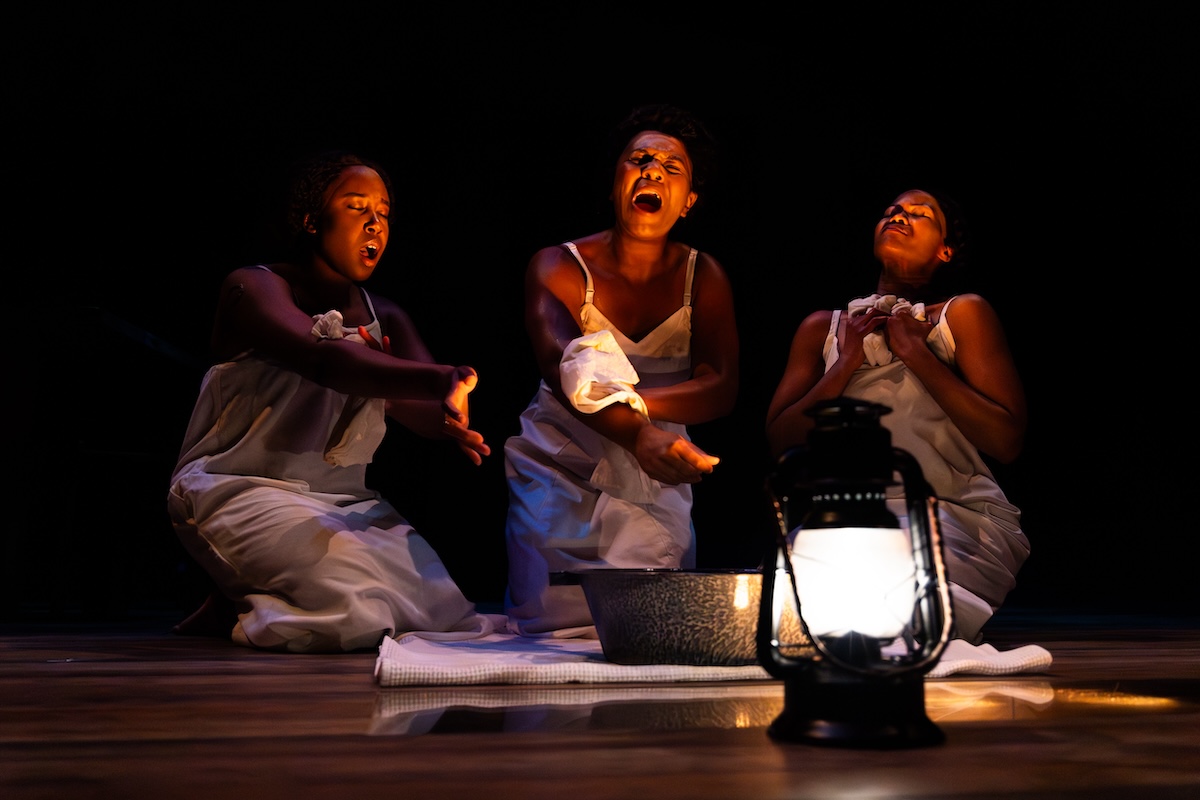
There is horror in Mama's reverence for and worship of God. The nightly prayer was a baptismal ritual that took on multiple meanings. There is a possessed quality to the sanctified dancing. They writhe, almost wantonly, in their loss of control. Covenant's plot has a finely honed line in the battle between redemption and condemnation. Walker's characters are treated with respect and sympathy, even for their heinous behavior. Everybody wants love, freedom, and success, and no one can really know how far another will go.
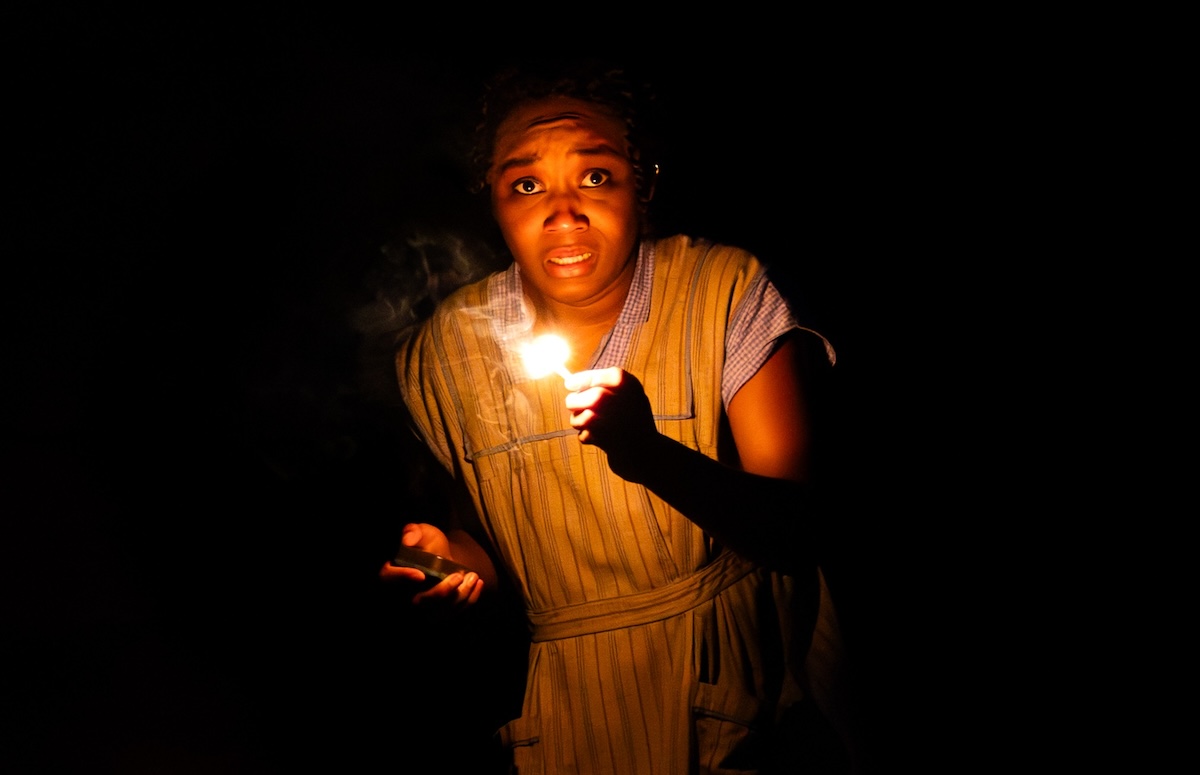
Covenant will keep you guessing and jumping to conclusions. Ryan Emens' set design is deceptively spare and yet stylized, with shadows of tree branches set against a gauzy backdrop that changes color. A saltbox-style wood-frame church is center stage, adorned with a simple cross. Upstage is Mama's kitchen, literally and metaphorically, sitting in front of the church. There are long stalks of grass, giving a swampy Georgia feel. Gina Patterson's lighting design is satisfyingly creepy, giving an air of impending doom. Dee Atti-Williams' sound design echoes throughout the theater, making several audience members jump and look around, including me and the person sitting next to me.
I highly recommend Covenant, now playing in Goodman's smaller Owen Theatre. It is one of the best stage thrillers I have seen in a long time. It is a fantastic addition to the 100th anniversary season of the Goodman. Covenant runs 95 minutes with no intermission, through May 31, at the Goodman Theatre, 170 N. Dearborn St.
Did you enjoy this post? Please consider supporting Third Coast Review’s arts and culture coverage by making a donation. Choose the amount that works best for you, and know how much we appreciate your support!
