
The Chicago Repertory Ballet has been presenting fresh takes on Shakespearean stories and classical music masterpieces, such as Vivaldi's The Four Seasons, since its founding in 2011. Founder and artistic director Wade Shaaf also welcomes work by other choreographers. Their Spring Series premiered last week at the Ruth Page Center for the Arts. Beyond the Blue Line, choreographed by Yanis Erik Pikieris, opened the performance.
Beyond the Blue Line, featuring the full ensemble, is a new collaboration between Pikieris and CRB. It was a scintillating opener with music by Michael Torke. Pikieris cut his teeth creating work for Dimensions Dance Theatre in Miami and Ballet Vero Beach. I found Beyond the Blue Line to be a worthy and energetic, albeit uneven effort. The choreography needs to be tightened up and more in sync. I think that Pikieris's scope was hampered by his use of the main stage space at the Ruth Page Center, with the movements flowing from the center stage out to the sides. Still, it was fun to watch, and I look forward to future collaborations by Pikieris with CRB.
The second dance was a world premiere by Wade Schaaf. PulseILTJ1101 was an out-of-this-world experience, literally. According to the program, Schaaf was inspired by interstellar bodies and the energy between bodies. The music was by Raffertie, who did the soundtrack for the horror/sci-fi mashup The Substance (2025), and Kangding Ray, a film composer known for techno and electronica. David-Goodman Edberg's lighting design enhanced PulseILTJ1101's undulating and kinetic vibe. It reminded me of the Aardvark Cinematheque in Pipers Alley, which closed in the 1970s. I felt like I was back among the black-light posters and light shows in the bohemian version of Old Town of the '70s. I didn't even mind the dreaded fog machine, which continued billowing through the intermission into the second half of the show.
The Rite of Spring was after the intermission, and it was a restaging of Schaaf's interpretation from CBR's 2013 season. In a wonderful twist, the premiere of Igor Stravinsky's The Rite of Spring took place on May 29, 1913, at the Théâtre des Champs-Élysées in Paris. It would seem that Paris was the center of the avant-garde, but Stravinsky's composition and choreography by Vaclav Nijinsky caused an uproar. The music by the man who composed The Firebird for the same Ballet Russes was considered brutal and shocking.
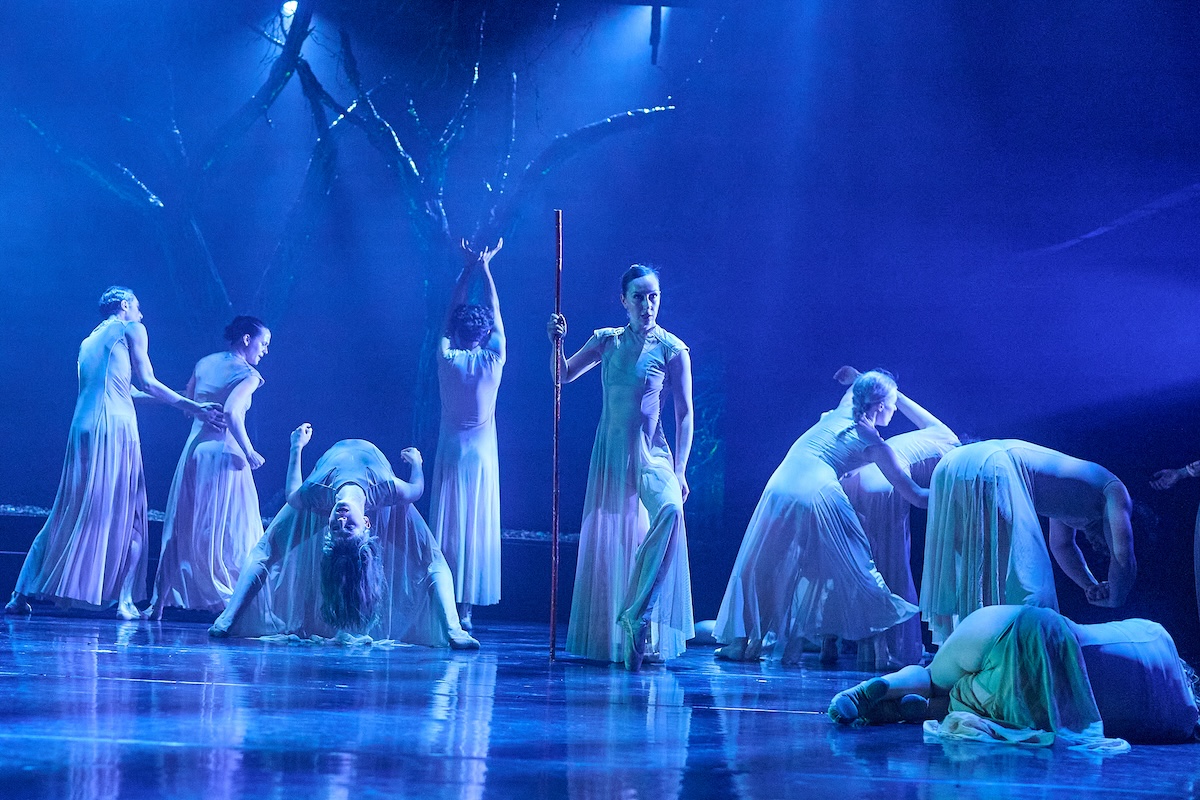
Stravinsky's music remains powerful and brilliant with a stabbing tempo, dissonant harmonies, and eerie polychords. Schaaf's re-imagining and choreography are brilliant, and the CRB ensemble is on its A-game. The Rite of Spring staging is done in two tableaux. The first features the youthful members of a pagan tribe dancing about the woods. Schaaf designed the set as a forest with the trees posed so that they seemed to be a part of the ensemble. He made full use of the space with the dancers as nymphs floating about the woods. David-Goodman Edberg's lighting design featured reds and icy blues that evoked a forest floating on the mist rising from the ground. This was a good use of a fog machine, as it should be. Nathan Rohrer's costume design has a lovely, flowing nude look. It enhanced the dancers' muscular and sinewy bodies in motion.
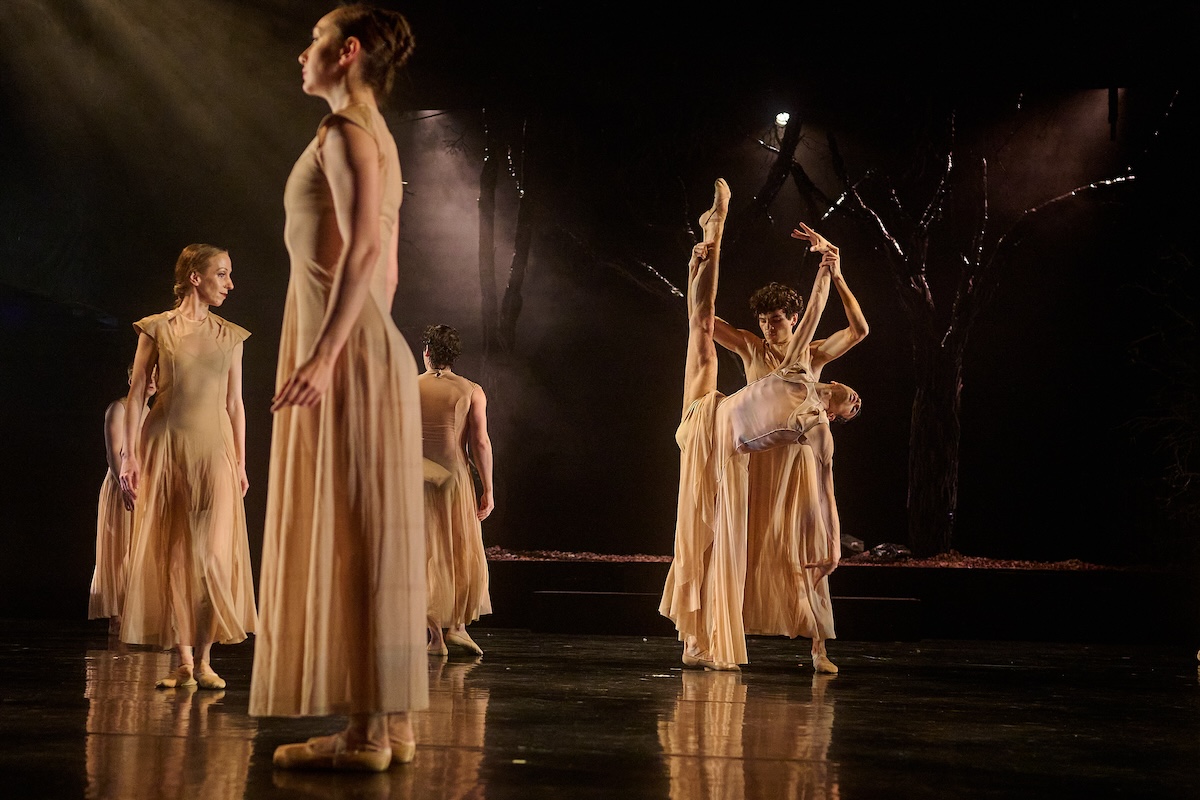
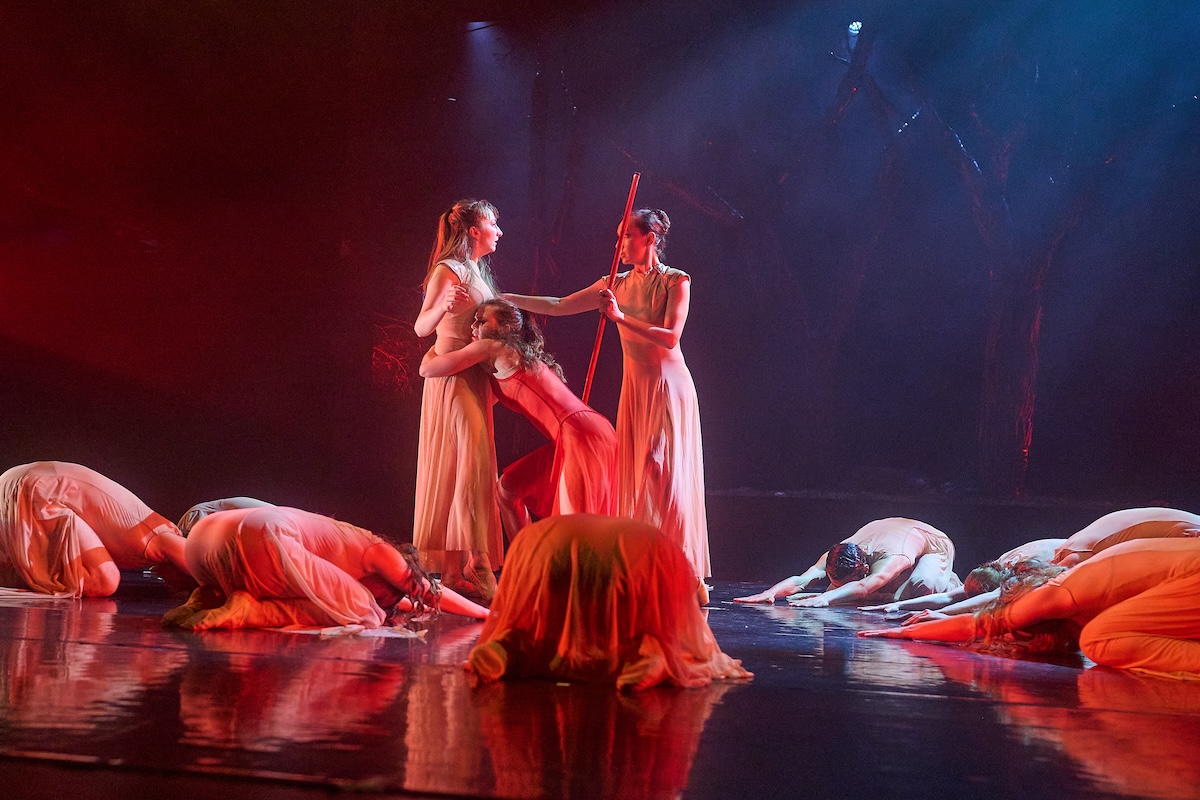
CRB's The Rite of Spring is a sensuous look into the atavistic nature of pagan tribes. The early pagans are believed to have celebrated the Divine Feminine, and this performance has two women as lovers, with one of them becoming a sacrifice. The carnival atmosphere in the woods features a mock abduction, feats of strength, and a ceremony of adoration led by a Chieftess, danced by Miriam-Rose LeDuc with majestic and lovely form. Her Viceroy is danced by Alberto Andrade, who stood out in every dance. His grace feels surreal, as if his body were a liquid moving through space.
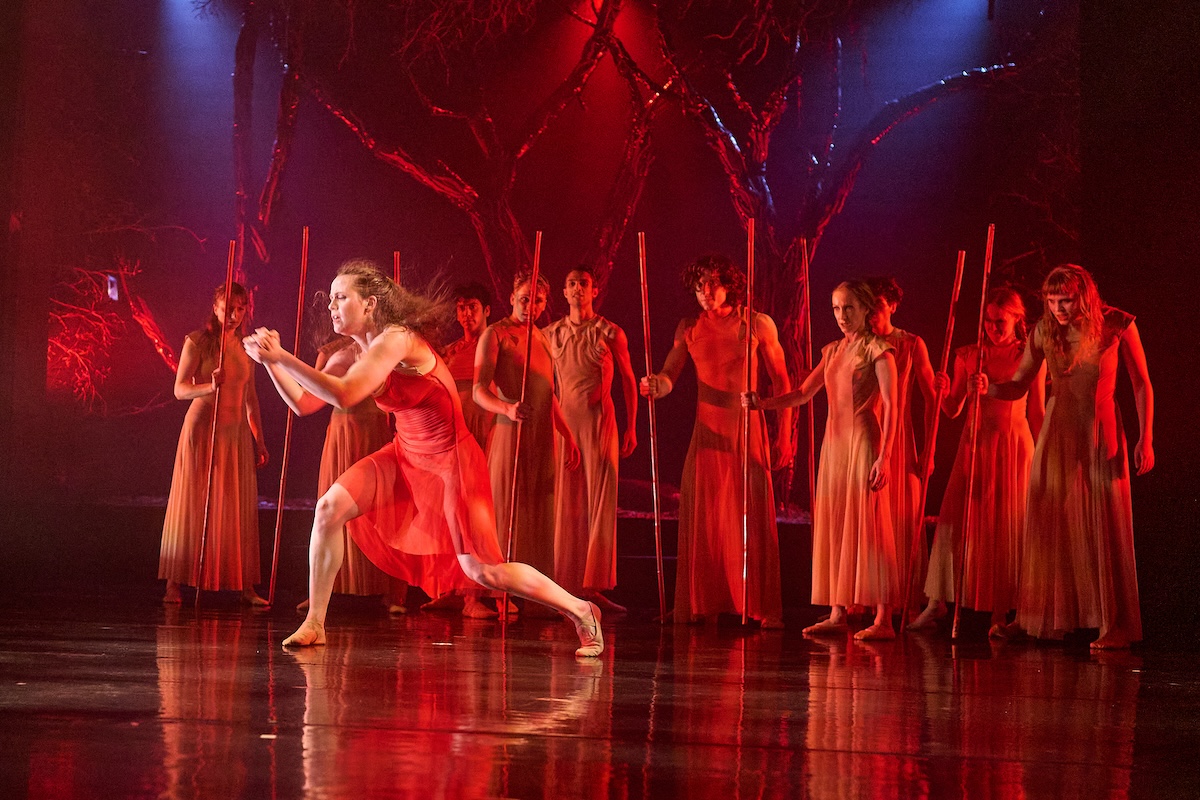
Rachel Schmidt plays one of the Lovers who openly and fiercely protects her lover, the Sacrifice (Haley Baker). They have a sensational chemistry that made the second tableau even more effective. Schmidt has a beautiful solo that opens the tableau. Baker is fantastic as the sacrifice who seems both unwilling and willing, as if under a spell. I loved the scene Schaaf titled Passion of the Sacrifice. The ensemble reminded me of the Wands suit in a tarot deck. They banged their batons on the floor rhythmically with Stravinsky's tempo. It was visually spectacular with the Sacrifice laid out on the woven batons over the heads of the ensemble, and the red lighting and fog resembled flames.
I highly recommend attending a Chicago Repertory Ballet performance. Wade Schaaf has developed and advanced the company into a top ensemble in the Chicago dance scene. The dancing is sublime, and the acting in tandem with it is excellent. That is no small feat. The choreography and narrative choices are great. I covered Schaaf's The Capulets in the 2025 season, and it was a great take on Shakespeare's classic feuding-family play. It is being played again in November 2026, in case you missed it the last time.
The Rite of Spring was not ready for prime time in 1913, but Schaaf has beautifully honored Stravinsky's masterpiece and given new life and beauty to what Nijinsky dared to try. It is 113 years since the shock and outrage in Paris, and it is now properly celebrated.
Chicago Repertory Ballet presented its Spring Series, including The Rite of Spring, on May 29-31 at The Ruth Page Center for the Arts, 1016 N Dearborn St. For more information, please visit their website.
If you enjoyed this post, please consider supporting Third Coast Review’s arts and culture coverage by making a donation. Please choose the amount that works best for you, and know how much we appreciate your support!
