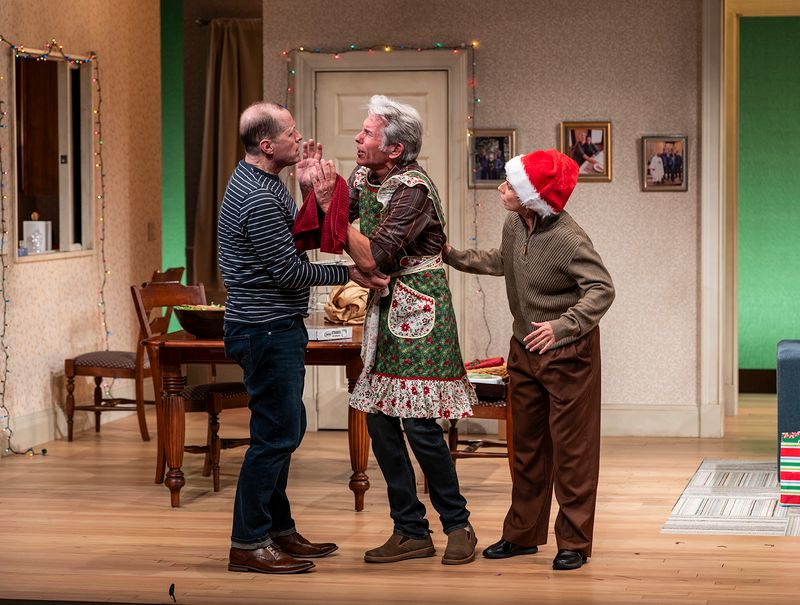

Steppenwolf Theatre ends its 50th anniversary season with a production that reflects the company’s core identity. Ensemble member Amy Morton directs Mia Chung’s Catch as Catch Can with trademark attention to character behavior and rhythm. The result is sheer Steppenwolf: actor‑driven staging built on close observation and emotional clarity.
At the center of Chung’s play is a casting device: each actor plays two roles, cross‑gender and cross‑generational, and can switch between them in an instant. It sounds confusing, and at first, maybe it is, but the audience quickly adjusts and begins to track the connections.
No mere casting stunt, the device grounds the play’s central idea: Escaping a family legacy is a struggle, and the struggle leaves marks. In the Playwrights Horizons’ Off‑Broadway premiere, the Irish- and Italian‑American roles were played by Asian-American actors, which sharpened the script’s treatment of casual anti‑Asian prejudice and the presence of unseen Korean American partners in the younger generation’s lives. At Steppenwolf, the roles are played by white actors, which shifts the emphasis toward generational repetition and the limits of personal reinvention.
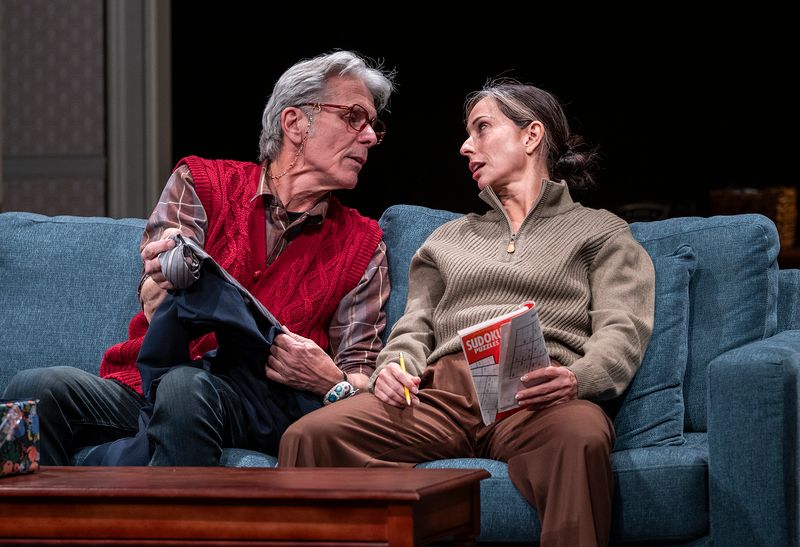
Gary Cole returns to the Steppenwolf stage for the first time in more than two decades in the dual role of Roberta and Robbie LaVecchia. His Roberta starts as a comic character, rooted in habit and fussy worry. Robbie is a younger, brusquer version dealing with the same anxieties but expressed in gender‑typical bluffness. Roberta garners more laughs at first, but by the play’s end is one of the saddest characters.
Tim Hopper plays the LaVecchias’ family friends and neighbors, the Phelans—mother Theresa and son Tim. Like Cole’s Roberta, Theresa begins the play as a figure of fun, focused on gossip and decorating. Hopper’s Tim is the catalyst of the play’s change of tone: a returning prodigal after many years in California who harbors secrets that unsettle the dynamics of both families. Hopper handles the switch in tone (and the switch between characters) perfectly, letting the emotional undercurrents surface without ever breaking the play’s naturalistic frame.
Audrey Francis brings steadiness to Lon and Daniella. Her restraint as Lon establishes the production’s baseline. When she shifts into Daniella, the contrast is stark: while dealing with her own issues, Daniella has perhaps done the best job of distancing from her family while also accepting them as a part of her.
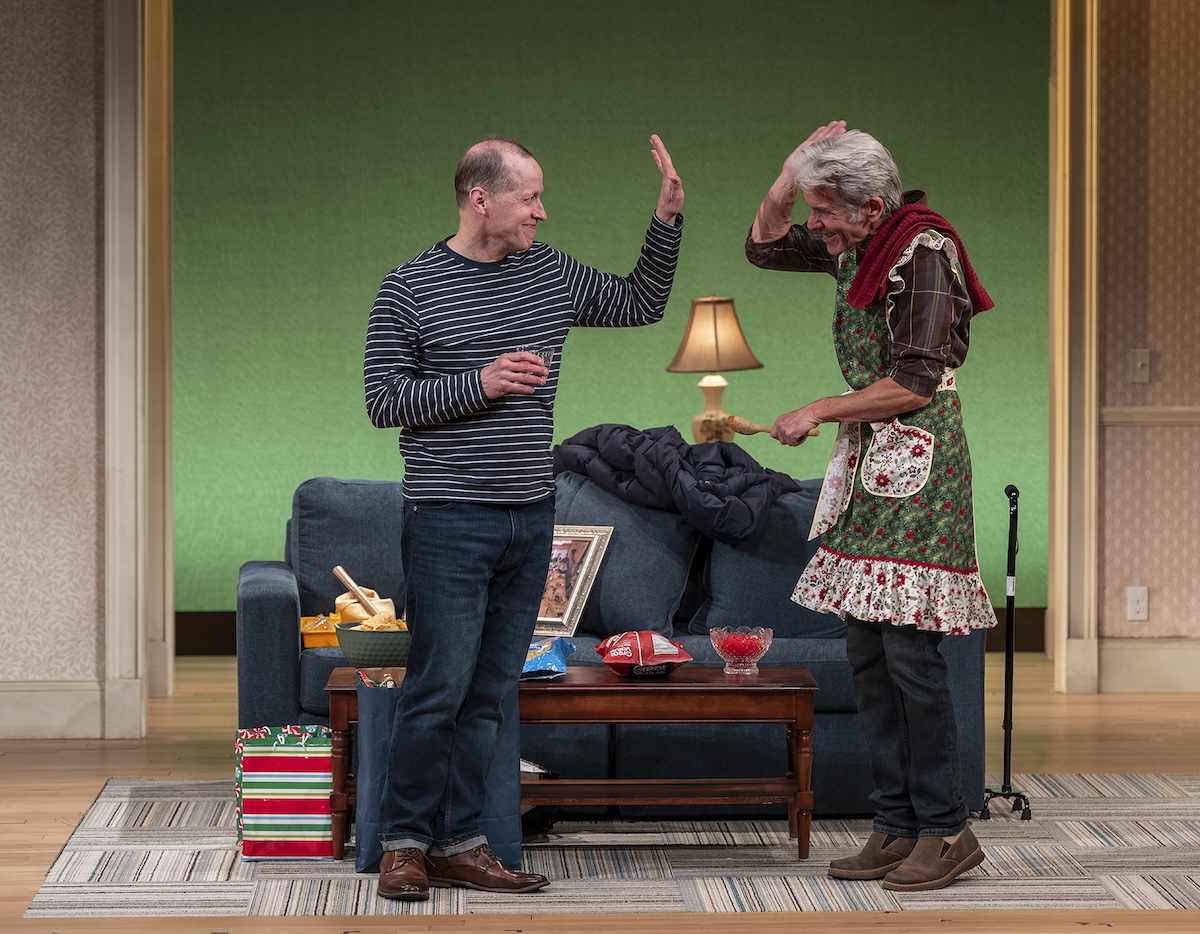
Morton’s direction keeps the staging tight. She trusts Chung’s script structure and the actors’ ability to carry it. The production begins in a comic register, built on familiar domestic rhythms, then turns toward something darker. The shift lands because the actors build the story behavior by behavior. The comedy never obscures the pressure under the surface. The later scenes show characters coping with the weight of their circumstances as best they can. The title’s meaning becomes clear: each person is doing what they can with what they have.
Chung’s writing gives the production its shape. The short scenes, the doubling, and the exposure of inherited behavior require exactness. Morton and the cast meet that requirement. The play does not offer solutions. It shows the limits of escape and the possibility of change. It suggests that presence and acceptance may be the only tools available, and that growth comes slowly.
This is the kind of work Steppenwolf built its reputation on: actor‑driven, closely observed, and rooted in the details of ordinary lives. It is a perfect capstone to the 50th anniversary season.
The creative team for Catch as Catch Can includes Andrew Boyce (scenic design), Yuki Nakase Link (lighting design), Mikhail Fiksel (sound design), and Izumi Inaba (costumes). Laura D. Glenn is production stage manager.
Catch as Catch Can plays through July 12 at Steppenwolf Theatre, 1650 N. Halsted St. The show runs 1 hour 45 minutes in one act. Tickets are available at www.steppenwolf.org.
For more information on this and other productions, see theatreinchicago.com.
If you found this post interesting, please consider supporting Third Coast Review’s arts and culture coverage by making a donation. Choose the amount that works best for you, and know how much we appreciate your support!
